Women's Dance Clothes on eBay
Class and rehearsal basics sold as products — leotards, wraps and warm-ups, and the stretch checks that decide wearability
Dance clothes, in the everyday sense, are studio basics: the leotards, wrap tops, skirts and warm-up layers worn to class and rehearsal week after week. On eBay they list as products from dance shops clearing end-of-line stock and from dancers selling outgrown or surplus kit. This product-focused guide covers the basic families, the stretch and seam construction that decides whether a garment survives a term of classes, and how dancewear sizing — which runs deliberately close — should be read from a listing's measurements.
Sellers photograph and phrase the same garment in very different ways, which is why the search wording in this guide matters as much as the bidding advice. Each section pairs the phrases that surface good listings with the fabric, fit and condition evidence worth demanding before money moves.
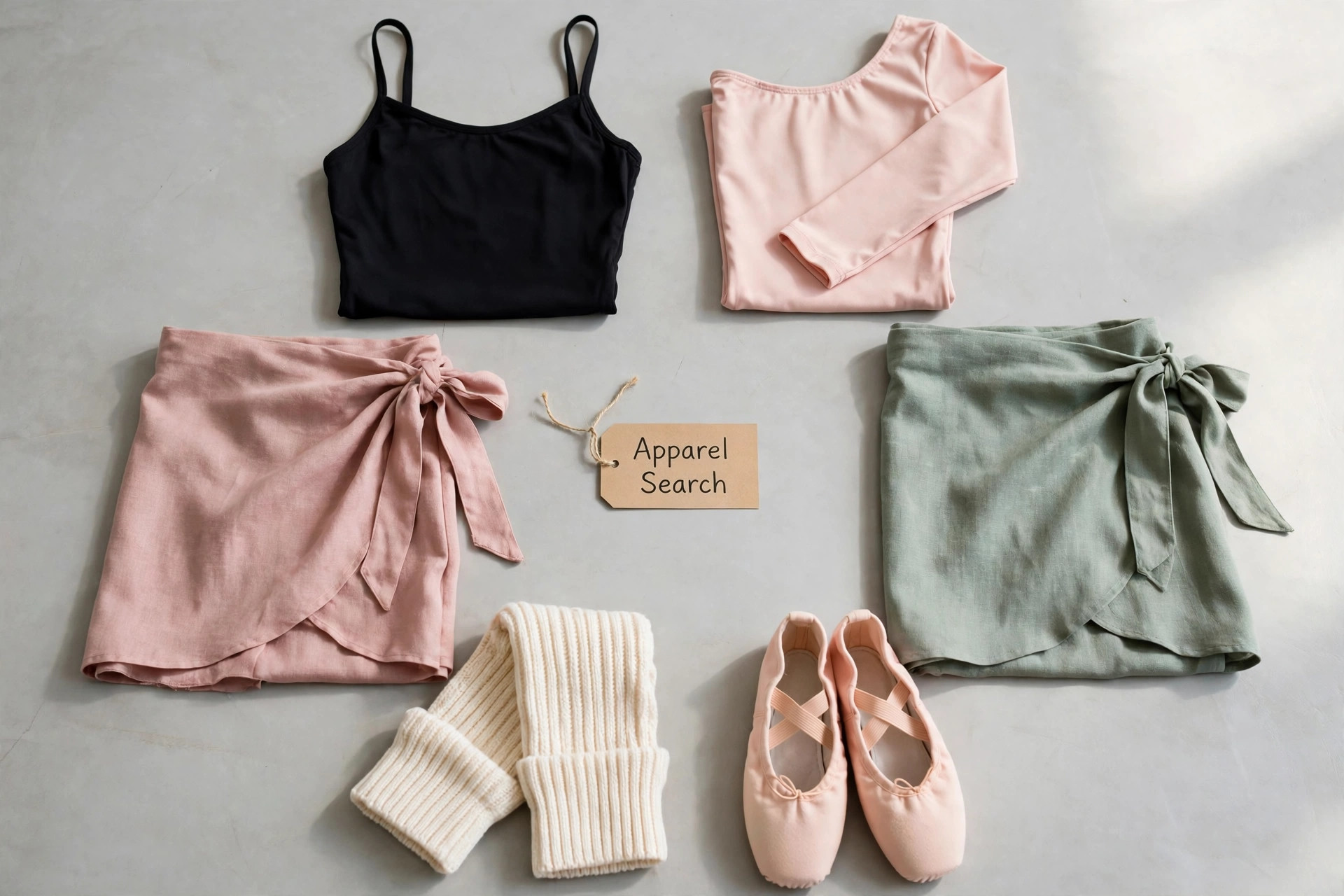
New studio basics in standard sizes are also a tidy set-price purchase. The Apparel Search Amazon clothing guide collects the Amazon dance and active departments — a fixed-price route beside the class-wear bargains below.
Studio Basics in the Listings
Listings for women's dance clothes on eBay typically cover leotards in camisole, cap-sleeve and long-sleeve cuts, wrap tops and shrugs, practice skirts in chiffon and georgette, warm-up knitwear and leg warmers, dance pants and unitards in the same listings and ballet slippers and practice shoes sold with basics. The sellers behind them range from individuals clearing a wardrobe to specialist dealers and outlet accounts, so photography, description depth and condition grading vary widely from one listing to the next. Dance shop overstock is the value seam: regulation class colors and standard cuts, listed when a shop changes supplier or a line is discontinued. Begin broad, then narrow with the size, color and condition filters; a saved search with alerts catches the short listings that end before a casual browser ever sees them.
Because seller wording is inconsistent, run several searches rather than one: "ladies leotard"; "ballet wrap skirt"; "dance warm up"; "adult ballet clothes". Vaguely titled and misspelled listings are where quiet bargains hide, since fewer bidders ever find them. Search the class vocabulary — leotard, wrap, warm-up — rather than the word dance alone, which pulls in occasion dresses and fancy dress instead. Sort by ending soonest to catch neglected auctions, and compare price plus postage together — a low bid with heavy shipping is seldom the cheapest way to own the garment.
Girth Measurements and Elastane Life
Fit comes first: dancewear is cut to move and to show line, so it fits closer than everyday clothing in the same letter size; buy on the listing's bust, waist and torso (girth) measurements where given, and treat a garment with no measurements as a question to ask. Auction garments cannot be tried on, so the flat measurements in the description are the only dependable evidence, and a seller who lists none is worth a message before bidding. On materials, expect cotton-elastane leotard knits, nylon-elastane performance knits, chiffon and georgette skirts and acrylic warm-up knits. Elastane content is the lifespan figure: higher-elastane leotards hold their shape through a term of washing, while tired elastane bags at the seat and straps in a way flat photographs of a stretched cuff can reveal.
In this category condition moves value more than age does. Seams and elastic edges age first in studio wear — check strap stitching, leg elastic and underarm seams in close photographs, and favor new-with-tags shop stock for garments worn weekly. Study the photographs at full size, read the returns policy, and judge the seller's feedback by the pattern that matters — description accuracy — rather than the headline score alone. A garment described as new with tags should show those tags in a photograph; if it does not, ask before bidding.
Shop Overstock and Term Starts
Timing shapes the price. Class wear lists at term starts, with the deepest clearances when dance shops change ranges in summer and after the winter show season. Regulation basics are identical from shop to shop, so a discontinued color or range at auction is the same garment at half price. Fix a maximum that includes postage, bid it once, and let the automatic bidding do the work — chasing an auction past your ceiling is how a bargain turns into an overpayment. Do not buy dance sizes by dress size: the two scales differ deliberately, and a leotard a size small is unwearable rather than merely neat.
Common Questions
What should I check first when buying women's dance clothes on eBay?
Measurements and condition. dancewear is cut to move and to show line, so it fits closer than everyday clothing in the same letter size; buy on the listing's bust, waist and torso (girth) measurements where given, and treat a garment with no measurements as a question to ask. Then confirm the fabric content and read the seller's returns policy before bidding.
Which search phrases find the best women's dance clothes listings?
Try several seller wordings — ladies leotard, ballet wrap skirt, dance warm up — and save the searches so short or mis-titled auctions are caught before they end.
When is the cheapest time to buy women's dance clothes at auction?
Class wear lists at term starts, with the deepest clearances when dance shops change ranges in summer and after the winter show season. Bidding on off-peak endings and setting a firm maximum that includes postage keeps the delivered price down.