Women's Dance Clothing on eBay
Performance and ballroom clothing sold as products — embellished dresses, costume construction and buying event wear by measurement
Where studio basics are bought by the term, performance dance clothing is bought by the event: ballroom and Latin dresses, show costumes and competition wear, often made for one dancer and worn a handful of times. eBay is one of the few places this clothing trades openly, and this product-focused guide covers how it lists — by style of dance, by embellishment, by measurement rather than size — and the construction checks that matter when sequins, fringe and stretch fabrics carry the whole value of a garment.
Nothing in an auction category is a fixed range, so the value sits in the checking. Work through what the listings usually hold, the measurements and materials to verify, and the seasonal pattern that decides whether to bid this week or wait for the next wave.
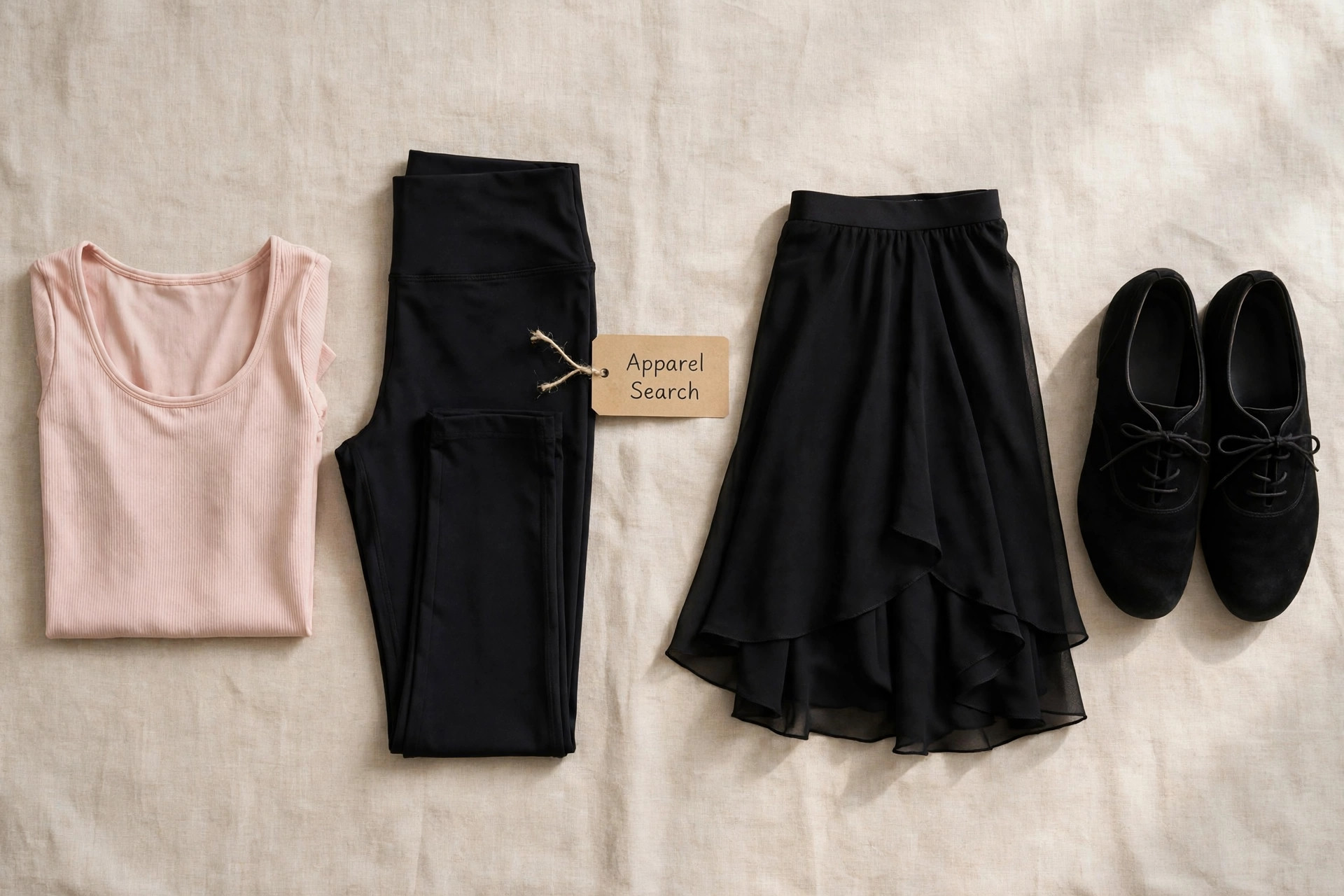
Practice staples are easy to price new; performance pieces are not. The Apparel Search Amazon clothing guide collects the Amazon occasion and dance departments for the set-price end of the wardrobe, while the embellished one-offs below are auction territory.
Performance Families at Auction
Listings for women's dance clothing for performance on eBay typically cover ballroom and smooth dance dresses, Latin and rhythm dresses with fringe and embellishment, performance and show costumes, competition practice wear in the same listings, character and stage skirts and dance shoes matched to performance styles. The sellers behind them range from individuals clearing a wardrobe to specialist dealers and outlet accounts, so photography, description depth and condition grading vary widely from one listing to the next. Supply follows the competition calendar: dancers sell a dress when they change syllabus level, partner or style, so high-quality garments list in waves after major events. Begin broad, then narrow with the size, color and condition filters; a saved search with alerts catches the short listings that end before a casual browser ever sees them.
Because seller wording is inconsistent, run several searches rather than one: "ballroom dress"; "latin dance dress"; "competition dance costume"; "performance dancewear". Vaguely titled and misspelled listings are where quiet bargains hide, since fewer bidders ever find them. Search by dance style first and garment second — ballroom, Latin and stage sellers use entirely different vocabularies for similar-looking dresses. Sort by ending soonest to catch neglected auctions, and compare price plus postage together — a low bid with heavy shipping is seldom the cheapest way to own the garment.
Made-to-Measure Means Measure
Fit comes first: performance garments are frequently made to one dancer's measurements and altered since, so the listing's bust, waist, hip and skirt length figures are the garment; any stated letter size is history, not specification. Auction garments cannot be tried on, so the flat measurements in the description are the only dependable evidence, and a seller who lists none is worth a message before bidding. On materials, expect stretch velvet and lycra bodies, chiffon and georgette float panels, fringe and sequin embellishment and mesh illusion panels. Embellishment is hand-finished and fragile: stone and sequin density shows in close photographs, and a listing that counts or photographs its decoration is describing the garment's real cost driver.
In this category condition moves value more than age does. Check hems for floor wear, underarm and zip areas for strain, and fringe for tangles or losses — performance wear works hard for few hours, and those hours concentrate damage in predictable places. Study the photographs at full size, read the returns policy, and judge the seller's feedback by the pattern that matters — description accuracy — rather than the headline score alone. A garment described as new with tags should show those tags in a photograph; if it does not, ask before bidding.
Competition Calendars and Price Waves
Timing shapes the price. Listings surge after competition seasons and show runs end; buying in those windows, rather than in the run-up to events, is where the discounts live. A made-to-measure performance dress resold after one season commonly changes hands at a third of its making cost, with its working life barely begun. Fix a maximum that includes postage, bid it once, and let the automatic bidding do the work — chasing an auction past your ceiling is how a bargain turns into an overpayment. Never buy an embellished dress from stage-distance photographs alone — the garment's value is in its close-up finish, and so is its damage.
Common Questions
What should I check first when buying women's dance clothing for performance on eBay?
Measurements and condition. performance garments are frequently made to one dancer's measurements and altered since, so the listing's bust, waist, hip and skirt length figures are the garment; any stated letter size is history, not specification. Then confirm the fabric content and read the seller's returns policy before bidding.
Which search phrases find the best women's dance clothing for performance listings?
Try several seller wordings — ballroom dress, latin dance dress, competition dance costume — and save the searches so short or mis-titled auctions are caught before they end.
When is the cheapest time to buy women's dance clothing for performance at auction?
Listings surge after competition seasons and show runs end; buying in those windows, rather than in the run-up to events, is where the discounts live. Bidding on off-peak endings and setting a firm maximum that includes postage keeps the delivered price down.