Fashion Terms — the Apparel Search fashion terminology directory
The term “bed head” is not specifically about fashion, but it is about beauty, and the business of beauty is very relevant to style: your overall appearance plays a role in your fashionable appearance. Similar to hat head, bed head is what happens when your bed affects the appearance of your hair — the flattened, rumpled look left by a night of sleep.
The term "bed head" is not specifically regarding fashion. However, it is regarding beauty and the business of beauty is very relevant to style. Your overall appearance plays a role in your fashionable appearance.
Similar to hat head, the term bed head is referenced when your "bed" effects the appearance of your hair. Yes, it is most likely your pillow effecting your hair and not your actual bed, but you get the point. Also, it can be a couch, floor, car seat, or anywhere else you lay your head to sleep. In summary, when you lay your head down to rest, it often flattens your hair. The pressure / weight of your head pushing down toward the surface on which you rest will cause a flattening effect. The story gets worse. As you move around in your sleep, your hair gets shifted in many different directions. By the time you wake, you are most likely a mess.
Getting your beauty sleep is very beneficial for a wide assortment of reasons but it does not always give your hair the beauty it deserves.
Do you know any tips to avoid bed head?
|
|
If you have bed head, it is certainly not a reason to panic. Take a shower or consult a fabulous hair stylist.
Thank you for taking the time to learn about this beauty relevant terminology. Your hair is an important part of your appearance. It is important to understand relevant terms. If someone tells you that you have terrible bed head, you will know what they mean.
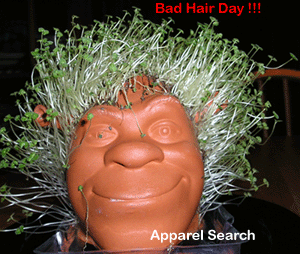
Don't freak out if you are having a bad hair day. You can remedy a bad hair day.
Hair holds a shape because of the bonds inside each strand. Pressure, warmth and a little moisture — exactly what a pillow supplies for hours at a time — are enough to reset those bonds into whatever position the hair was lying in, which is why one side of the head wakes up flat and the other wakes up pointing at the ceiling. Fine, straight hair shows bed head most because it has little natural structure to resist; curly hair hides it better but tangles more. Cotton pillowcases add friction that roughs the surface of the hair, while smoother fabrics let strands slide instead of creasing.
The morning fixes all work the same way: they undo the set. A mist of water reactivates the bonds so the hair can be combed back into place, a minute with a warm dryer does the same job faster, and dry shampoo at the roots restores the volume the pillow pressed out. Stylists also point out that how hair goes to bed matters — gathered loosely on top of the head, it wakes with fewer creases than hair slept on directly. None of this makes bed head a fashion statement by itself, but the deliberately tousled version of it became one: the undone, slept-in look has cycled through fashion editorials for decades precisely because it reads as relaxed rather than careless.
Bed head is the disordered state of hair after sleep — flattened on one side, sticking up on the other — caused by the pressure and friction of a pillow through the night.
They are cousins: hat head is hair flattened and creased by wearing a hat, bed head is hair disordered by sleeping on it. This page links the two terms because both describe hair marked by what touched it.
By restyling — dampening and reshaping the hair, or washing it — and, as this page suggests, a good hair stylist can help with a cut and routine that survives the night better. A bad hair day can be remedied.