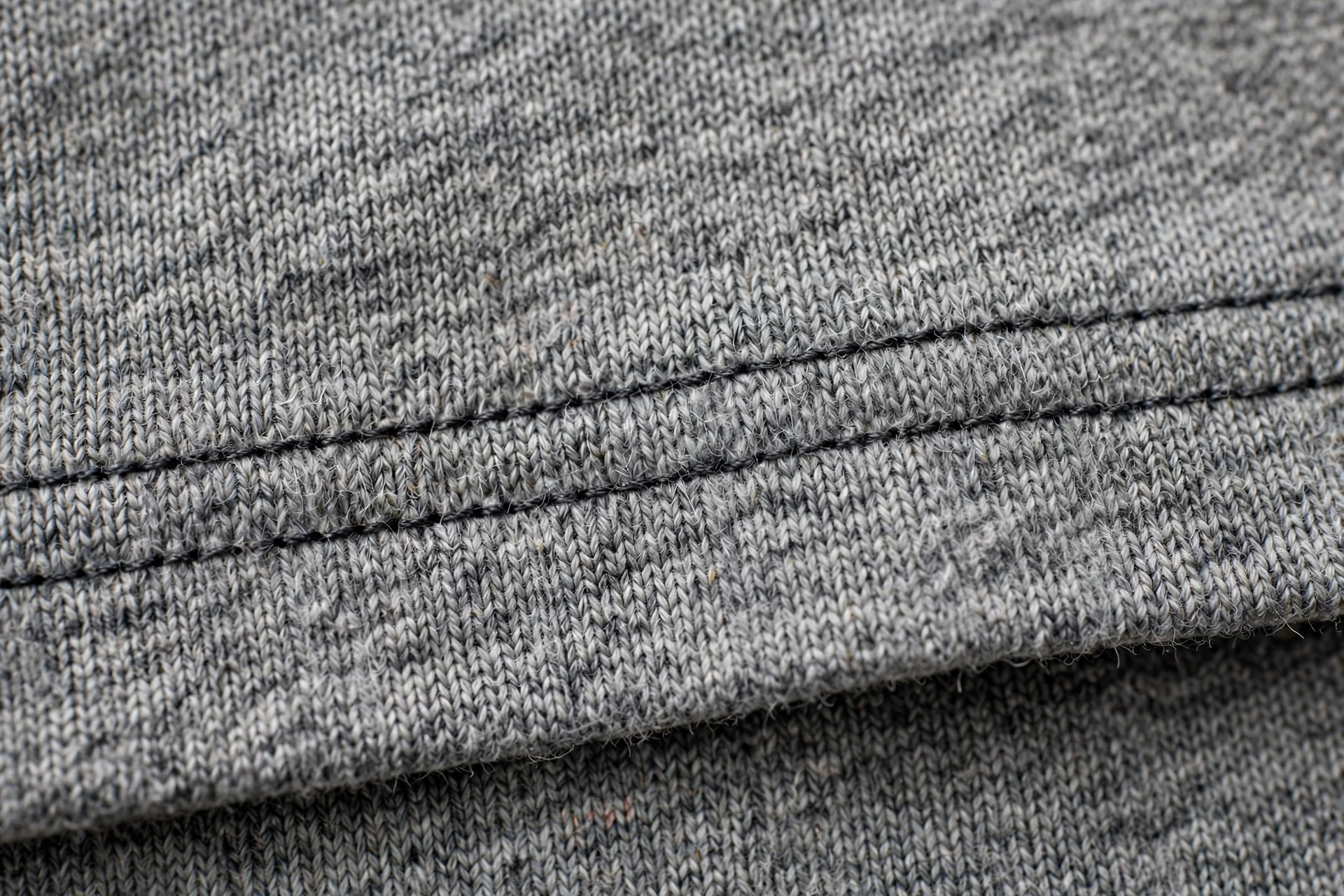
Coverstitch (also called a cover hem) is a professional hemming stitch made with two or three needles plus a looper. It produces parallel lines of straight stitching on the face of the fabric and a grid of interlocking looper threads underneath. Look at the hem of any t-shirt or pair of leggings — those tidy double rows of stitching are a coverstitch.
How a Coverstitch Works
A coverstitch machine feeds the fabric under two or three needles working in a line. On top you see clean, straight rows; underneath, a single looper thread weaves between the needle threads, locking them into a stretchable chain. Because no thread wraps the fabric edge, the seam stays flat and flexible — it stretches with knit fabric instead of popping when the garment is pulled on.
Coverstitch vs. Overlock (Serger)
The two stitches are often confused because both are associated with knit garments, but they do different jobs:
- Overlock / serger stitch — wraps thread around the raw fabric edge to finish seams and prevent fraying. See the overlock stitch definition.
- Coverstitch — hems from the top of the fabric without wrapping the edge; the raw edge is typically folded under first. It cannot finish a raw edge on its own.
In production, a garment often gets both: the serger closes the seams, and the coverstitch machine hems the bottom, sleeves, and neckline.
Where You'll Find It
Coverstitching is the standard hem for t-shirts, polo shirts, sweatshirts, leggings, yoga pants, children's knitwear, and anywhere a stretchy, flat, comfortable hem matters. A twin-needle on a home sewing machine imitates the look on top, but only a real coverstitch machine makes the looper structure underneath that gives the seam its stretch and durability.
Fashion Terms: see the fashion term directory and the C terms for more apparel industry terminology.