Apparel Search · Closures & Trims
Types of Zippers Explained
Coil, metal, molded plastic and invisible zippers; separating versus closed-end; and the size numbers — #3, #5, #8 — decoded. Everything a sewer, designer or curious wearer needs to choose the right zipper for the garment.
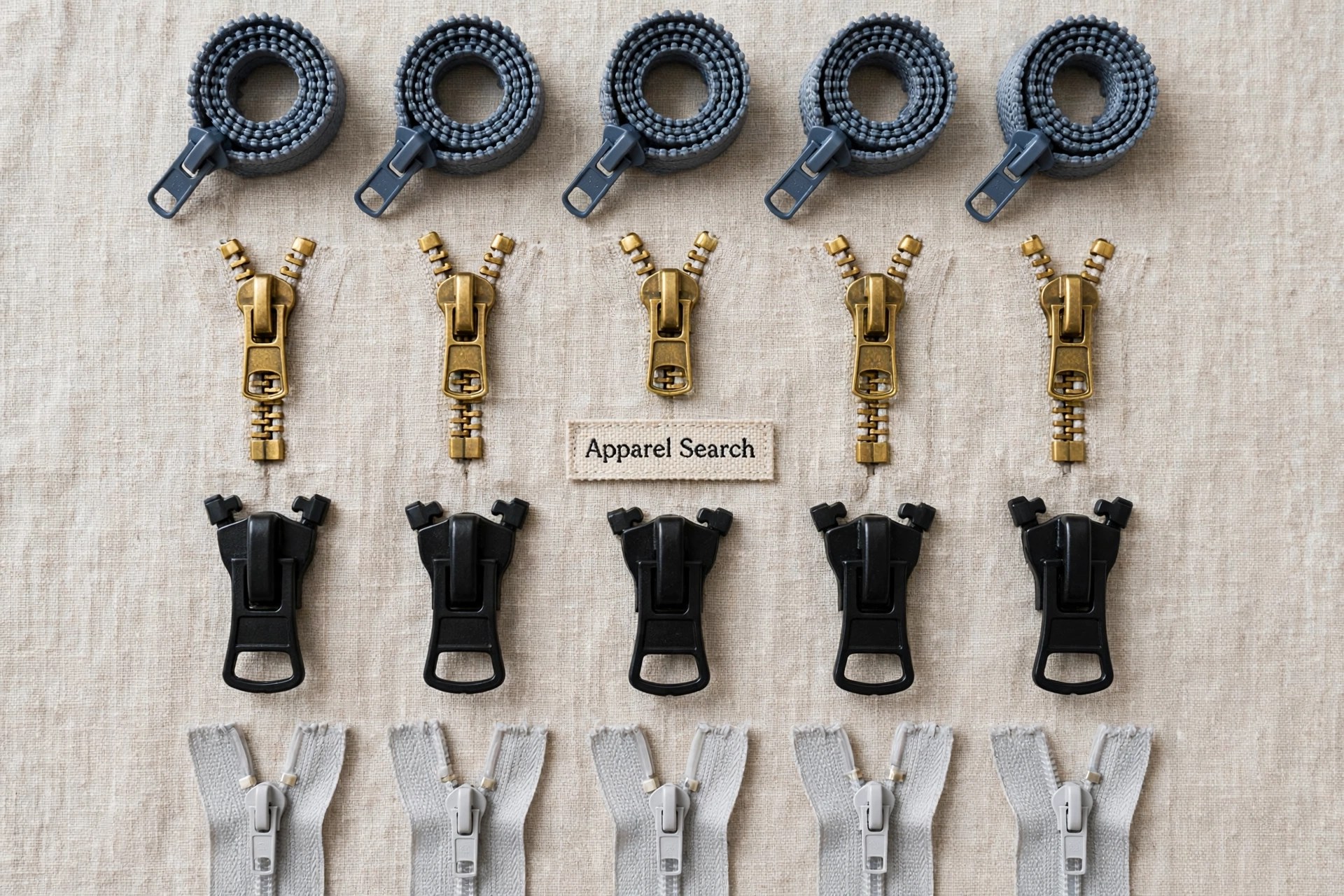
A zipper looks simple until you have to choose one. Then the questions multiply: coil or metal? Separating or closed-end? What does the #5 on the package mean, and why did the dress zipper jam while the jacket zipper has worked for a decade? Every one of those differences is a deliberate engineering choice, matched to the garment's weight, stress and look. This page explains the main types of zippers, the two ways they open, and the size system that ties them together.
A zipper is one member of the closure family covered alongside buttons and other trims on Apparel Search, and choosing it happens during pattern and garment development — the Pattern Making & Fitting guide covers the construction stage where closures are specified.
The Parts of a Zipper
Every zipper has the same anatomy: two tapes (the fabric strips sewn to the garment), the chain of teeth or coil that runs along them, the slider that meshes and unmeshes the chain as it travels, a pull attached to the slider, and stops that keep the slider from running off the ends. Zipper types differ in how the chain is made.
The Four Main Zipper Types
The chain is a continuous spiral of nylon or polyester filament sewn or woven onto the tape. Coil is flexible in every direction, light, and inexpensive, so it is the default for most clothing — dresses, skirts, trousers, lightweight jackets — and for curved seams that metal teeth cannot follow.
Individual teeth of brass, aluminum or nickel are clamped onto the tape one by one. Metal is the strongest and most abrasion-resistant chain, the classic choice for jeans, leather jackets, workwear and boots. It is stiffer than coil and can corrode or discolor if poorly finished.
Chunky resin teeth are molded directly onto the tape. They are strong, light for their size, and immune to rust and salt water, which makes them standard on outdoor jackets, sportswear, luggage and marine gear. The bold tooth profile is also used as a visible design feature.
A fine coil zipper constructed so the chain rolls underneath the tape and hides inside the seam. Closed, nothing shows but a slim pull and the seam line itself. Invisible zippers are the standard for dresses, skirts and formal wear, and they need a special presser foot to sew.
Separating, Closed-End and Two-Way Zippers
Type is only half the decision; the other half is how the zipper opens. A closed-end zipper stays joined at the bottom — the kind in trousers, skirts, dresses and pockets. A separating zipper comes completely apart at the bottom, like a jacket, so the two halves of the garment can open fully. A two-way separating zipper has two sliders, letting a long coat or jacket open from the bottom as well as the top for sitting and movement. Specifying the wrong one is a classic beginner's error: a closed-end zipper in a jacket front simply will not work, and the garment must be unpicked.
Zipper Sizes: #3, #5, #8 and #10
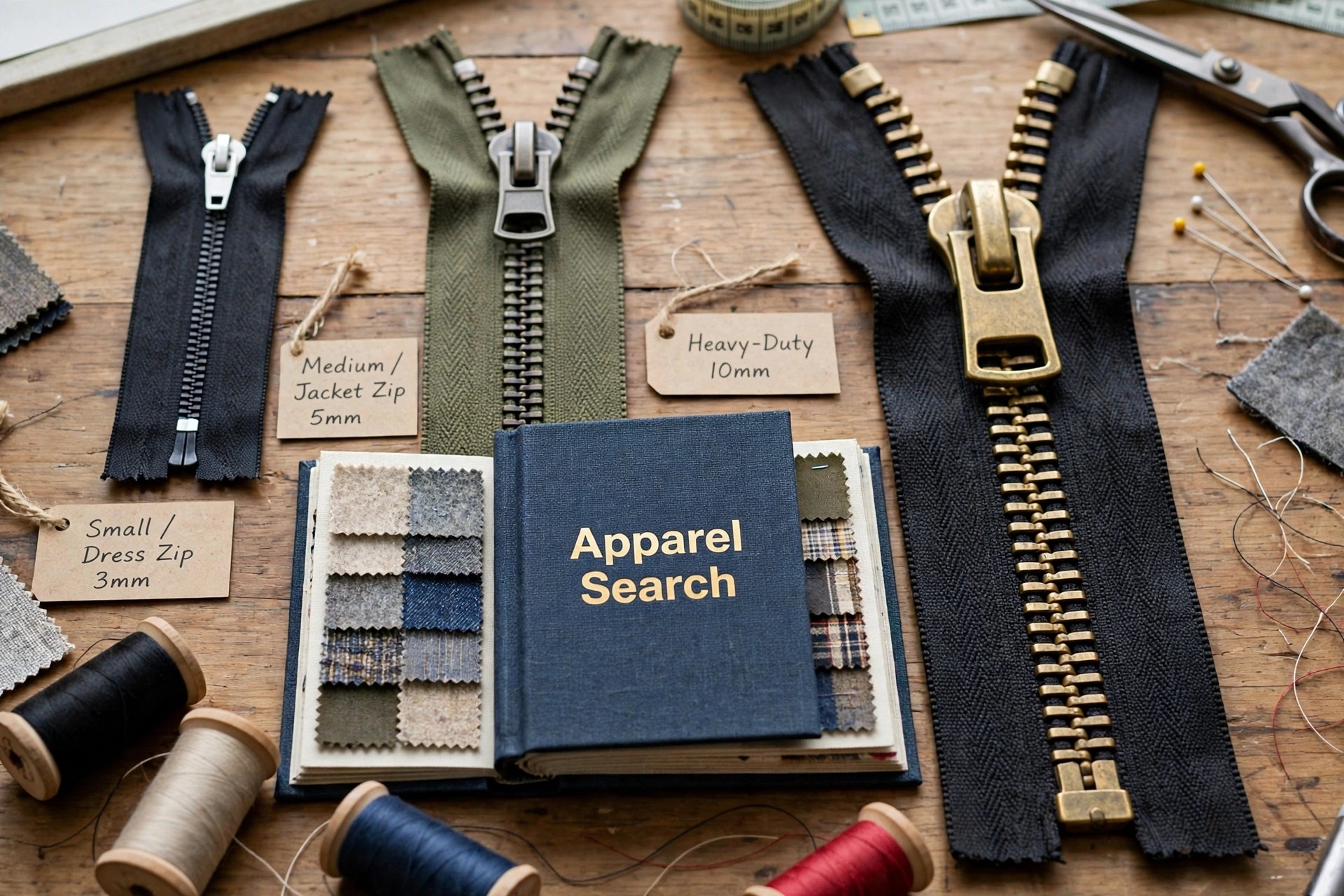
The size number is the approximate width of the closed chain in millimeters. A #3 (or #4) is a light dress and skirt zipper; a #5 is the workhorse jacket and jeans-adjacent size; #8 and #10 are heavy chains for coats, boots, tents and bags. Matching size to the garment matters in both directions: an undersized zipper in a stressed seam will burst its chain, while an oversized one adds stiffness, weight and cost where none is needed. When in doubt, match the size of the zipper the garment was designed for — the pattern's trim specification, covered in the sewing guides, will name it.
Choosing the Right Zipper
Start with the fabric and the stress. Heavy fabrics and hard-use openings get metal or molded chains in larger sizes; light fabrics and hidden openings get coil. Consider the environment: metal corrodes in salt air, while molded plastic shrugs it off. Consider the look: an exposed brass zipper is part of a jeans or biker jacket design, while the same garment in a formal context would hide an invisible zipper in the seam. Finally, consider the wearer — oversized pulls and two-way sliders are small choices that decide whether a garment is easy to live in. The stitch and seam choices around the zipper are covered in the stitch and seams guide.
Related Guides on Apparel Search
Common Questions
What do zipper sizes like #3, #5 and #8 mean?
The number describes the width of the closed zipper chain in millimeters, roughly: a #3 zipper's teeth or coil measure about 3 mm across when closed, a #5 about 5 mm, and a #8 about 8 mm. Bigger numbers mean a heavier, stronger chain meant for heavier garments. Most dresses and skirts use #3 or #4, most jackets #5, and heavy outerwear, boots and bags #8 or #10.
Which type of zipper is the strongest?
Metal zippers are generally the most durable choice for high-stress openings, which is why jeans, leather jackets and workwear use them. Molded plastic zippers are also very strong and resist corrosion, making them favorites for outdoor gear. Coil zippers are the most flexible and are plenty strong for most garments, but a coil can be damaged by a hard sideways pull that metal teeth would survive.
What is an invisible zipper?
An invisible zipper is a fine coil zipper sewn so that its teeth roll to the underside of the seam and disappear into it. When the zipper is closed, all you see is the seam line and a small, slim pull. It is the standard closure for dresses, skirts and formal clothing where a visible zipper would spoil the line of the garment.
Can a broken zipper be repaired instead of replaced?
Often, yes. The most common failure is a worn slider that no longer meshes the teeth, and replacing just the slider restores the zipper in minutes. Missing stops can be replaced and a separated coil can sometimes be re-meshed. If teeth are missing or the tape is torn, the whole zipper has to be replaced, which is a bigger job because the seam must be opened and resewn.
A Small Part That Decides the Garment
Zippers fail more garments than any other single component. Choosing the right type and size at the pattern stage — and sewing it in with the right seam and foot, as the stitch and seams guide shows — is far cheaper than replacing one afterward.