Children's Wholesale Clothing
Wholesale children's garments for clothing stores, boutiques and department stores — and how the wholesale channel works
Children's wholesale clothing is clothing sold in quantity to stores rather than to individual shoppers. A children's clothing store, boutique or department store buys garments at wholesale, in size ranges and seasonal assortments, and then sells those garments to consumers at retail. That distinction shapes everything on this page: the linked directory leads to children's clothing wholesalers — companies that sell to stores — while this page explains the garments, the buying process and the terms involved. Shoppers looking for individual children's garments for their own families are in a retail market, not a wholesale one, and the children's clothes guide linked in the navigation covers children's clothing category by category. Store buyers, by contrast, will find the wholesaler directory, the wholesale clothing term, the wholesale fashion news and the wider wholesale clothing section all linked directly below.
Children's Wholesale Clothing Directory
Related Guides of Interest
Children's Wholesale Clothing and Children's Clothing Wholesalers Are Different Searches
There is a real difference between looking for children's wholesale clothing and looking for children's clothing wholesalers, and knowing which search you are making saves time. Children's wholesale clothing describes the goods: garments — dresses, jackets, tops, bottoms, sleepwear, activewear and blank garments for printing — offered for sale in bulk at trade prices. Children's clothing wholesalers describes the companies: the distributors who stock those garments and sell them on to stores. A retailer who needs stock for a children's department is searching for wholesalers and for the garment ranges they carry. A consumer who wants a single garment at a low price is searching for retail clothing, however the word wholesale is used in advertising, because wholesalers in this section sell to stores, not to the public. The Children's Clothing Wholesalers directory linked at the top of this page is the company side of the search; the sections below are the garment side.
What a Children's Clothing Wholesaler Does
A fashion or apparel wholesaler is also often referred to as a distributor. The wholesaler or distributor typically purchases product from manufacturers — the factories that make the garments — and then sells the product to others. Normally, a fashion wholesaler sells clothing to retailers, meaning stores, and the store in turn sells the garments to consumers. Some wholesalers do sell direct to consumers, but that is the exception rather than the model. Apparel wholesalers typically do not produce the actual clothing themselves; they are the middle step between the producer, the factory, and the buyer, whether that buyer is a retailer or the final consumer. For children's clothing that middle step matters because children's garments turn over quickly: sizes sell through unevenly, seasons are short, and a store needs a supplier who can supply complete size ranges and replenish the sizes that sell first. A wholesaler holding stock across infant, toddler, boys and girls size ranges lets a small store buy an assortment without ordering factory quantities of every single garment.
The Garments Stores Source at Wholesale
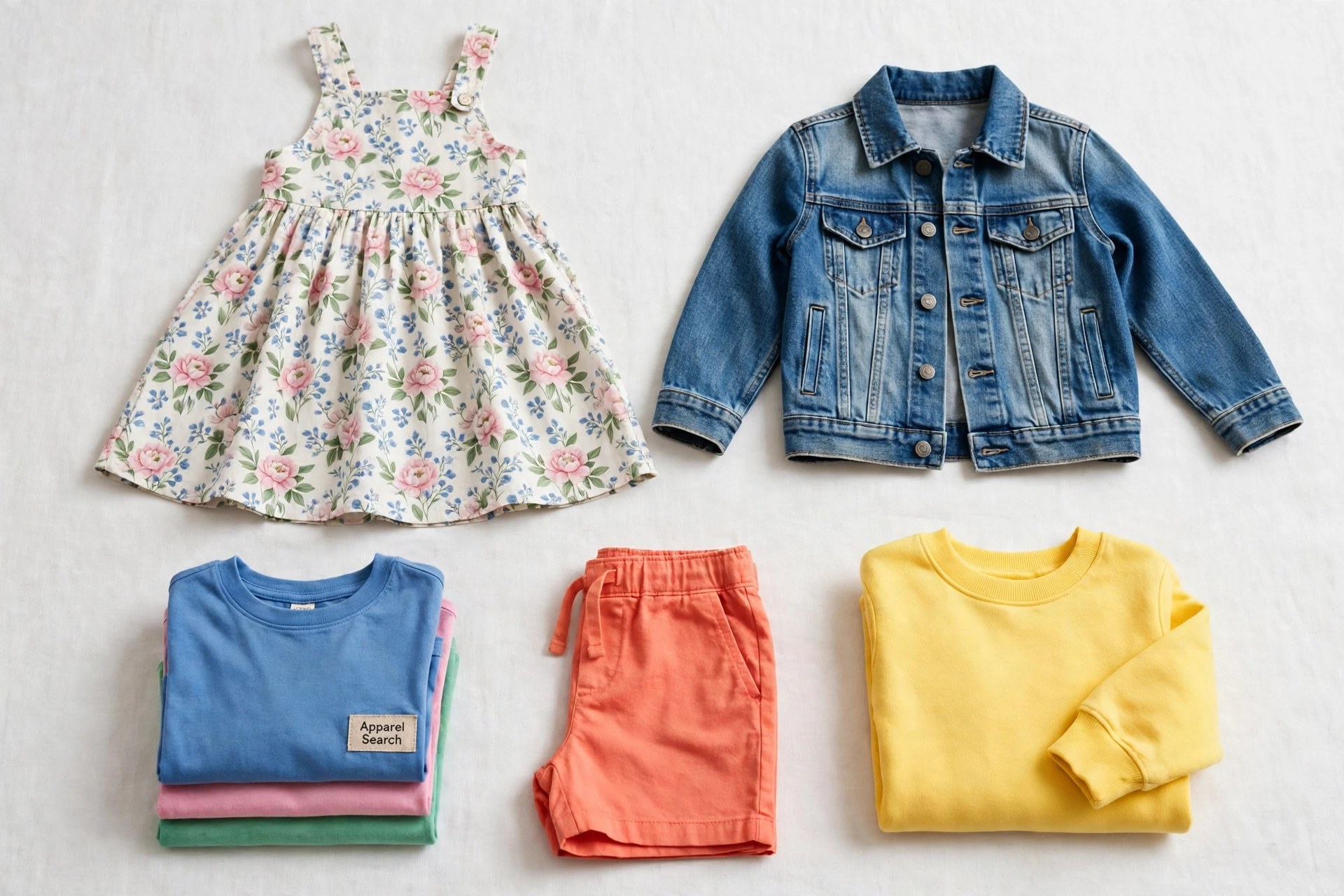
The children's garments traded at wholesale cover the same categories a children's department sells at retail, supplied as ranges rather than as single pieces. Dresses are a staple wholesale category, from everyday jersey dresses to occasion dresses, bought in colour and size assortments for each season. Jackets and coats are bought ahead of the cold season, in padded, denim and fleece styles sized from toddler through teen. Tops — t-shirts, polo shirts, sweatshirts and hoodies — form the volume core of most children's ranges, and the same garments in plain, undecorated form are bought as blanks by printers and embroiderers who decorate them for schools, clubs and events. Bottoms include shorts, trousers, jeans, leggings and skirts, again bought as size ranges. Activewear, swimwear, sleepwear and underwear complete a full children's assortment. In every category the buying unit is the range: a style is ordered across its size run, often in several colours, so the store receives a sellable department rather than a pile of one size. Garment details are checked at the product level — fabric composition, fastenings sized for children's wear, care labels and the construction of seams and hems — because a store's customers will judge the garment, not the channel it arrived through.
Buying Wholesale Children's Clothing as a Store
A store buyer working through a wholesaler directory usually starts from the garment category needed, then compares suppliers on the practical points of a wholesale order. Minimum order quantities decide whether a small boutique can use a supplier at all. Size ranges decide whether the assortment will fit the store's customers, from baby and toddler sizes through boys and girls sizes to teen. Seasonal timing matters more in children's clothing than in most apparel, because a range bought for back-to-school or for the holiday season loses value quickly once the season passes, and children outgrow sizes between seasons, so there is no carrying last year's size run forward. Buyers also check what a wholesaler actually stocks against what must be ordered in, the fabrics and price points of the ranges, and whether the same supplier can also supply the women's and men's assortments a general store needs — the women's apparel wholesalers and men's apparel wholesalers areas linked on this page cover those sides of the trade, and the clothing business-to-business section linked in the navigation places children's wholesale buying inside the wider apparel trade.
Wholesale Children's Clothing Is a Trade Channel
Wholesale prices are trade prices, set for resale, and they come with trade conditions: quantity minimums, size-range buying and business-to-business ordering. That is why this section is written for stores and for the companies that supply them. Readers researching children's clothing itself — the garment types, fabrics and size categories — can continue to the children's clothes guide, and readers following the business can follow wholesale fashion news and the wider wholesale clothing section, which covers the women's, men's and children's wholesaler directories together with the components and trims suppliers that garment businesses also buy from. Learning more about clothing wholesalers as a business — how distributors, jobbers and manufacturers divide the work of getting garments from factory to store — is covered in the linked wholesaler resources in the navigation on this page.
Photos


Common Questions
What is the difference between children's wholesale clothing and children's clothing wholesalers?
Children's wholesale clothing is the goods — children's garments offered in bulk at trade prices. Children's clothing wholesalers are the companies — distributors who buy garments from manufacturers and sell them to stores. A store searching for stock needs the wholesalers and their garment ranges; the two searches lead to different results.
Who can buy children's clothing at wholesale?
Wholesalers in this section sell to retailers: children's clothing stores, fashion boutiques and department stores buying garments in size ranges for resale to consumers. Wholesale is a business-to-business channel with quantity minimums, so individual shoppers looking for single garments are shopping in the retail market instead.
What children's garments do stores source at wholesale?
Stores source the full children's assortment at wholesale: dresses, jackets and coats, t-shirts, polo shirts, sweatshirts and hoodies, shorts, trousers, jeans, leggings and skirts, plus activewear, swimwear, sleepwear and plain blank garments for printing and embroidery — each style bought across its infant, toddler, boys or girls size range, usually in several colours.