Yemen Clothing Industry
Apparel Search world clothing industry directory — apparel, fashion and textile resources for Yemen.
Yemen Apparel Industry Directory: Guide to Apparel Fashion and Textiles in Yemen. This page is the Yemen clothing industry directory, provided by Apparel Search for readers who want to learn about the apparel fashion and textile industry of Yemen. Its single company listing sits at the very start of the clothing supply chain: Lepro limited Yemen, a Sana'a company dealing in raw and processed hides and skins since 1985. Hides and skins are the raw material of leather, and leather goes into shoes, jackets, bags, belts and gloves, so a hides and skins exporter is part of the fashion industry even though it sells no finished garments. The sections below explain the stages named in the listing - wet blue, pickled, dry salted and wet salted - what goat, sheep and calf skins are used for, and how a buyer reads an export listing of this kind.
Yemen Clothing Industry
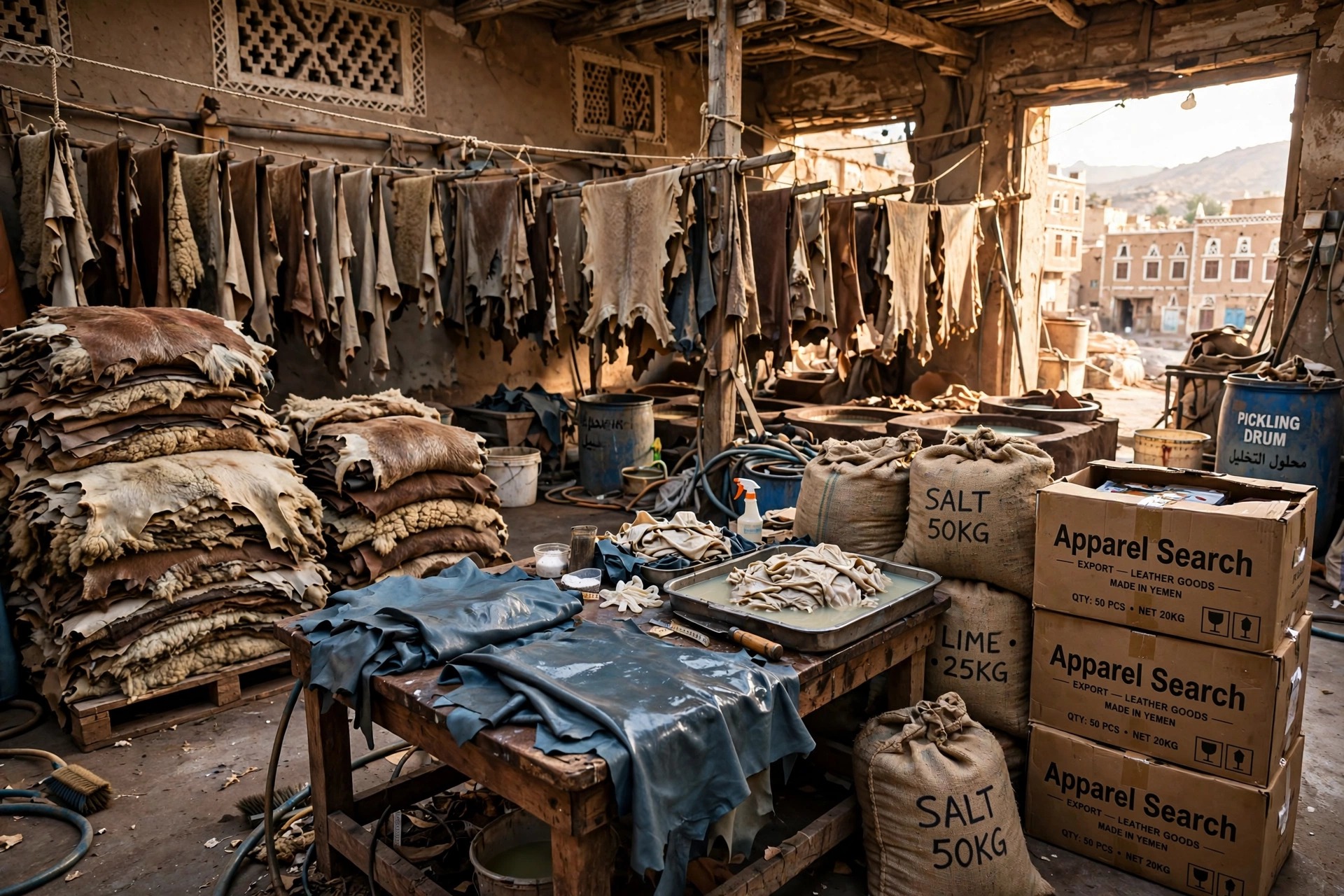
A hide or skin passes through several distinct stages before it becomes finished leather, and the four manufacturer items in the Lepro listing name those stages in order. Salting comes first: a raw hide spoils quickly, so it is preserved with salt - dry salted when the salt is applied and the hide dried, wet salted when it is kept in brine or a salt stack - which lets it be stored and shipped to a tannery. Pickling comes next in the tannery itself, when the hide is treated in an acid and salt bath that prepares it for tanning. Wet blue is the chrome-tanning stage, named for the blue-grey color the process leaves in the material; a wet blue hide is tanned and stable, ready for a buyer to finish to the color, softness and surface the end product needs. A company offering all four forms can sell to buyers at different points in the chain, from a trader who wants preserved raw skins to a tannery that wants chrome-tanned material it can finish directly.
The animals named in the listing matter because each skin has its own market. Goat skins are fine-grained and strong for their weight, and are widely used for shoe uppers, gloves and small leather goods. Sheepskins are softer and more pliable, used for garment leather, linings and gloves. Calfskins are the premium end of the three - smooth, fine and even - and go into higher-quality footwear and leather goods. Lepro states that it produces a big quantity of wet blue and pickled goat and sheepskins and calfskins, which places its trade in the middle stages of the chain: material that has been preserved and partly processed in Yemen, sold on to tanneries and leather manufacturers in its export markets for finishing.
Those export markets are named plainly in the listing: Europe, India, Pakistan, Morocco and Egypt. That geography is a working map of the leather trade - India, Pakistan and Morocco are long-established leather and leather-goods manufacturing centers, Egypt has its own tanning industry, and Europe both finishes leather and makes the shoes and goods it goes into. A hides and skins company in Sana'a exporting to all five is plugged into the established routes by which raw and semi-processed material moves from livestock-producing regions to the factories that finish it. The listing also gives a complete set of contact routes for a trade enquiry: a Zubairy Street address in Sana'a, two phone numbers, a fax number, an e-mail address, and a named contact, Naeem ahmed sheikh, the Manager Import.
A good enquiry to a hides and skins exporter is specific about stage, species and quantity. Name the form you want - wet blue, pickled, dry salted or wet salted - and the skin, goat, sheep or calf, because prices and availability differ for each combination. State the quantity and how selections or grades should be sorted, and ask how material is packed and shipped from Yemen to your country. Confirm current details directly with the company before placing an order, because company details such as phone numbers, e-mail addresses and staff can change since a listing was supplied. The References & Further Reading block below carries the two external links that accompany this directory: the USA Embassy - Yemen and TeleYemen.
Yemen Fashion Industry Companies
Listings are given with the descriptions, addresses and contact details supplied for each business.
Lepro limited Yemen
Lepro limited Yemen: Dealing in raw and processed hides and skins since 1985 and securing good orders. Producing big quantity of wet blue and pickled goat and sheepskins and calfskins Area of export is Europe, India, Pakistan, Morocco, Egypt. Address: Zubairy Street Sana'a 00967 Republic of Yemen Phone: 00967 1 21 2482/4/6 or 00967 71101634 Fax: 00967 1 202864 Email: lepro_yemen@y.net.ye Contact: Naeem ahmed sheikh, Manager Import
Manufacturer Item # 1: wet blue leather Manufacturer Item # 2: pickled leather Manufacturer Item # 3: dry salted leather Manufacturer Item # 4: wet salted leather
References & Further Reading
- USA Embassy - Yemen - the United States Embassy in Yemen.
- TeleYemen - Yemen telecommunications.
Common Questions
What does Lepro limited Yemen deal in?
Lepro limited Yemen deals in raw and processed hides and skins, and has done so since 1985. The company produces a big quantity of wet blue and pickled goat and sheepskins and calfskins, and its manufacturer items are wet blue leather, pickled leather, dry salted leather and wet salted leather. Its area of export is Europe, India, Pakistan, Morocco and Egypt.
How can a buyer contact Lepro limited Yemen in Sana'a?
Lepro limited Yemen can be reached by e-mail at lepro_yemen@y.net.ye, by phone at 00967 1 21 2482/4/6 or 00967 71101634, or by fax at 00967 1 202864. The contact name given is Naeem ahmed sheikh, Manager Import, and the address is Zubairy Street, Sana'a, 00967, Republic of Yemen.
What is the difference between wet blue, pickled and salted hides?
They are successive stages in preparing a hide or skin for the leather trade. Salting - dry salted or wet salted - preserves the raw hide so it can be stored and shipped without spoiling. Pickled skins have been treated in an acid and salt bath, a stage on the way to tanning. Wet blue is the chrome-tanning stage, named for the blue-grey color the process gives the leather, after which the material is ready for further finishing by a tannery or leather goods maker.