Tie-Dye
Fabric Definitions — dye and colour definitions from Apparel Search
Search Apparel Search
At a Glance
Definition: Tie-dye is a resist method of dyeing cloth that is tied with string or rubber bands into a pattern before dyeing, so the bound areas do not absorb the dye and the pattern appears where the ties kept the colour out.
Category: Fabric Definitions
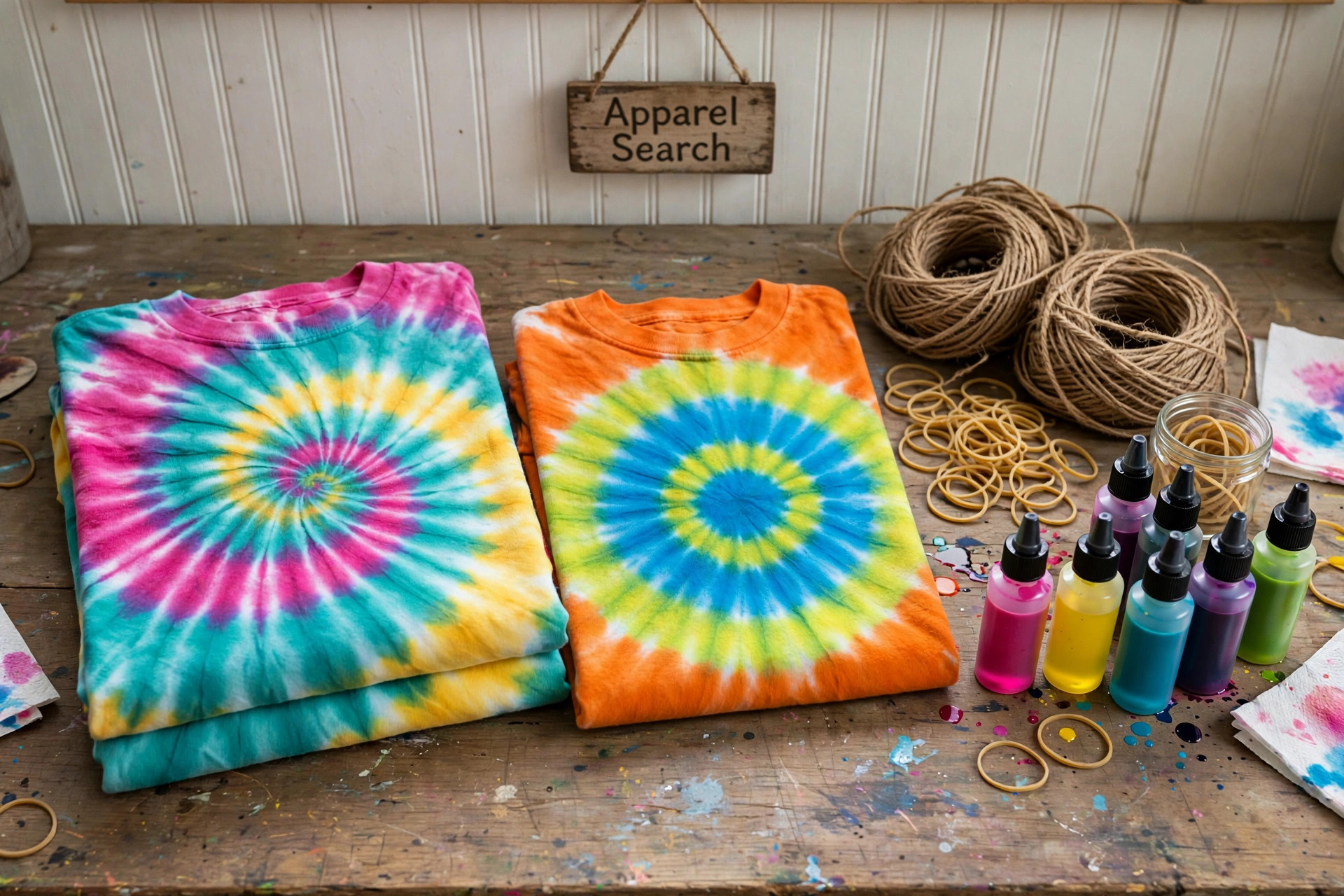
Tie-dye is a method of dyeing clothing originally popularised by members of the hippie subculture. Clothes are tied, either with string or rubber bands, into some sort of pattern, and then dyed, either by submerging them or by squirting dye solution onto them. Where the fabric is tied, some areas do not absorb dye, and those undyed areas form the pattern. This is known as a resist technique — the areas that are tied resist dyeing. The technique is far older than its 1960s fame: shibori, its Japanese form, has been practised since at least the eighth century.
Folding, Binding, Pattern
Every tie-dye pattern is decided before the dye is mixed. The common modern patterns are few and mechanical. A bullseye starts from a central point, bound as though the fabric had been poked with a finger or stick, creating rings of colour, with different parts of the bullseye often dyed different colours. Stripes, horizontal or vertical, are created by pleating the fabric into several small folds, causing the dye to spread laterally. A spiral twists the fabric into a swirl, bundled into a round bun resembling a cinnamon bun or a snail's shell, with different wedges of the bun dyed different colours. The random category holds everything else — combinations, and patterns as chaotic as bundling the item to resemble a plucked chicken.
Underneath the patterns sit the working controls. Folding determines symmetry — an accordion fold gives stripes and mirrored repeats, a spiral twist the radiating swirl — and binding determines how sharp the resist edges will be: tight binding and dense fabric keep dye out completely, while loose ties let colour creep in for soft, clouded boundaries. Applying several dye colours to different sections, keeping the garment damp so dye travels, and leaving it wrapped while the dye fixes complete the method. Cotton takes fibre-reactive dyes directly, which is why the classic tie-dye garment is a cotton T-shirt; the same folds on polyester would need disperse dyes and heat, a different process entirely.
One Technique, Many Traditions
Shibori includes a number of labor-intensive resist techniques, among them stitching elaborate patterns and tightly gathering the stitching before dyeing, forming intricate designs for kimonos; another shibori method wraps the fabric around a core of rope, wood or other material and binds it tightly with string or thread, so the areas against the core or under the binding remain undyed. Tie-dye techniques have also been used for centuries in the Hausa region of West Africa, with renowned indigo dye pits located in and around Kano, Nigeria, the tie-dyed clothing then being richly embroidered in traditional patterns; it has been argued that the Hausa techniques were the inspiration for the hippie fashion. Plangi and tritik are Malay-Indonesian words for methods related to tie-dye, and banda is a term from India. The closest relative of all is ikat, a method of tie-dyeing the warp or weft before the cloth is woven — the resist applied to the yarn rather than the finished cloth.
The 1960s and 1970s American revival took the simplest version of the technique — rubber bands, buckets of dye, psychedelic colour — and made it a symbol of the hippie subculture, which is the association that gave the English term its modern meaning; the 1960s fashion and 1970s fashion definitions set that moment in its decade. Fashion cycles keep returning to tie-dye, from festival wear to luxury hand-dyed pieces, because the resist principle guarantees the one thing fashion usually cannot: no two resist-dyed garments are ever exactly alike.
Common Questions
Why is tie-dye called a resist technique?
Because the tied areas resist dyeing. Fabric bound tightly with string or rubber bands does not absorb the dye where it is tied, so after dyeing and untying, the bound areas remain the original colour and form the pattern.
What is shibori?
Shibori is a form of tie-dye that originated in Japan and has been practised there since at least the eighth century. It includes labor-intensive resist techniques such as stitching elaborate patterns and tightly gathering the stitching before dyeing, forming intricate designs for kimonos, and wrapping fabric around a core of rope or wood and binding it tightly.
Where else has tie-dye been used historically?
Tie-dye techniques have been used for centuries in the Hausa region of West Africa, with renowned indigo dye pits in and around Kano, Nigeria; the tie-dyed clothing there is then richly embroidered in traditional patterns. Plangi and tritik are Malay-Indonesian methods related to tie-dye, and banda is a term from India.