Jewelry Groups - How to Add Jewelry Network Groups
The Jewelry Network's groups, and how one was added
This page describes the groups of the Jewelry Network, the Apparel Search Company's business-to-business social network for the jewelry industry. It carries its own ending at its head: the JewelryNetwork.org website was sold in September 2013, and everything below that notice is, in the page's own words, for historical reference only.
The groups system mirrored the one the company ran for fashion, adapted to a different trade's divisions. Jewelry people share a subject without sharing a job: one member's expertise is designing pieces, another's is making them at the bench. Groups existed so that each could find peers doing comparable work and talk inside that specialty, instead of in one undifferentiated room.
Jewelry Routes
Matched by Trade Within the Trade
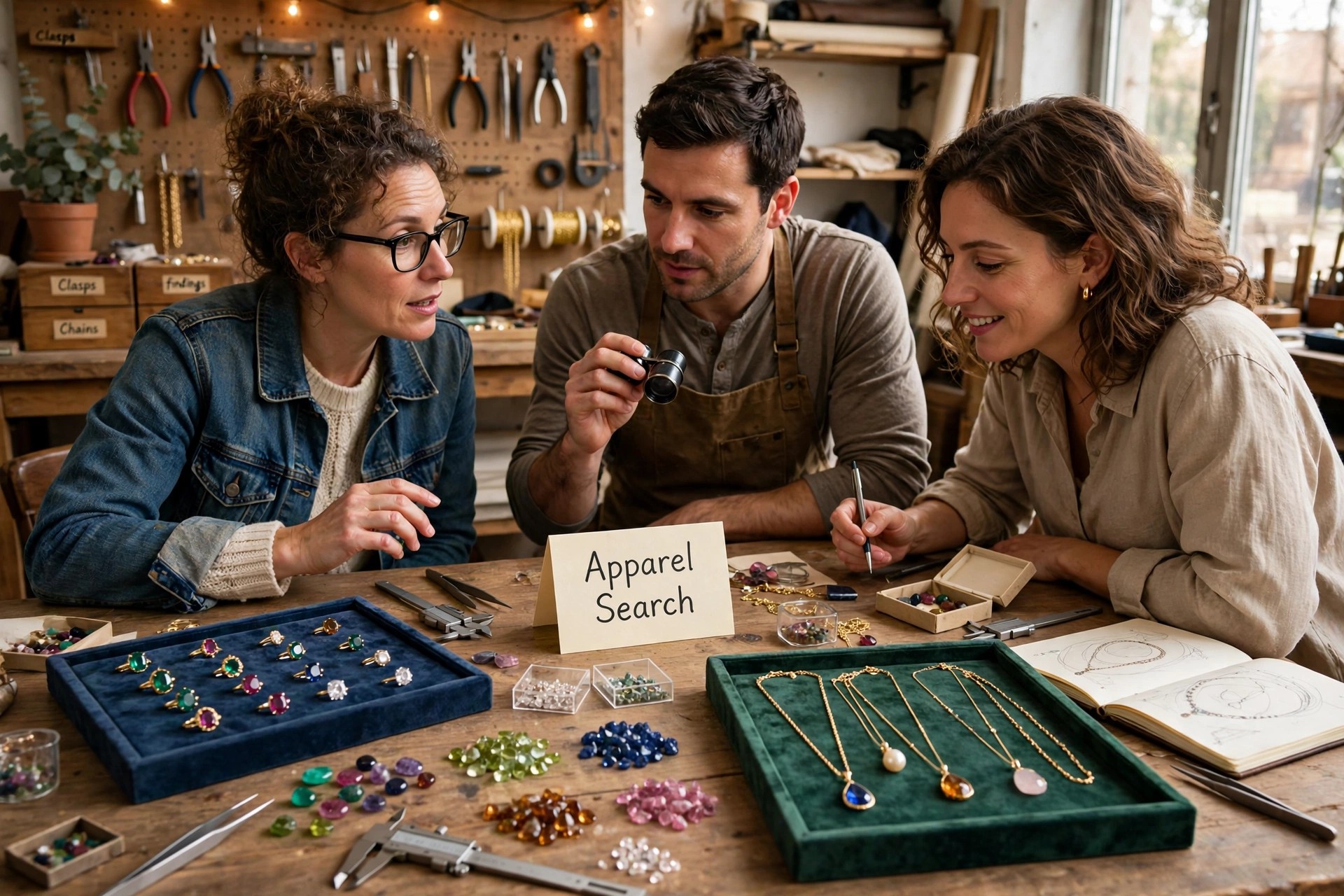
Jewelry is not one craft but several sharing a counter: the designer sketching a collection, the bench jeweler who manufactures it, the wholesaler who moves it, the boutique owner who sells it, the gem specialist who grades its stones. A network for all of them works only if each can find their own kind quickly, and groups were the sorting mechanism - smaller rooms inside the network where a conversation could assume shared knowledge instead of explaining itself from the beginning each time.
A visitor to the groups section would find some number of standing groups ready to enter. The section was meant to grow by demand rather than by plan: if the room a member needed was missing, the correct move was not to crowd into the nearest one but to ask for the right room to be built.
Asking for a Room of Your Own
Starting a group was a request, not a button. The network would create groups for its members, and it asked the requester to supply the raw materials in a particular shape: a proposed name; a short written summary of what the group would be about - a few sentences, though a member stuck for wording could develop one jointly with the network instead; a picture, where the requester had one in mind to serve as the group's symbol; and pointers to outside websites worth connecting from the group's page. The message could go to the network's own accounts on the site, or arrive by email at appsearch@aol.com with the purpose stated plainly, so it would not be mistaken for ordinary correspondence.
Vetting each request before a group existed kept the directory of groups short and meaningful. Every listed group had been wanted by somebody, named deliberately, and given a description a newcomer could judge before joining - a small piece of editorial control that general social platforms, which let groups multiply unchecked, do not bother with.
Enter Few Rooms, and Stay on Subject
Membership in a group was open in one direction and restricted in another. Any network member could enter a group that genuinely matched their work - and was expected to stop there, rather than collecting memberships across rooms they had no real stake in. The reason was discussion quality: a room stays useful when everyone in it cares about its subject, and the network warned that conversation drifting far from a group's topic could cost the speaker their place in the network altogether.
The September 2013 sale of JewelryNetwork.org froze this page mid-system: the groups it describes belonged to a network that no longer took members, and the jewelry discussion the company continued to host moved to the jewelry group on its fashion network. The main Jewelry Network page, linked at the top of this one, records the sale and the move; this page keeps the smaller record of how its groups were made and entered.
Common Questions
How was a new Jewelry Network group added?
A member asked the network to create it, supplying a name, a few sentences describing the group's purpose, optionally a picture for its symbol, and any outside websites the group should point to. The ask went to the network's own accounts or by email, labeled as a group suggestion.
Why did the Jewelry Network have groups?
So specialists could talk to specialists. Designing jewelry and manufacturing jewelry are different expertise inside one industry, and the groups sorted members into rooms where that expertise was shared.
Is the groups page current?
No - it is historical reference. The JewelryNetwork.org website was sold in September 2013, as the notice at the head of the page states.