Niche Perfumery Explained
Designer, niche and indie are the three words every fragrance shopper meets — what they really mean, what they do not mean, and how to explore the niche shelf wisely.
Walk into fragrance discussion online and three labels appear within minutes: designer, niche and indie. They are used as if they were quality grades — designer at the bottom, niche at the top — and a great deal of confusion, and overspending, follows from that mistake. This guide defines the three terms properly, explains how niche perfumery actually works in practice, and shows how to explore it at sample size before bottle size.
It sits alongside our Fragrances & Perfumes Guide, which covers the mainstream shelf, and our guide to how perfume is made, which explains the perfumer's craft that niche houses put at the centre of their story. If you are new to the vocabulary of notes and families, start with Fragrance Notes & Scent Families and come back — niche descriptions assume that vocabulary throughout.
The Short Version
- Designer = fragrance lines from fashion houses, sold widely; niche = fragrance-first houses with limited distribution; indie = small independent makers.
- Niche describes a business model — focus and distribution — not a guaranteed level of quality, and not simply a high price.
- Niche briefs are commonly perfumer-led, with unusual materials and often higher concentrations, in general terms.
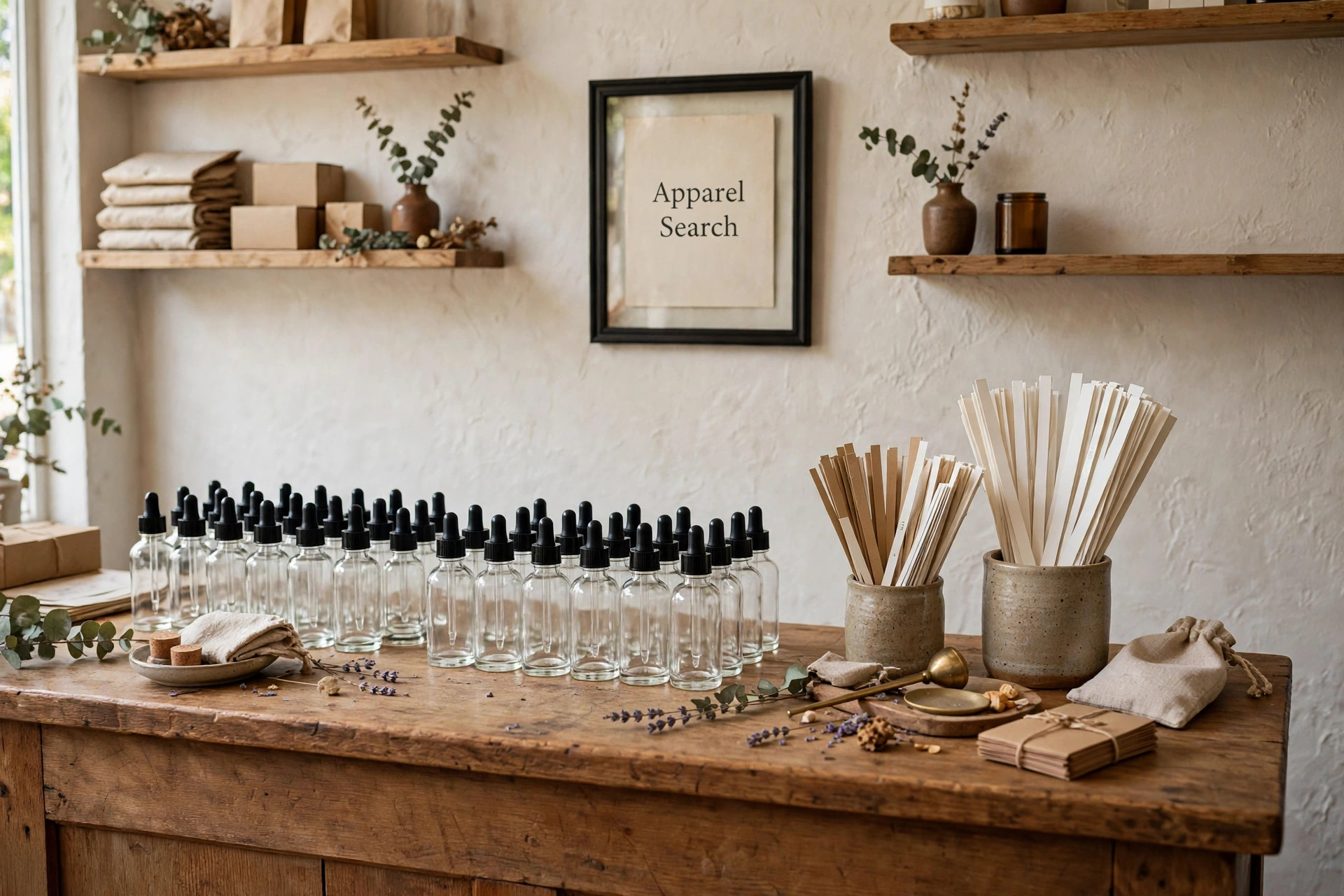
- Sampling is the culture: decants and discovery sets exist so you can live with a scent before committing to a bottle.
- Explore in order: define what you like, sample widely and cheaply, wear each sample more than once, then buy the smallest bottle that makes sense.
Fragrance Guides
The Three Labels, Defined
- Designer perfume
- Fragrance released under a fashion or luxury house whose main business is something else — clothing, accessories, jewellery. The perfumes are developed to sit alongside the brand, are distributed very widely through department stores and chains, and are usually composed by perfumers at the large fragrance companies working to a brand brief. Designer is not a synonym for ordinary: some of the most important perfumes ever made, including several in our iconic perfumes guide, are designer launches.
- Niche perfume
- Fragrance from a house whose main — often only — business is perfume itself. Niche houses typically distribute narrowly: their own boutiques, specialist perfumeries and selected retailers rather than every department store. Production runs are smaller, the catalogue is the brand, and the perfumer's choices, rather than a fashion collection or a celebrity, are the marketing story.
- Indie perfume
- Fragrance from small, independent makers — sometimes a single perfumer blending, bottling and shipping their own work. Indie overlaps with niche (an indie house is almost always niche in distribution) but stresses independence and scale rather than positioning. Indie ranges often include perfume oils and small-batch releases alongside sprays.
Notice what none of the definitions mentions: price, quality or ingredients. Those vary inside every category. A designer house can release a daring, expensive, beautifully made perfume; a niche house can release a dull one. The labels tell you how a perfume is made, sold and distributed — useful information, but not a verdict.
How Niche Differs in Practice
In general terms, four practical differences follow from the niche model. First, the brief is different. A designer brief usually starts from a market position — a competitor to answer, a face to front the campaign, a price point to hit. A niche brief more often starts from the perfumer: a material to feature, an accord to explore, a place or memory to evoke. The perfumer is commonly named and credited, which is still unusual on the designer shelf.
Second, the materials palette can be more unusual. Freed from having to please the widest possible testing panel, niche perfumers build scents around challenging or distinctive notes — smoke, leather, inks and metals, green and bitter notes, realistic single-flower portraits — that a mass brief would soften away. Third, concentrations are often higher: niche lines lean toward eau de parfum and parfum strengths rather than the lighter eau de toilette formats that dominate the designer counter, although this is a tendency, not a rule.
Fourth, the catalogue behaves differently. Niche houses keep slow sellers alive longer because the catalogue is the brand, discontinue less aggressively, and release in smaller batches — which also means a beloved niche scent can be harder to replace, and reformulations are discussed by devotees in forensic detail.
A Short History, With One Firm Landmark
Fragrance-first houses are not new — Guerlain was one for most of its history — but niche as a self-conscious category grew from the 1970s onward, as houses such as L'Artisan Parfumeur and Diptyque built reputations on perfumer-led scents sold outside the department-store model, and it expanded rapidly in the 2000s as specialist retailers and then the internet made narrow distribution viable worldwide.
One landmark is firmly documented. Editions de Parfums Frédéric Malle was founded in Paris in 2000 on a publishing model: the house acts as editor, the perfumer as author, and the perfumer's name appears on the bottle — a first in an industry that had traditionally kept perfumers anonymous behind the brand. That single decision, crediting the creator on the label, did more than any other to define what shoppers now expect niche to mean: the perfumer is the author, and the house is proud to say so.
Why Niche Perfume Costs More
Niche prices have several ordinary drivers, none of them mysterious. Small production runs raise the cost of everything from glass to boxes. Expensive natural materials, used at meaningful doses, cost what they cost — there is no volume discount at niche scale. Narrow distribution means no vast advertising machine, but also no vast sales volume across which to spread fixed costs. And some of the price is positioning: a house that sells rarity will price like it.
What the price does not reliably buy is superiority. It buys a particular set of trade-offs: more distinctive compositions, a higher chance of smelling something you have never smelled before, and a higher chance of smelling something you actively dislike. Niche perfumery's real product is difference. Whether a given difference is worth a given price is a judgement only your nose, on your skin, over a full day, can make — which is exactly why the sampling culture exists.
Niche Is Not a Synonym for Expensive
The most useful correction in this whole guide is the simplest: niche and expensive are not synonyms, in either direction. Some niche houses price close to the designer shelf, and discovery sizes and travel sprays bring many niche scents within ordinary reach. Conversely, the designer world now contains private and exclusive lines at thoroughly niche prices, sold through narrow distribution with perfumer-led stories — designer by definition, niche in everything but the label.
Judge a perfume, then, the way you would judge anything else in this section of Apparel Search: by what it is and how it wears, not by which shelf word is attached to it. The categories are a map of the industry. They are not a ranking of the scents.
The Sampling Culture: Decants and Discovery Sets
Niche perfumery runs on samples, and understanding the formats saves real money:
- Discovery sets
- The house's own boxed set of small vials — commonly 1.5 to 2 ml each — covering some or all of its range. Many houses credit the price of the set against a later full-bottle purchase, which makes the set the rational first buy from any house you are curious about.
- Decants
- Small quantities drawn from a full bottle into a travel spray, sold by specialist retailers and decanting services. Decants let you try houses that offer no discovery set, and to wear a scent for a week rather than an afternoon before deciding.
- Paper first, skin second
- Test on a paper strip (a mouillette) to screen a scent out, but never judge one in or out on paper alone. The scents that matter must be worn on skin, through their full development, at least twice — first impressions of a top note are the least reliable data in perfumery.
How to Explore Niche Without Overspending
A workable method, in order. First, learn your own taste on the mainstream shelf, where testing is free: identify the families you love using our notes and families guide, and note the specific perfumes that worked on you. Second, choose niche houses whose described style matches those families, rather than whichever house is loudest online. Third, buy discovery sets and decants only, and wear each sample fully at least twice, on different days, before forming a verdict.
Fourth, keep notes — a line per scent, what it smelled like at the open, at two hours, and at the end of the day, and whether you wanted to smell it again. Fifth, when a sample earns a bottle, buy the smallest bottle that makes sense; a 30 ml bottle of a scent you adore is a better purchase than 100 ml of one you merely like. And set a simple rule that prevents most regret: no full bottle of anything you have not worn from a sample on at least three separate days. Niche perfume rewards patience precisely because its scents are distinctive — the same quality that makes a great discovery makes an expensive mistake.
Reading Niche Marketing Honestly
A few phrases recur in niche marketing often enough to deserve translation. “Handmade” and “small batch” describe production scale, not a method that guarantees quality; a small batch can be brilliant or careless, exactly like a large one. Ingredient percentages quoted in advertising — a rose scent boasting an unusually high dose of one material — tell you about one line of a formula and nothing about the balance of the whole, which is where perfumes succeed or fail. “Natural” is a sourcing claim, not a safety or quality verdict: niche perfumers, like all perfumers, blend naturals and synthetics, and the synthetics are often what make a niche composition possible at all. And limited editions deserve a calm eye — some are genuine experiments a house could only justify in a small run, and some are ordinary releases wearing scarcity as a costume. None of this is an argument against niche perfumery, which produces a disproportionate share of the most interesting scents being made today. It is an argument for trusting the sample on your skin over every word on the box, including the words in this guide.
Where Niche Sits in Your Wardrobe
Most fragrance wardrobes end up mixed, and that is healthy. Designer scents tend to win on polish, versatility and price per wear; niche scents win on character, on the specific and the strange, and on the pleasure of wearing something few people around you will recognise. The landmarks in our iconic perfumes guide came from both worlds. Build the wardrobe that serves your life, sample before you commit, and let the labels inform you without ranking for you.
Common Questions
What does niche perfume mean?
A niche perfume comes from a house whose main business is fragrance itself, sold through limited distribution — its own boutiques and specialist perfumeries rather than every department store. The term describes the house's focus and distribution model, not a guaranteed level of quality or a particular price.
What is the difference between niche and designer perfume?
Designer perfumes are fragrance lines from fashion houses whose main business is clothing or accessories; they are distributed widely and built around the brand. Niche perfumes come from fragrance-first houses, are distributed narrowly, and are usually marketed around the perfumer and the composition rather than a fashion image or celebrity.
Is niche perfume better than designer perfume?
Not automatically. Niche houses take more creative risks and use more unusual materials, which produces both more distinctive successes and more scents you may dislike. Designer houses include many of history's greatest perfumes. Judge each scent on your own skin; the label tells you how it was made and sold, not how good it is.
Why is niche perfume so expensive?
Small production runs, costly materials without volume discounts, and narrow distribution all raise the price per bottle, and some houses also price for rarity. Sampling first — discovery sets and decants — is the standard way to avoid paying bottle prices for scents that turn out not to suit you.
How should a beginner start with niche perfume?
Learn the families you enjoy on the mainstream shelf first, then pick niche houses working in those families. Buy discovery sets or decants, wear each sample fully on skin at least twice, keep brief notes, and only buy a bottle — the smallest sensible size — after a scent has earned it over several wears.