Woody Perfumes
Sandalwood, cedar, vetiver and patchouli — the backbone family of perfumery, its four great materials, its sub-styles, and how to find the wood that suits you.
Every perfume wardrobe has a backbone, and in most of them it is made of wood. Woody perfumes — scents built on sandalwood, cedar, vetiver, patchouli and their modern synthetic relatives — are the structure beneath an enormous share of the fragrances ever made, for every gender and every season. This guide goes deep on the family itself: what each great woody material actually smells like, why the sandalwood in a modern bottle is rarely the sandalwood of a century ago, how the family's sub-styles differ, and how to choose and wear a woody scent well. It expands on the overview in Fragrance Notes & Scent Families, where the woody family sits alongside the florals, ambers, chypres and fresh families, and it forms part of our Fragrances & Perfumes Guide.
If the notes guide is the map, this page is the ground tour. Woods reward close attention because they are the slowest, longest-lasting and most skin-like materials in perfumery — the part of a perfume still present at midnight, and the part most likely to become someone's signature.
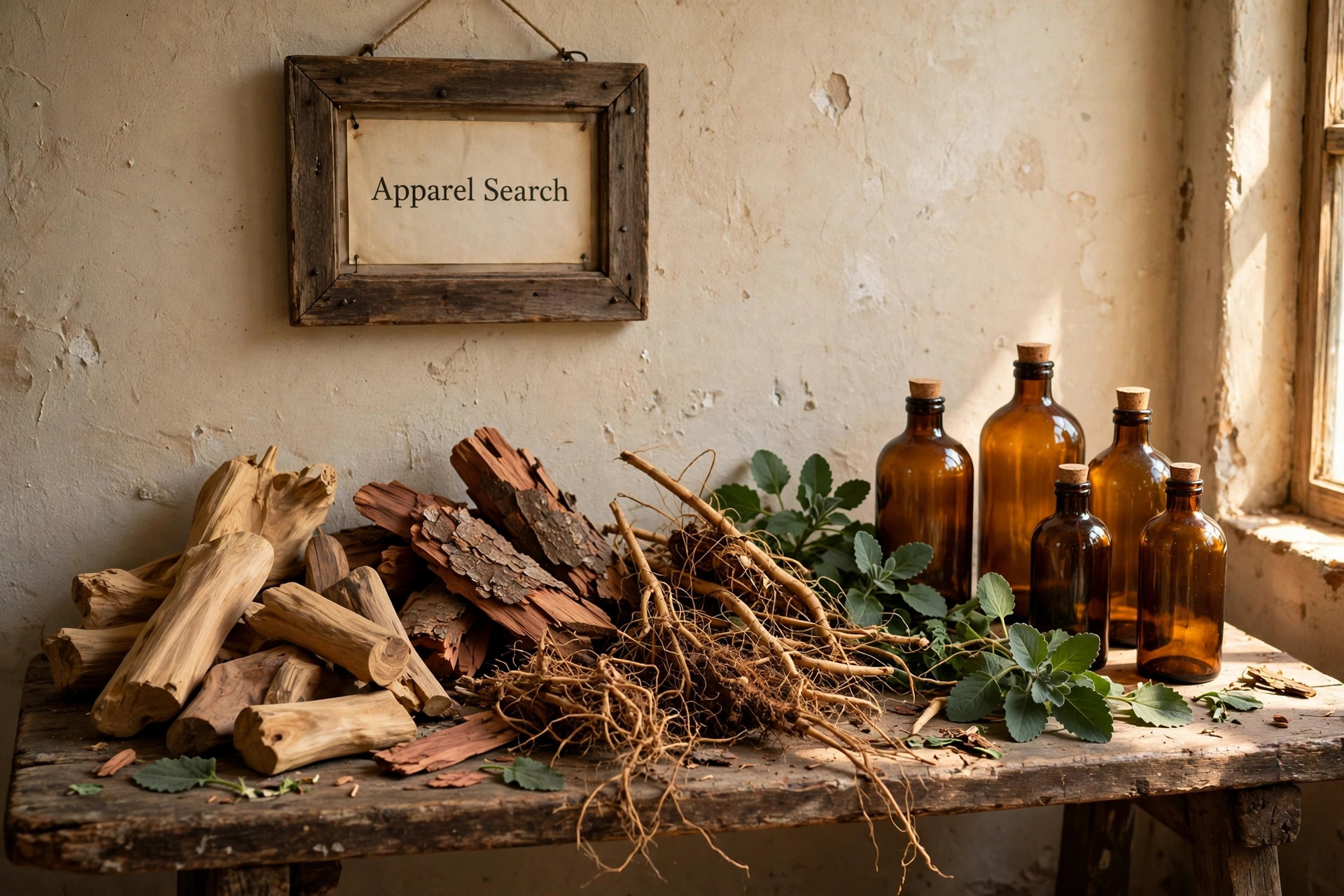
The Short Version
- The family: perfumes whose backbone is wood or wood-like base notes — warm, dry, creamy, earthy or smoky, and built to last.
- Sandalwood: creamy and milky; historic Indian Mysore oil is now scarce, so modern perfumes use Australian sandalwood, plantation oil and synthetic sandalwood molecules.
- Cedarwood: dry, clean and pencil-sharp — the family's crisp, structural wood.
- Vetiver: not a wood but a grass root; earthy, green and elegant, grouped with the woods by behaviour.
- Patchouli: a leaf, not a wood; dark, earthy-sweet, and a cornerstone of the classic chypre structure.
Fragrance Guides
What Makes a Perfume Woody
A woody perfume is one in which woody materials carry the structure of the scent. That definition is about role, not just ingredients. Woody materials are heavy molecules that evaporate slowly, so they live mostly in the base of a fragrance — the dry-down that remains after the bright opening and the heart have faded — and they give a composition its warmth, its dryness, its staying power and much of its sense of polish. A perfume can contain a little sandalwood and still be a floral; it becomes woody when the woods move to the centre and everything else is arranged around them.
The family is broader than the timber yard. Alongside true woods — sandalwood and cedarwood distilled from heartwood — perfumery counts vetiver, distilled from grass roots, and patchouli, distilled from leaves, as full members, because both smell earthy and dry and behave in a blend exactly as woods do. Resins and smoky materials often extend the family at its dark edge, and at its extreme stands oud, the resinous agarwood examined in our oud perfume guide — technically a pathological resin rather than a plain wood, and the most intense material the family contains. Modern perfumery adds a further wing: synthetic woody molecules, from radiant sandalwood replacers to the smooth, amber-woody materials that give contemporary fragrances their polished, long-wearing trails. A twenty-first-century woody perfume is usually a conversation between the natural and the synthetic wings of that palette.
The Four Pillars of the Woody Family
Four materials do most of the family's work. Learn to recognise them individually and you can read almost any woody perfume's note list like a recipe.
Sandalwood — the creamy wood
Sandalwood is the soft heart of the family: the oil of the Santalum trees, and above all of Santalum album, the East Indian species whose heartwood yields an oil that smells like nothing else in nature — creamy, milky, softly sweet and warm, with a smooth, almost skin-like quality carried mainly by its santalol content. In a blend, sandalwood does not shout; it rounds, cushions and sensuously warms everything around it, which is why it has been a perfumer's favourite base for well over a century and a sacred material in India for far longer, burned, carved and distilled for temples and ritual for thousands of years.
The famous name is Mysore sandalwood, after the region in Karnataka, in southern India, whose oil set the world standard. Its story carries a warning. Demand, a slow-growing tree and decades of over-harvesting depleted the wild resource so severely that Santalum album is now listed as vulnerable, Indian harvest and export are tightly controlled, and genuine Mysore oil has become scarce and costly. Modern perfumery has answered in three ways: Australian sandalwood (Santalum spicatum), a related species, sustainably harvested in Western Australia, whose oil is real sandalwood but drier, greener and less creamy, with a lower santalol content; plantation-grown Santalum album, now cultivated in northern Australia and elsewhere, which comes closer to the classic profile; and synthetic sandalwood molecules — materials such as Javanol, Ebanol, Polysantol and Sandalore, developed from the 1970s onward, each capturing one facet of the natural oil's creamy warmth and used, often blended with a little natural oil, to build most of the sandalwood notes in contemporary fragrance. None of this makes a modern sandalwood perfume a lesser thing; it makes it a reconstruction, and the best of them are seamless.
Cedarwood — the dry wood
If sandalwood is the family's cream, cedarwood is its pencil shavings — literally the comparison perfumers reach for, because cedar oil smells dry, clean, crisp and faintly resinous, like a freshly sharpened pencil or the inside of a cedar chest. The main perfumery sources are Virginian cedar (in fact a juniper, Juniperus virginiana) and Atlas cedar from Morocco. Cedar's gift to a composition is structure: it gives a woody blend its upright, tailored lines, cuts through sweetness, and adds a clean dryness that reads as instantly composed and professional. It is rarely the star and frequently the reason a woody perfume smells “finished” rather than merely soft. Where sandalwood relaxes a fragrance, cedar organises it.
Vetiver — the earthy green wood that is not a wood
Vetiver is the root of a tropical grass, Chrysopogon zizanioides, grown notably in Haiti, Indonesia and India. The grass above ground is unremarkable; the treasure is the dense root system, harvested at around eighteen to twenty-four months and steam-distilled into one of perfumery's most complex oils. Vetiver smells earthy and rooty, yes — but also green, dry, slightly smoky and, in its first moments, surprisingly fresh, with a grapefruit-like brightness that lifts it far above plain dirt. Haitian vetiver is prized for a cleaner, more elegant profile; Indonesian material tends smokier and darker.
In composition, vetiver is the family's diplomat: it pairs with citrus to make some of the freshest, most enduring warm-weather scents ever made, and with woods and leather to make dry, distinguished evening fragrances. It is also a natural fixative, holding lighter notes in place. A vetiver perfume is the woody style most likely to be described as elegant rather than cosy — the crisp white shirt of the family.
Patchouli — the dark, earthy-sweet leaf
Patchouli comes from the leaves of Pogostemon cablin, a bushy member of the mint family grown chiefly in Indonesia. The leaves are dried — often lightly fermented — before steam distillation, and the resulting oil is dark, thick and powerful: earthy, damp and woody, with camphoraceous coolness in the opening and a distinctive dark sweetness underneath, often compared to cocoa or a cellar floor in the best possible way. It is one of the few essential oils said to improve with age, mellowing in the bottle. Patchouli reached European noses in the nineteenth century as the scent clinging to imported Indian shawls, which had been packed with the moth-repelling leaves for the voyage; it later became the signature scent of the 1960s and 70s counterculture, worn as a raw oil — a history that still colours first impressions of the note.
Used with a modern hand, patchouli is indispensable rather than overpowering: in small doses it adds body and earthy depth invisibly, and in larger ones it anchors two great structures — gourmands, where its darkness sets off sweetness, and the chypre, the classic family built on a bergamot opening over a mossy, woody base, where patchouli has long been a cornerstone and has taken on still more of the structural load as traditional oakmoss has been restricted. The families overview tells that chypre story in full; here it is enough to know that without patchouli, the woody family would lose its deepest shadow.
The Sub-Styles: Creamy, Dry, Mossy and Smoky
Between and around the four pillars, woody perfumes sort themselves into recognisable styles. Knowing the styles is the fastest way to shop the family:
- Creamy woods
- Sandalwood-led, often with cashmere-soft synthetic woods, vanilla, iris or gentle musk. Smooth, warm, close-wearing and sensual; the most universally liked corner of the family and a natural home for signature scents.
- Dry woods
- Cedar- and vetiver-led, frequently with citrus, aromatic herbs or a mineral edge. Crisp, clean, tailored and highly wearable in warm weather and at work; the family at its most architectural.
- Mossy and earthy woods
- Patchouli- and vetiver-led with mossy, green and sometimes leathery facets — the chypre inheritance. Damp, sophisticated and a little vintage in spirit; depth and character over sweetness.
- Smoky and resinous woods
- The dark frontier: oud, guaiac wood, birch, cade and incense resins such as frankincense. Bonfire, leather and temple smoke; evening scents with real presence, best worn with a light hand.
Woody Scents for Everyone
Woody perfumes carry an outdated reputation as men's territory, largely because cedar and vetiver were marketed so heavily in twentieth-century men's lines. The materials themselves never got the memo. Sandalwood has anchored celebrated women's perfumes for a century; patchouli runs from classic women's chypres to modern gourmand blockbusters; and the current centre of the family — creamy sandalwood styles, clean vetiver styles, shared oud compositions — is explicitly unisex, with most new woody launches presented as scents for anyone. Our men's fragrances and cologne guide covers the tailored, dry end of the family in its traditional home, but the honest advice is to shop by sub-style and by skin, not by the gender on the box: creamy woods read soft, dry woods read crisp, earthy woods read grounded, and smoky woods read bold, on every wearer alike.
Choosing and Wearing Woody Perfumes
Three habits will serve you well. First, judge late: woods are base notes, so a woody perfume's true character is its two-hour dry-down, not its first five minutes — spray a sample, go about your day, and decide in the afternoon. Second, match the style to the season and setting: dry cedar and vetiver styles are the family's summer and office scents, creamy sandalwoods are year-round and close-company friendly, and mossy, earthy and smoky styles come alive in cold weather and evening air, when their depth reads as richness rather than weight. Third, dose by density: a fresh vetiver can take three or four sprays happily, while a smoky or patchouli-heavy composition may need only one — woods are the longest-lasting materials in perfumery, and a woody perfume applied at breakfast is frequently still present, pleasantly, at dinner.
Finally, store woody perfumes as you would any fragrance — cool, dark and upright — and expect them to keep well: a family built on heavy, stable base materials ages more gracefully than most, and a good woody scent, like the trees behind it, is in no hurry at all.
Common Questions
What makes a perfume a woody perfume?
A perfume is woody when wood-derived or wood-like notes form its backbone — usually in the base, where heavy, slow-evaporating materials live. The materials may be literal woods and roots, such as sandalwood, cedarwood and vetiver, leaves such as patchouli that behave like woods in a blend, or modern synthetic woody molecules that create the same dry, smooth or creamy effect without scarce naturals. Woody perfumes can smell creamy, dry, earthy, smoky or green depending on which materials lead, but they share a common role: structure, warmth and long wear. Judge a woody perfume in its dry-down, an hour or more after spraying, because that is where the woods actually perform.
What does sandalwood smell like, and is it real in modern perfumes?
Sandalwood smells soft, creamy and milky-warm — the gentlest of the major woods, more like warm skin and sweet cream than like a timber yard. The historic benchmark is Indian Mysore sandalwood, from Santalum album, but decades of over-harvesting depleted the wild resource, the species is now listed as vulnerable, and genuine Mysore oil is scarce and expensive. Most sandalwood in modern perfumery therefore comes from Australian sandalwood — a related species with a drier, greener, less creamy profile — from plantation-grown Santalum album, or from synthetic sandalwood molecules such as Javanol, Ebanol and Polysantol, often blended together. A modern sandalwood note is usually a skilled reconstruction rather than the historic oil alone.
Is vetiver actually a wood?
Botanically, no — and perfumery groups it with the woods anyway. Vetiver is a tropical grass, Chrysopogon zizanioides, and its oil is distilled from the plant's roots, harvested when the grass is roughly eighteen to twenty-four months old. Those roots smell earthy, green, dry and sometimes faintly smoky or grapefruit-like, and the oil behaves exactly like a woody base note: heavy, tenacious and structural. Patchouli is similar — a leaf, not a wood — but its dark, earthy character earns it a permanent seat in the woody family. Perfumery classifies by smell and behaviour, not by botany.
Are woody perfumes only for men?
No — that association is a habit of marketing history, not a rule of scent. Cedar and vetiver were sold heavily in men's fragrances for much of the twentieth century, which attached a masculine label to the whole family, but sandalwood has anchored famous women's perfumes for a hundred years, patchouli runs through beloved women's chypres and gourmands, and most modern woody releases are positioned as unisex or shared. The useful question is not who a woody perfume is for, but which wood leads it: creamy sandalwood styles read soft and sensual on anyone, dry cedar and vetiver styles read crisp and tailored, and dark patchouli and oud styles read bold and evening-ready — on any wearer.
How do I choose a woody perfume that suits me?
Start from the sub-style, not the family name. If you like soft, comforting scents, look for creamy woods led by sandalwood; if you like clean, crisp, office-friendly scents, look for dry woods led by cedar and vetiver; if you like depth and earth, look for patchouli and mossy styles; if you like drama, look toward smoky woods and oud. Then test on skin and wait — woody perfumes reveal themselves in the dry-down, so judge a sample at the two-hour mark rather than at the counter, and wear a finalist for a full day before buying. Season helps too: dry and green woods shine in warm weather, while creamy, earthy and smoky woods come into their own in the cold.