Men's Medical Uniforms Guide
Medical uniforms are the institutional side of healthcare dress - the standardized clothing systems by which a facility dresses its staff: color codes by department, embroidered identification, issued or allowance-bought sets, and the rules that bind them. The page is anchored to the scrubs within it and the uniform accessories around it, and that structure is the subject: a uniform is not a garment but a program, and this guide treats the decisions a program has to make - and the ones a man makes inside it.
Shop Men's Medical Uniforms Now
Shop Men's Medical Uniforms on Amazon Shop Men's Medical Uniforms on eBayThe Amazon and eBay links on this page are affiliate links. If you make a purchase through them, Apparel Search may earn a commission.
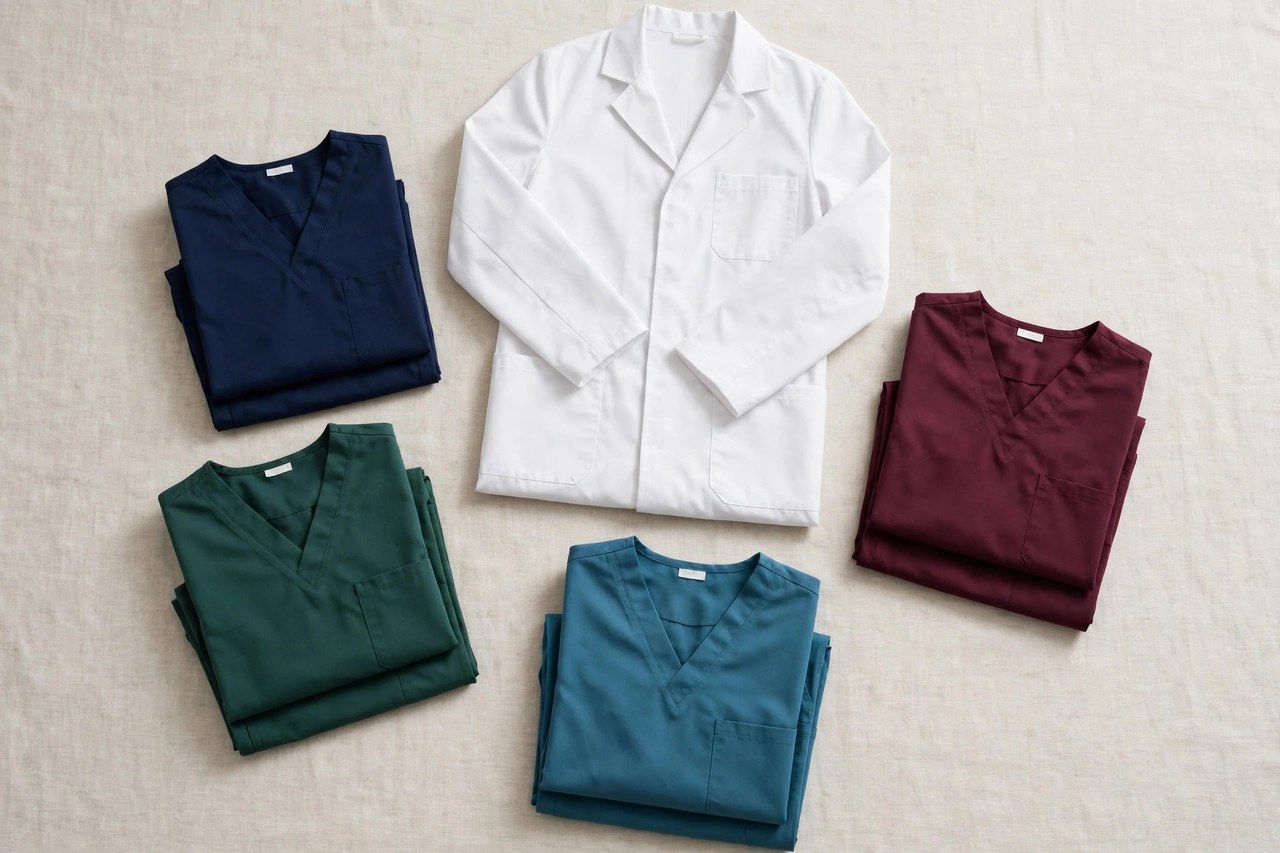
Medical uniforms are the institutional side of healthcare dress - the standardized clothing systems by which a facility dresses its staff: color codes by department, embroidered identification, issued or allowance-bought sets, and the rules that bind them. The page is anchored to the scrubs within it and the uniform accessories around it, and that structure is the subject: a uniform is not a garment but a program, and this guide treats the decisions a program has to make - and the ones a man makes inside it. This guide is built around the questions buyers actually ask: which style, which size, which fabric, and what will it look like after a year of real use - answered in order, with the trade-offs stated plainly.
A Program, Not a Garment
A uniform program decides five things. The palette: which colors identify which roles, held to exact shades so a replacement set matches a three-year-old one. The garments: scrub sets as the base, warm-up jackets, lab coats and consultation jackets for the roles that wear them, patient gowns stocked as part of the same system. The identification: embroidery versus badges, name and credential conventions, where they sit. The supply model: facility-issued and laundered, or allowance and self-laundered, each with its own replacement cadence. And the size run: a range honest enough - men's talls, extended sizes - that every body on the staff is inside the program, because a uniform system that fits most people is a system that fails visibly every day.
Workwear is judged at the stress points, because the job finds them first: bar-tacked pocket corners and belt loops, double or triple-stitched main seams, reinforced knees, elbows and seats, and hardware - zippers, snaps, rivets - rated for daily cycling rather than occasional wear. Fabric weight is a specification, not a brag: heavier cloth resists abrasion and holds shape, lighter cloth breathes and dries, and the right answer is the one matched to the actual shift, climate and laundry the garment will live in.
The Wearer's Choices Inside the System
Inside the program, the wearer's fit decisions remain his own: the chart size that lets the set work through a shift's full range of motion, the tall inseam where he needs it, the underscrub and socks that manage his temperature and his legs. Fit complaints in uniform programs are usually sizing-chart problems, not garment problems - measure chest, waist and inseam, and exchange into the size the numbers say, even when it is not the letter you usually wear. Where the program allows personal pieces - shoes above all - spend there first: the uniform is issued, but the footwear is the shift, and our medical shoes and footwear guides treat that choice in full.
Fit workwear in the postures of the job: reach overhead, bend, kneel, climb, sit through a charting session or a cab ride. Seams should never be the thing that stops a movement, waistbands should stay where they were put without a belt doing structural work, and lengths should clear the floor and the machinery. Work garments are sized generously by design - buy your measured size and let the cut do its job, rather than sizing down into a uniform that fights every task.
Replacement Discipline
Programs live on replacement discipline. Sets are retired when color drifts off the code, when fabric thins at the stress points, when embroidery frays - because the uniform's information and hygiene both depend on every set looking and performing as one. Self-laundering wearers keep the rotation at three sets minimum and wash as the hygiene rules require; issued programs track the same logic centrally. For the individual, the care is the family's usual: hot washes, stains treated early, sets washed together so they age together. A uniform that is maintained as a set stays a uniform; maintained as odds and ends, it becomes scrubs with a history.
Work garments earn a laundry system, not a laundry day: wash by the employer's or the label's hygiene rules, treat stains before heat can set them, and inspect as you fold - a pocket corner letting go, a hem fraying, a button hanging by a thread are all two-minute repairs now and garment failures next month. Keep the rotation honest: a spare set washed and ready is what makes daily laundering possible without wearing any single set to death.
Common Questions
What counts as a medical uniform?
The whole standardized system a facility dresses staff in: scrub sets in department colors, warm-up jackets, lab coats or consultation jackets for the roles that wear them, and the identification - embroidery and badges - that completes them. Patient gowns are stocked as part of the same system. A single scrub set is a garment; the uniform is the program of palette, identification and replacement that the set belongs to.
Who pays for medical uniforms?
It varies by facility and role, in two common models: the uniform is issued and often laundered by the employer, or the wearer buys to the facility's specification with or without an allowance. Either way the specification - color, style, identification - is the employer's, and the fit and footwear choices within it are the wearer's. Ask which model your facility runs before buying; allowance programs reward quality purchases that outlast the replacement cycle.
How are medical uniforms different from scrubs?
Scrubs are the base garment - the top-and-pant set. The uniform is everything the institution builds around them: the color code that assigns meaning, the warm-up jackets and coats layered by role, the embroidered names and badges, and the issue-and-replacement system that keeps it all consistent. Our medical scrubs guide treats the garment itself in detail; this page treats the system.
More in Men's Clothes Guide M
Uniforms and Their Components
The category is built from its components: the scrubs at its base and the medical uniform accessories around it, both linked from the page and both given their own guides in this section. The medical uniform stores, wholesale medical clothing and the scrubs and hospital gown definitions are linked below.
Looking for Men's Clothing Stores?
This guide explains men's medical uniforms. To browse where to buy, visit our men's clothing store directory, where you can find retailers that carry them.