Men's Comfortable Underwear Guide
Comfortable men's underwear is not a style but a standard: underwear engineered so that nothing about it is noticed during the day - no binding waistband, no riding leg, no seam in the wrong place, no fabric that turns clammy by afternoon. This guide treats comfort as a set of measurable specifications: the fit, fabric and construction choices that produce it, and how to diagnose the discomfort in pairs you already own.
Shop Men's Comfortable Underwear Now
Shop Men's Comfortable Underwear on Amazon Shop Men's Comfortable Underwear on eBayThe Amazon and eBay links on this page are affiliate links. If you make a purchase through them, Apparel Search may earn a commission.
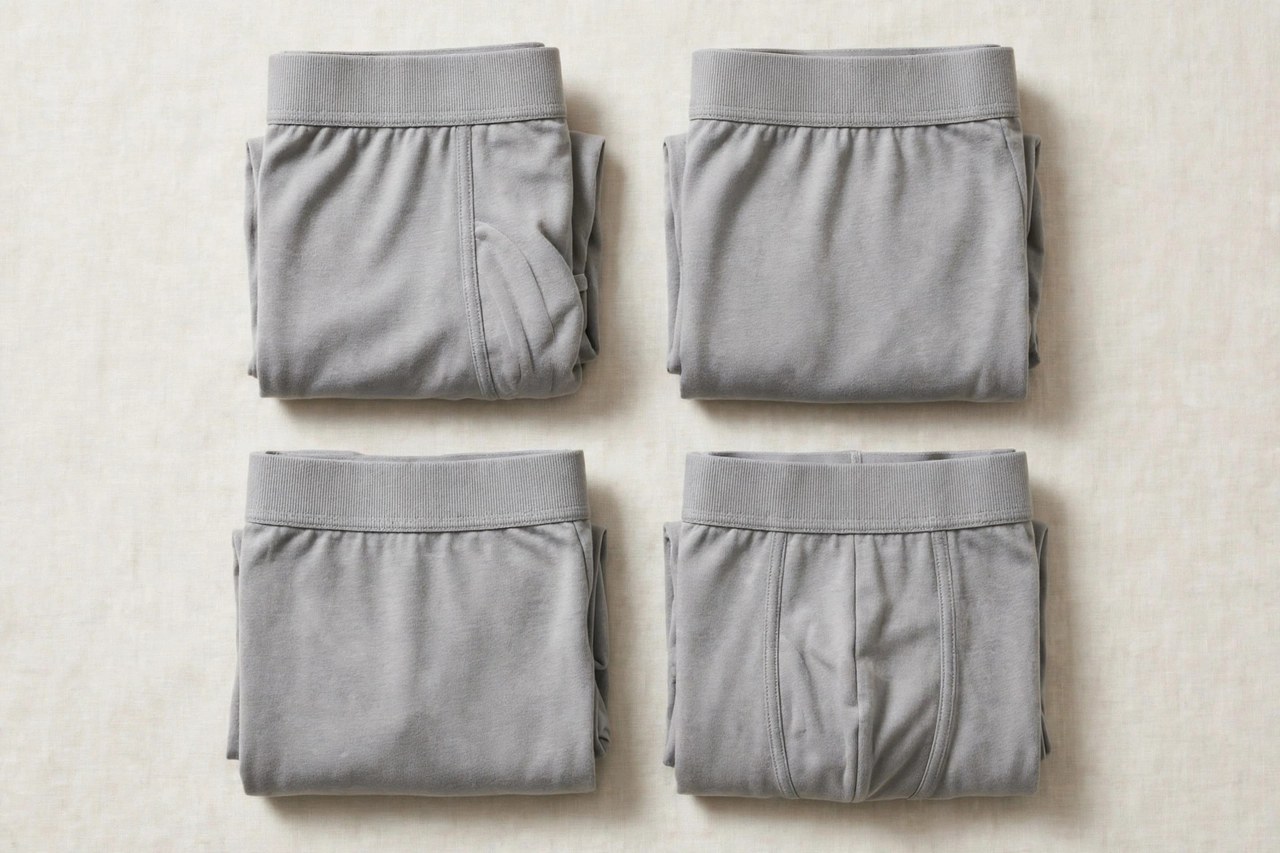
Comfortable men's underwear is not a style but a standard: underwear engineered so that nothing about it is noticed during the day - no binding waistband, no riding leg, no seam in the wrong place, no fabric that turns clammy by afternoon. This guide treats comfort as a set of measurable specifications: the fit, fabric and construction choices that produce it, and how to diagnose the discomfort in pairs you already own. This guide walks through the choices that matter - style, fit, fabric and finish - with the practical detail a product listing rarely gives you, and closes with the care habits that keep the garment in service.
Styles and Construction
Comfort has four sources. Fit first: correct size, a style matched to your build and trousers, and enough elastane for the garment to move with the body. Fabric second: smooth, moisture-managing cloth - modal and microfiber lead on hand feel, quality combed cotton on familiarity, merino on temperature range - with a soft waistband that is fabric-covered or brushed on the skin side. Construction third: flatlock or bonded seams, tagless labels, a pouch shaped rather than flat, and leg openings finished so they neither grip nor gap. Fourth is the absence of small defects: no center back seam ridge in briefs, no scratchy elastic thread at the band, no label. The market's premium tier sells exactly these four things, and the useful skill is checking them in any pair at any price - several are visible in the hand before purchase.
The durable buying order is job, specification, budget - in that sequence. Decide what the garment must do, translate that into fiber, weight, construction and size numbers, and only then shop price. Read labels as specifications, inspect the garment inside out where finishing is unposed, and prefer the maker who publishes measurements to the one who publishes adjectives. A garment that matches your measurements, climate and laundry will be worn; one that misses any of the three becomes expensive storage.
Fit and Sizing
Diagnose before you replace. Riding up means leg length or fabric; a rolling waistband means size or band construction; chafing means seams or a style that lets skin meet skin (a longer boxer brief is the fix); clamminess means fabric. Each discomfort has a different cure, and buying 'more comfortable' versions of the wrong specification repeats the problem at a higher price. Use the diagnosis, then buy one test pair, then commit to multipacks.
Measure yourself once a year and keep the numbers - chest, waist, inseam, foot, head - because bodies drift gradually while size habits never do. Shop from measurements, try garments under real conditions (over layers, in your own shoes, late in the day for footwear), and be honest about alterations: lengths and small waist changes tailor beautifully; shoulders, rises and patterns are the garment you bought forever.
Wearing and Care
Comfort care is fabric care: modal and microfiber want cool washing and gentle drying; cotton tolerates more. The comfort features degrade in a known order - elastane recovery first, fabric surface second - so a pair that has stopped feeling invisible has usually lost its stretch, not your goodwill. Retire on that signal; comfort underwear that must be thought about has failed its only job.
Five minutes when a garment comes off - shake it out, hang or fold it correctly, note the stain and the loose button - prevents most of the damage later blamed on quality. Keep a small kit where the clothes live: brush, lint roller, conditioner suited to your leathers, black, navy and grey thread. Clothing rarely dies at once; it fades by small neglects, and small attentions reverse the process at the same pace.
Common Questions
What is the most comfortable underwear fabric?
For most men, modal and modal blends: exceptionally smooth, cool to the touch, moisture-releasing and durable in softness. Microfiber synthetics rival it with better sport performance; Pima cotton suits men who prefer a natural hand; merino wins for travel and temperature swings. Skin sensitivity is the tiebreaker - reactive skin often does best in smooth natural or modal fibers with flat seams.
Why does underwear that fits in the morning annoy by evening?
Three usual causes: elastane that relaxes with body heat (cheap stretch loses recovery across the day), cotton that has absorbed moisture and changed its friction, and waistbands cut too close that fatigue the skin slowly. The fixes are better stretch (quality elastane, not more of it), a moisture-managing fabric, and honest sizing - in that order.
Is expensive underwear actually more comfortable?
Up to a point, demonstrably: the premium buys fabric quality, pouch shaping, flat seams and better elastic, all of which are comfort specifications. Beyond the well-made tier you are buying branding and marginal gains. The efficient strategy is to find one specification that makes you forget the garment - then buy it in rotation quantity, on sale, without further experimentation.
More in Men's Clothes Guide U
Background and History
We are not talking about emotionally comfortable underwear. This page is about physical comfort. In regarding to underwear we are talking about the use of soft, breathable , fabrics that are cut and sewn properly to provide maximum comfort. Obviously, people generally do not like wearing undergarments that are made from rough fabrics. Textile surface texture, fiber, weight, and stretch are all important factors when selecting underwear. Cotton is often used for underwear because it provides a soft hand and breathability. When this fiber is knitted it provide more stretch than when this fiber is woven. Silk is another natural fiber that can be used well for underwear. However, silk is typically a woven fabric and would provide less natural stretch. Silk has a luxurious hand which makes a nice pair of boxer shorts. If you never wore a pair of silk boxers, you may want to give it a try. By the way, rough surfaces usually wear more quickly and have higher friction coefficients than smooth surfaces. Does this
Looking for Men's Clothing Stores?
This guide explains men's comfortable underwear. To browse where to buy, visit our men's clothing store directory, where you can find retailers that carry them.