Men's Mesh Underwear Guide
Men's mesh underwear is underwear built from perforated or open-knit fabrics - engineered mesh - used where ventilation and fast drying are the priorities: sport, hot climates and physical work. This guide is strictly product-focused: how athletic mesh differs from decorative open fabrics, panel placement, the lined-versus-unlined construction question, sizing and care.
Shop Men's Mesh Underwear Now
Shop Men's Mesh Underwear on Amazon Shop Men's Mesh Underwear on eBayThe Amazon and eBay links on this page are affiliate links. If you make a purchase through them, Apparel Search may earn a commission.
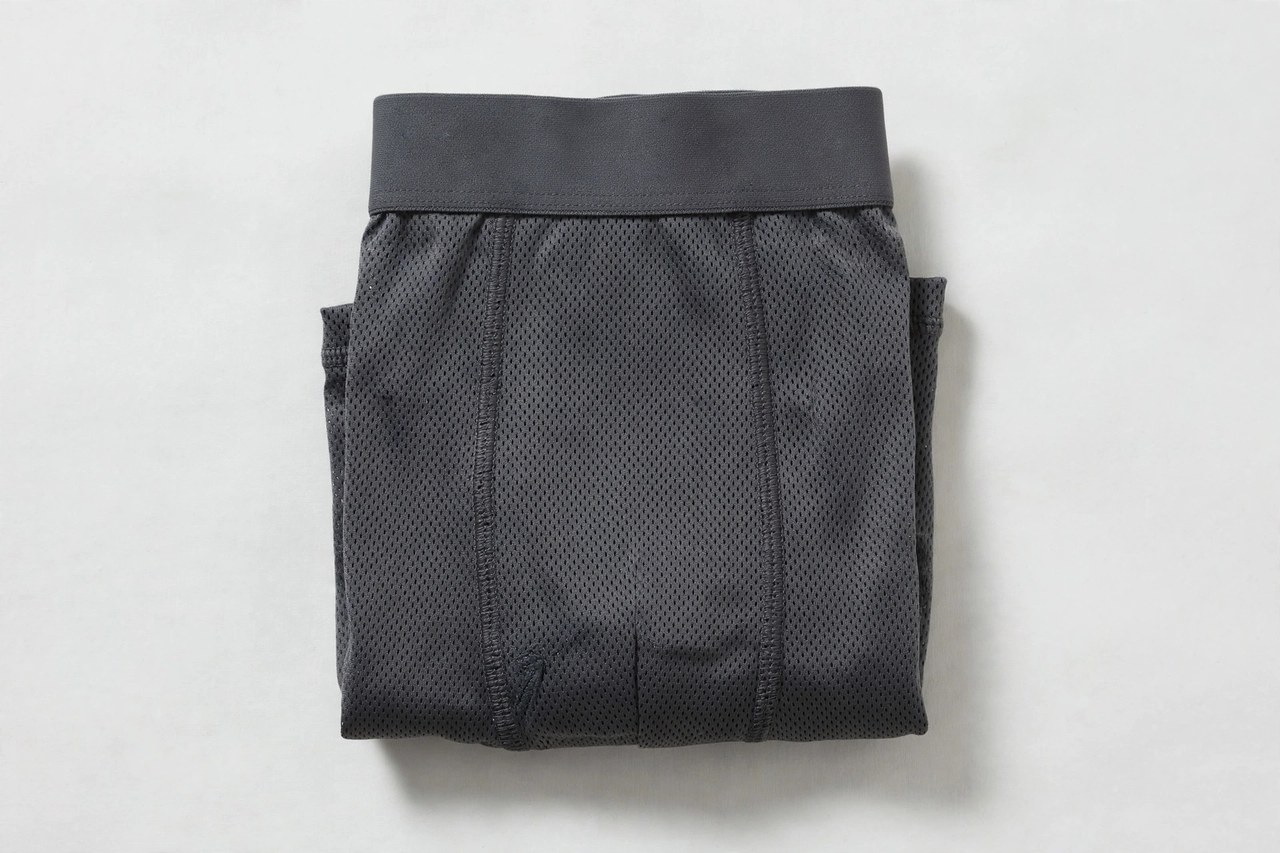
Men's mesh underwear is underwear built from perforated or open-knit fabrics - engineered mesh - used where ventilation and fast drying are the priorities: sport, hot climates and physical work. This guide is strictly product-focused: how athletic mesh differs from decorative open fabrics, panel placement, the lined-versus-unlined construction question, sizing and care. This guide is built around the questions buyers actually ask: which style, which size, which fabric, and what will it look like after a year of real use - answered in order, with the trade-offs stated plainly.
Styles and Construction
Athletic mesh is a technical knit: a polyester or nylon fabric with a pattern of fine holes knitted in, giving airflow and rapid moisture release while remaining opaque and durable. In underwear it appears two ways: full-mesh bodies for maximum ventilation in sport briefs and boxer briefs, and mesh panels set into a solid body at the sides, back or pouch surround, where makers balance cooling against coverage. Better constructions line the pouch itself in a smooth solid knit even on a mesh garment, so the ventilated structure does not sit directly where friction is highest. Distinguish this fabric from fashion 'net' cloth (covered in the Net Underwear guide): athletic mesh is fine-holed, strong and opaque, designed as equipment. Judge a mesh garment by hole size (fine is stronger), edge finishing, and whether seams are flat - mesh magnifies the feel of a raised seam.
The durable buying order is job, specification, budget - in that sequence. Decide what the garment must do, translate that into fiber, weight, construction and size numbers, and only then shop price. Read labels as specifications, inspect the garment inside out where finishing is unposed, and prefer the maker who publishes measurements to the one who publishes adjectives. A garment that matches your measurements, climate and laundry will be worn; one that misses any of the three becomes expensive storage.
Fit and Sizing
Fit mesh underwear as you would its solid equivalent in the same style, remembering that mesh knits are typically very stretchy: the size that works in cotton may feel looser in mesh, and firm support requires the truer or smaller-in-between size. Sport use argues for the closer fit; the fabric's ventilation does its work only when the garment stays where it was placed.
Measure yourself once a year and keep the numbers - chest, waist, inseam, foot, head - because bodies drift gradually while size habits never do. Shop from measurements, try garments under real conditions (over layers, in your own shoes, late in the day for footwear), and be honest about alterations: lengths and small waist changes tailor beautifully; shoulders, rises and patterns are the garment you bought forever.
Wearing and Care
Mesh is synthetic care: wash cool or warm, skip fabric softener (it clogs the perforations the fabric exists for), and dry low or line dry - mesh dries faster than any other underwear fabric, one of its practical virtues. Inspect perforated panels periodically at stress points; once mesh tears, it runs like a stocking and the panel is finished, so early retirement of a torn sport pair prevents mid-activity failure.
Five minutes when a garment comes off - shake it out, hang or fold it correctly, note the stain and the loose button - prevents most of the damage later blamed on quality. Keep a small kit where the clothes live: brush, lint roller, conditioner suited to your leathers, black, navy and grey thread. Clothing rarely dies at once; it fades by small neglects, and small attentions reverse the process at the same pace.
Common Questions
Is mesh underwear only for sports?
Sport is its origin and best use, but mesh earns a place in hot climates and physical jobs for the same reason: moving air and fast drying across a long day. Many men wear mesh-panel boxer briefs as ordinary summer underwear. Full-mesh bodies are the specialist version; mesh panels in an otherwise standard pair are the everyday compromise and the better starting point.
Mesh vs net underwear - what is the difference?
Purpose and structure. Athletic mesh is a fine-perforated technical knit: opaque, strong, made to wick and ventilate during exertion. Net fabric is a coarse, open lattice - far more open, far less structural - used in fashion styles. The Net guide in this section covers that family; if your goal is cooling during activity, mesh is the correct fabric and net is not a substitute.
Does mesh underwear need a lined pouch?
Preferably, yes. A smooth solid lining in the pouch reduces friction and adds opacity and support where the garment works hardest, while the mesh around it does the ventilating. Unlined full-mesh pouches exist on ultralight sport models; they are a deliberate trade of comfort for airflow that most wearers only want for short, hard efforts.
More in Men's Clothes Guide U
Background and History
A mesh is similar to a web or a net in that it has many attached or woven strands. Net or netting is any textile in which the yarns are fused, looped or knotted at their intersections, resulting in a fabric with open spaces between the yarns. Net has many uses, and come in different varieties. Depending on the type of yarn or filament that is used to make up the textile, its characteristics can vary from durable to not durable. This textile is used because of its sturdy yet flexible origin, which can carry weight yet, still be lightweight and compactable. Netting has many similar components to mesh, as they both allow air to pass through easily, and share a lot of the same uses. Mesh underwear is very breathable and can be some what transparent. Different weaving patterns can be used for different kinds of netting. Depending on the use of the textile, size of the holes in the net will vary. Weaving patterns, opposed to knitting patterns,
Looking for Men's Clothing Stores?
This guide explains men's mesh underwear. To browse where to buy, visit our men's clothing store directory, where you can find retailers that carry them.