Men's Spandex Underwear Guide
Men's spandex underwear is underwear in which spandex (elastane) is a headline fiber: high-stretch blends - and occasionally near-pure spandex garments - built for body-hugging fit, athletic support and shape retention. This guide is strictly product-focused: what elastane percentages mean, spandex blended versus spandex-forward garments, the fit and compression consequences, and the heat-sensitive care elastane always demands.
Shop Men's Spandex Underwear Now
Shop Men's Spandex Underwear on Amazon Shop Men's Spandex Underwear on eBayThe Amazon and eBay links on this page are affiliate links. If you make a purchase through them, Apparel Search may earn a commission.
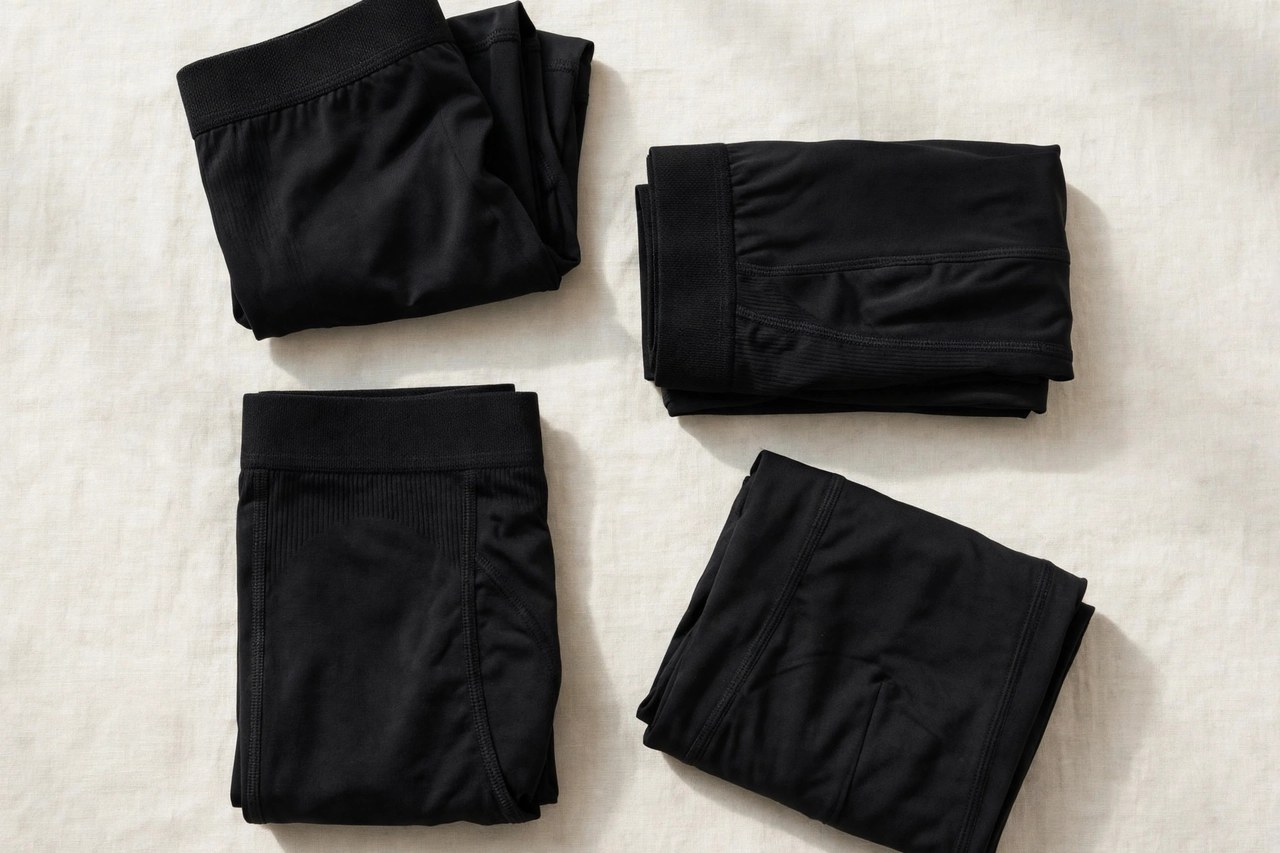
Men's spandex underwear is underwear in which spandex (elastane) is a headline fiber: high-stretch blends - and occasionally near-pure spandex garments - built for body-hugging fit, athletic support and shape retention. This guide is strictly product-focused: what elastane percentages mean, spandex blended versus spandex-forward garments, the fit and compression consequences, and the heat-sensitive care elastane always demands. This guide is built around the questions buyers actually ask: which style, which size, which fabric, and what will it look like after a year of real use - answered in order, with the trade-offs stated plainly.
Styles and Construction
Elastane is the fiber that stretches to five times its length and returns, and underwear uses it in doses. Two to five percent in cotton or modal is seasoning: shape retention without a compression feel. Ten to twenty percent in nylon or polyester makes athletic and spandex-forward underwear: genuinely compressive, very smooth, fast-drying, the fabric of sport briefs, bike-short-style liners and dance and performance underwear. Near-pure spandex garments are specialists - maximum hug, minimum structure, total dependence on the fiber's recovery. The trade ledger is consistent: more elastane means better hold and smoother lines, and also more heat sensitivity, faster aging if abused in the wash, and a clammy feel in cheap blends under exertion (good microfiber engineering fixes much of that). Read percentages on labels as you would read a recipe: they predict behavior more reliably than any style name.
The durable buying order is job, specification, budget - in that sequence. Decide what the garment must do, translate that into fiber, weight, construction and size numbers, and only then shop price. Read labels as specifications, inspect the garment inside out where finishing is unposed, and prefer the maker who publishes measurements to the one who publishes adjectives. A garment that matches your measurements, climate and laundry will be worn; one that misses any of the three becomes expensive storage.
Fit and Sizing
Fit spandex underwear by exact measurement: the fiber forgives small errors and advertises large ones. Compression is a specification, not a sizing strategy - a garment designed at ten percent elastane delivers its intended hold in your true size; sizing down adds pressure without adding the panel engineering that makes pressure useful, and shortens the garment's life measurably. Judge spandex fit at day's end, when the fiber's recovery (or its loss) has had hours to declare itself.
Measure yourself once a year and keep the numbers - chest, waist, inseam, foot, head - because bodies drift gradually while size habits never do. Shop from measurements, try garments under real conditions (over layers, in your own shoes, late in the day for footwear), and be honest about alterations: lengths and small waist changes tailor beautifully; shoulders, rises and patterns are the garment you bought forever.
Wearing and Care
Elastane's enemy is heat, in all its laundry forms: wash cool or warm, never hot; dry low or line dry; keep chlorine bleach away entirely. Fabric softener is discouraged on performance blends. Under that regime, quality elastane keeps recovery for years of rotation; under hot washing and tumble drying, spandex underwear becomes loose underwear within a season. When the hug fades and does not return from the wash, the fiber is done and so is the garment.
Five minutes when a garment comes off - shake it out, hang or fold it correctly, note the stain and the loose button - prevents most of the damage later blamed on quality. Keep a small kit where the clothes live: brush, lint roller, conditioner suited to your leathers, black, navy and grey thread. Clothing rarely dies at once; it fades by small neglects, and small attentions reverse the process at the same pace.
Common Questions
What elastane percentage should I look for?
Match the dose to the job: two to five percent for everyday cotton or modal underwear (retention without compression); around ten to fifteen percent in synthetic blends for sport and close fits; higher only in specialist garments designed around it. More is not better beyond the job - it buys heat sensitivity and care demands along with the hold, so spend it where the hold is the point.
Is spandex underwear good for sports?
Spandex blends are the standard athletic underwear fabric family: they move with the body, hold a pouch's shape, dry fast in microfiber bases and prevent the chafing that loose or cotton garments cause under exertion. Choose a sport pattern (longer leg for chafe control, mesh panels for heat) in a nylon or polyester base; cotton-spandex is an everyday blend that absorbs too much moisture for hard sport.
Why did my spandex underwear lose its stretch?
Almost certainly heat: hot washes and tumble dryers break elastane's molecular chains progressively, and chlorine bleach attacks it chemically. The loss is permanent and cumulative. Wash cool, dry low or line dry, and rotate pairs so fibers rest - elastane literally recovers between wears - and the next rotation will outlast this one by seasons.
More in Men's Clothes Guide U
Background and History
Looking for some stretch? First of all, what is Spandex? Spandex , Lycra or elastane is a synthetic fiber known for its exceptional elasticity. It is stronger and more durable than natural rubber. It is a polyester-polyurethane copolymer that was invented in 1958 by chemist Joseph Shivers at DuPont's Benger Laboratory in Waynesboro, Virginia. When introduced in 1962, it revolutionized many areas of the clothing industry. To be honest, this fiber is not the first thing we generally think about when we think of underwear. Our first choice is generally cotton. However, this fiber has beneficial characteristics. The name "spandex" is an anagram of the word "expands". In other words, it stretches. Because of its elasticity and strength (stretching up to five times its length), spandex has been incorporated into a wide range of garments, especially in skin-tight garments. A benefit of spandex is its significant strength and elasticity and its ability to return to the original shape after stretching and faster drying than ordinary fabrics. So, if you enjoy
Looking for Men's Clothing Stores?
This guide explains men's spandex underwear. To browse where to buy, visit our men's clothing store directory, where you can find retailers that carry them.