Men's Vintage Apparel Guide
Vintage apparel is the umbrella term for men's clothing and accessories from earlier decades that is bought to wear today, not simply to store. It spans tailored jackets, shirts, trousers, knitwear, denim and outerwear, judged by era, construction and condition rather than by novelty. Good buying starts with measurements, honest grading and fabric knowledge, because older garments were cut, sized and finished differently from modern clothing and reward a careful, unhurried inspection before money changes hands.
Shop Men's Vintage Apparel Now
Shop Men's Vintage Apparel on Amazon Shop Men's Vintage Apparel on eBayThe Amazon and eBay links on this page are affiliate links. If you make a purchase through them, Apparel Search may earn a commission.
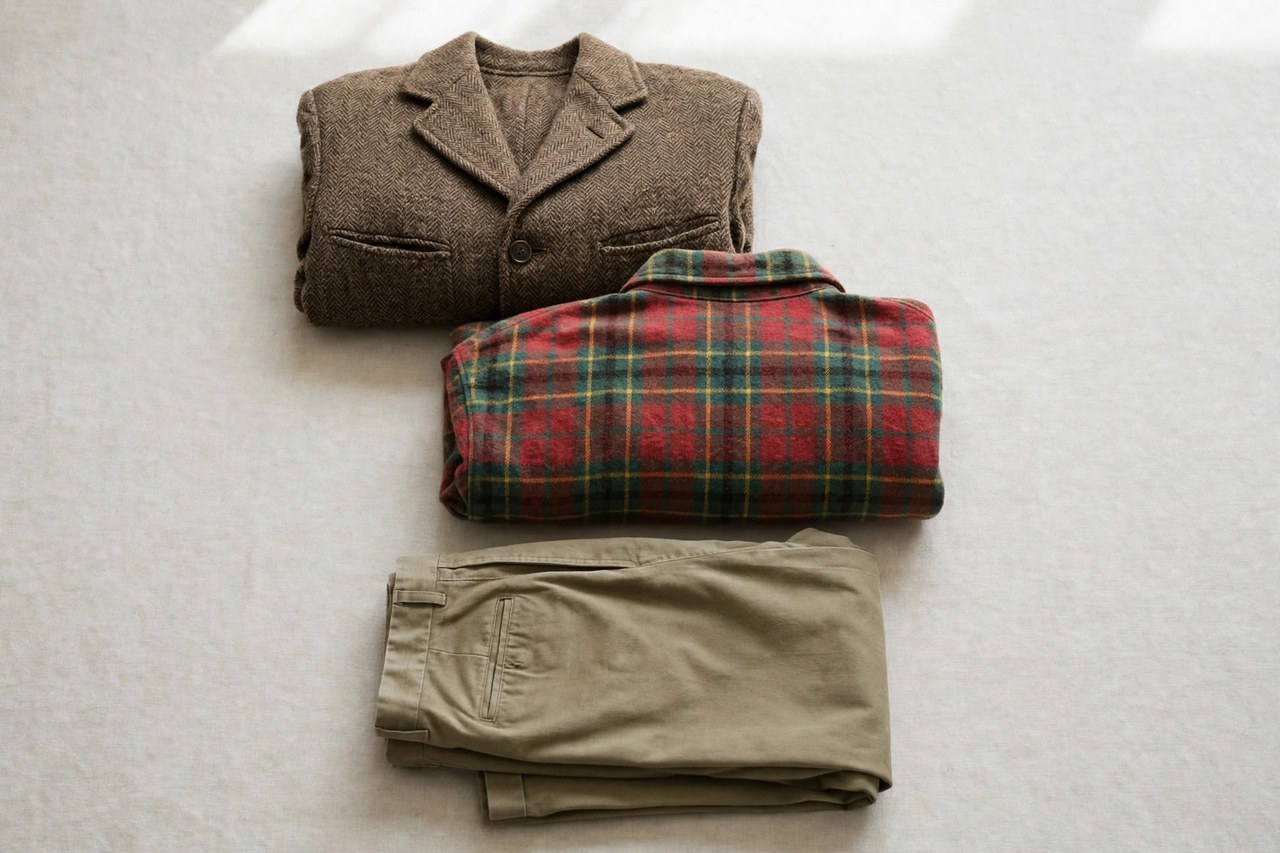
Vintage apparel is the umbrella term for men's clothing and accessories from earlier decades that is bought to wear today, not simply to store. It spans tailored jackets, shirts, trousers, knitwear, denim and outerwear, judged by era, construction and condition rather than by novelty. Good buying starts with measurements, honest grading and fabric knowledge, because older garments were cut, sized and finished differently from modern clothing and reward a careful, unhurried inspection before money changes hands. This guide covers the styles worth knowing, the fit points that decide comfort, the fabrics and construction that separate a good buy from a regret, and the simple care that makes the garment last.
Styles and Construction
Dating a piece relies on construction clues rather than guesses: union and care labels, zipper and button materials, seam finishes, lining fabrics and label typography all narrow the period. Single-stitch hems, selvedge edges, hand-finished buttonholes and natural-fiber linings suggest older manufacture, while overlocked seams and synthetic blends point later. Condition grading should describe fading, repairs, stains and wear plainly, and sellers who photograph flaws, collars, cuffs and interiors are usually more trustworthy than those showing only flattering angles.
The durable buying order is job, specification, budget - in that sequence. Decide what the garment must do, translate that into fiber, weight, construction and size numbers, and only then shop price. Read labels as specifications, inspect the garment inside out where finishing is unposed, and prefer the maker who publishes measurements to the one who publishes adjectives. A garment that matches your measurements, climate and laundry will be worn; one that misses any of the three becomes expensive storage.
Fit and Sizing
Vintage sizes run smaller than modern equivalents, and a tagged size from decades ago rarely matches the same number today. Measure the garment flat: chest across the underarms, shoulder seam to seam, sleeve, waist and inseam, then compare with a piece you already wear well. Shoulders and chest are the hardest areas to alter, while hems and sleeves are comparatively easy. When measurements are not listed, ask for them before buying rather than gambling on the label.
Measure yourself once a year and keep the numbers - chest, waist, inseam, foot, head - because bodies drift gradually while size habits never do. Shop from measurements, try garments under real conditions (over layers, in your own shoes, late in the day for footwear), and be honest about alterations: lengths and small waist changes tailor beautifully; shoulders, rises and patterns are the garment you bought forever.
Wearing and Care
Store vintage apparel clean, dry and supported, because old fibers weaken quietly in damp, heat and direct sunlight. Wash gently and rarely, using mild detergent, cool water and air drying, and test fragile or dyed fabric in a hidden spot first. Tailored pieces belong on broad hangers, knitwear folded flat, and everything given breathing room rather than compression. Cedar or lavender can discourage moths, but cleanliness matters most, since moths target soiled wool first.
Five minutes when a garment comes off - shake it out, hang or fold it correctly, note the stain and the loose button - prevents most of the damage later blamed on quality. Keep a small kit where the clothes live: brush, lint roller, conditioner suited to your leathers, black, navy and grey thread. Clothing rarely dies at once; it fades by small neglects, and small attentions reverse the process at the same pace.
Common Questions
What counts as vintage apparel?
Generally, clothing from an earlier era that is old enough to reflect period construction and styling, rather than last season's stock. Exact age cutoffs vary among sellers, so judge by labels, materials, seams and hardware instead of a claimed decade. A well-documented, honestly graded piece matters more than a fashionable age label.
How can I tell if a vintage garment is well made?
Turn it inside out and look for even stitching, finished seams, substantial lining, securely attached buttons and fabric with a tight, consistent weave. Older quality pieces often show hand finishing at buttonholes and hems. Weak signs include skipped stitches, puckering, thin worn lining and hardware that already feels loose or corroded.
Is vintage apparel a good buy for everyday wear?
It can be, if you choose sturdy categories such as denim, wool outerwear and woven shirts, check wear points carefully, and accept gentle care. Fragile dress pieces and dried-out elastic will not survive daily use. Buy the strongest example you can afford, rotate it, and budget for small repairs and professional cleaning.
More in Men's Clothes Guide V
Background
Generally speaking, clothing which was produced before the 1920s is referred to as antique clothing and clothing from the 1920s to 20 years before the present day is considered vintage. Popular places to buy vintage apparel include second hand clothing shops, consignment shops, garage sales, flea markets, antique markets, estate sales, auctions, vintage clothing shops and vintage fashion, textile or collectables fairs. Online websites such as eBay and Craig's List are also generally good sources. Learn the difference between vintage fashion and antique clothing . An important contributing factor in the value of an item of vintage clothing can also be its provenance. Vintage clothing collectors, like other collectors of history, value and record the background of an item: who wore it and to what occasion. Fashion design, throughout history has turned to previous eras for inspiration. It is sometimes hard to tell if the item is truly vintage or produced to appear as vintage apparel. Apparel that is produced to appear old is often referenced as Retro.
Looking for Men's Clothing Stores?
This guide explains men's vintage apparel. To browse where to buy, visit our men's clothing store directory, where you can find retailers that carry them.