Men's Vintage Footwear Guide
Vintage footwear covers older men's leather dress shoes, boots, loafers and casual shoes bought to wear rather than display. Shoes and boots can be excellent vintage value because quality leather uppers and stitched soles are repairable, but they also hide the category's worst risks: dried leather, cracked vamps, compressed insoles and soles that have hardened or begun to disintegrate. This guide shows how to flex, inspect and size older footwear before trusting it with real miles.
Shop Men's Vintage Footwear Now
Shop Men's Vintage Footwear on Amazon Shop Men's Vintage Footwear on eBayThe Amazon and eBay links on this page are affiliate links. If you make a purchase through them, Apparel Search may earn a commission.
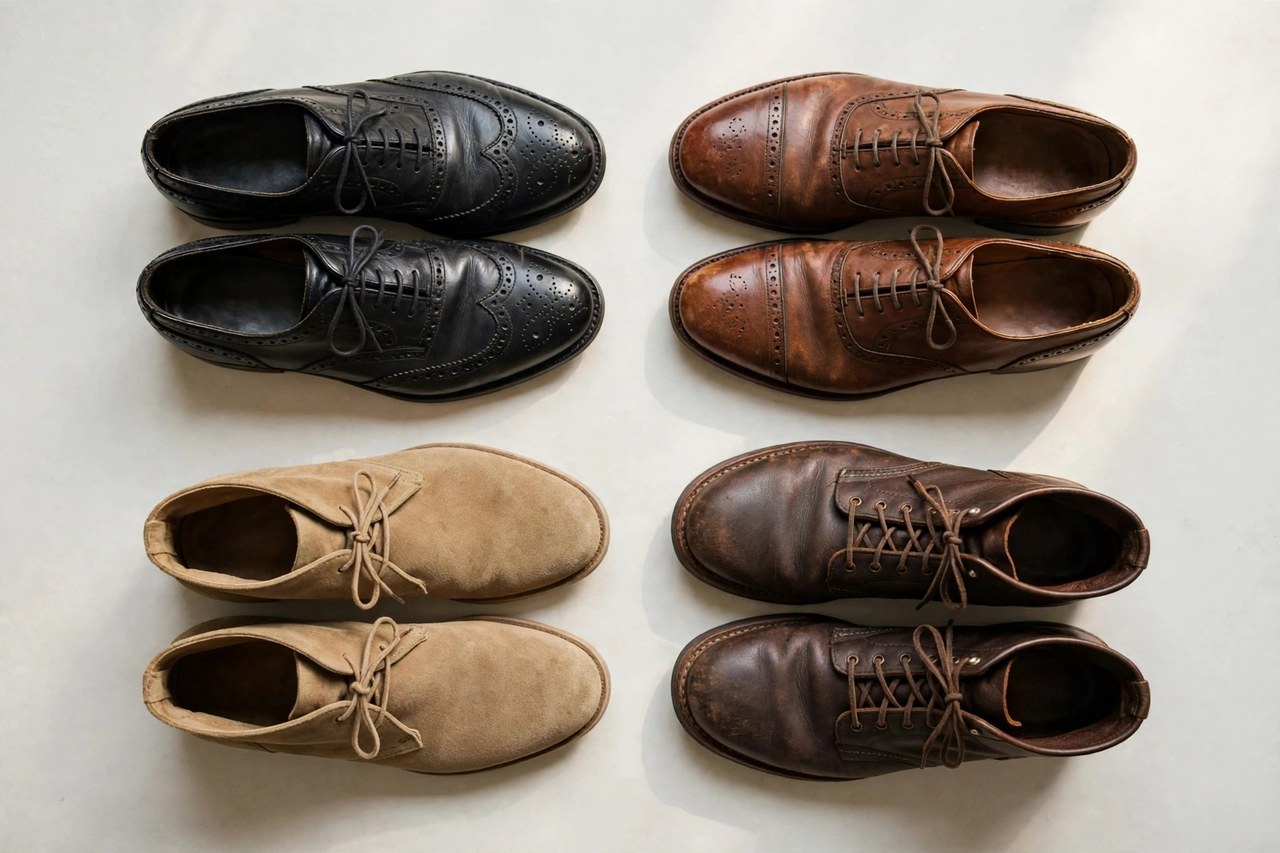
Vintage footwear covers older men's leather dress shoes, boots, loafers and casual shoes bought to wear rather than display. Shoes and boots can be excellent vintage value because quality leather uppers and stitched soles are repairable, but they also hide the category's worst risks: dried leather, cracked vamps, compressed insoles and soles that have hardened or begun to disintegrate. This guide shows how to flex, inspect and size older footwear before trusting it with real miles. This guide covers the styles worth knowing, the fit points that decide comfort, the fabrics and construction that separate a good buy from a regret, and the simple care that makes the garment last.
Styles and Construction
Construction decides whether a pair can be revived. Stitched or welted soles can usually be replaced by a cobbler, while cemented soles depend on glue that may have aged out even when uppers look fine. Flex the shoe gently and watch the vamp for surface cracking, press the sole for crumbling or separation, and inspect heel counters, lining and insole for collapse or flaking. Boots need the same checks plus shaft leather, eyelets, hooks and any zips or elastic gussets.
Judge footwear by attachment and compound: cemented soles are light and affordable, stitched or welted constructions cost more and can be repaired, and the outsole rubber decides grip against longevity - soft compounds bite, hard compounds endure. Linings decide comfort over hours, removable insoles decide whether your own supports can come along, and honest weight decides whether the pair disappears on the foot or taxes every mile of the day.
Fit and Sizing
Shoe sizing has changed enough that vintage sizes run smaller and narrower than many men expect, and a worn insole has already molded to another foot. Measure the insole length if accessible, compare with your best-fitting pair, and try shoes late in the day with the socks you will wear. There should be thumb width beyond the longest toe and no heel slip that a walk exposes. Tight vintage leather rarely stretches into comfort; buy the fit, not the hope.
Fit footwear late in the day in the socks you will actually wear, with roughly a thumb's width beyond the longest toe, the heel held without lift, and the foot's widest point meeting the shoe's widest point. Sizes are unstandardized between makers - trust your measured length and width over the printed number, and require no break-in argument: a shoe that needs excuses in the shop delivers them on the road.
Wearing and Care
Before regular wear, clean vintage shoes, condition the uppers lightly, and walk them on short outings so old soles and stitching prove themselves near home. Rest pairs a full day between wears on shoe trees, store them dry and away from heat, and resole stitched footwear before wear reaches the welt. Rubber soles that feel hard or slick should be replaced for safety. Never machine wash leather footwear, and dry wet pairs slowly at room temperature.
Rotation is the first care rule: a day of rest between wears lets linings dry and cushioning rebound, and it doubles a rotation's life compared with daily wear of one pair. Clean after use, dry at room temperature away from radiators, hold shape with trees or paper, and condition leather on a schedule rather than when it looks thirsty. Reproof weather finishes when water stops beading, and resole stitched footwear before the wear reaches the welt.
Common Questions
Can vintage shoes be resoled?
Stitched and welted shoes usually can, provided the uppers, lining and insole board are sound enough to justify the work. Cemented shoes are harder and sometimes uneconomical to rebuild. Ask a cobbler to inspect the pair before you pay a premium for it, and include likely resoling, heels and conditioning in the true purchase price.
Why do vintage soles sometimes crumble?
Some sole and midsole foams age by hydrolysis, breaking down in storage without wear, especially in warm or humid conditions. A shoe can look perfect and still shed its sole on the first walk. Flex and press soles before buying, test purchases on short walks, and treat crumbling as a replacement job, not a repair.
Should I wear vintage shoes straight away?
Not for a long day. Condition the leather, check heel and sole security, and wear the pair around the house and on a short walk first. Old stitching, glue and insoles reveal problems quickly under light use. Once a pair has passed several short outings without separation, cracking or pain, graduate it to regular rotation.
More in Men's Clothes Guide V
Background
Footwear refers to garments worn on the feet, which originally serves to purpose of protection against adversities of the environment, usually regarding ground textures and temperature. Footwear in the manner of shoes therefore primarily serves the purpose to ease the locomotion and prevent injuries. Secondly footwear can also be used for fashion and adornment. Learn more about men's footwear . Vintage footwear that was produced before the 1920s is referred to as antique items produced from the 1920s to 20 years before the present day is considered vintage. Retrospective or Retro, or "vintage style" usually refers to footwear that imitates the style of a previous era. Reproduction, or repro, clothing is a newly made copy of an older garment. When dealing with collectible vintage footwear, it is important to understand the difference between true vintage and reproductions. Vintage is a generic term for shoes originating from a previous era. Learn the difference between antique fashion and vintage fashion . A sneakerhead is a person who collects, trades or admires sneakers.
Looking for Men's Clothing Stores?
This guide explains men's vintage footwear. To browse where to buy, visit our men's clothing store directory, where you can find retailers that carry them.