Men's Vintage Shoes Guide
Vintage shoes for men include leather dress shoes and boots, canvas sneakers, loafers, and work footwear made in earlier decades, often with stitched soles and full-grain leather uppers. Quality older footwear was built to be repaired, with welted construction and materials that mold to the foot over time. Styles range from classic brogues to simple plimsolls. Because shoes absorb hard use and moisture, their internal condition matters as much as appearance, and careful assessment prevents uncomfortable, short-lived purchases.
Shop Men's Vintage Shoes Now
Shop Men's Vintage Shoes on Amazon Shop Men's Vintage Shoes on eBayThe Amazon and eBay links on this page are affiliate links. If you make a purchase through them, Apparel Search may earn a commission.
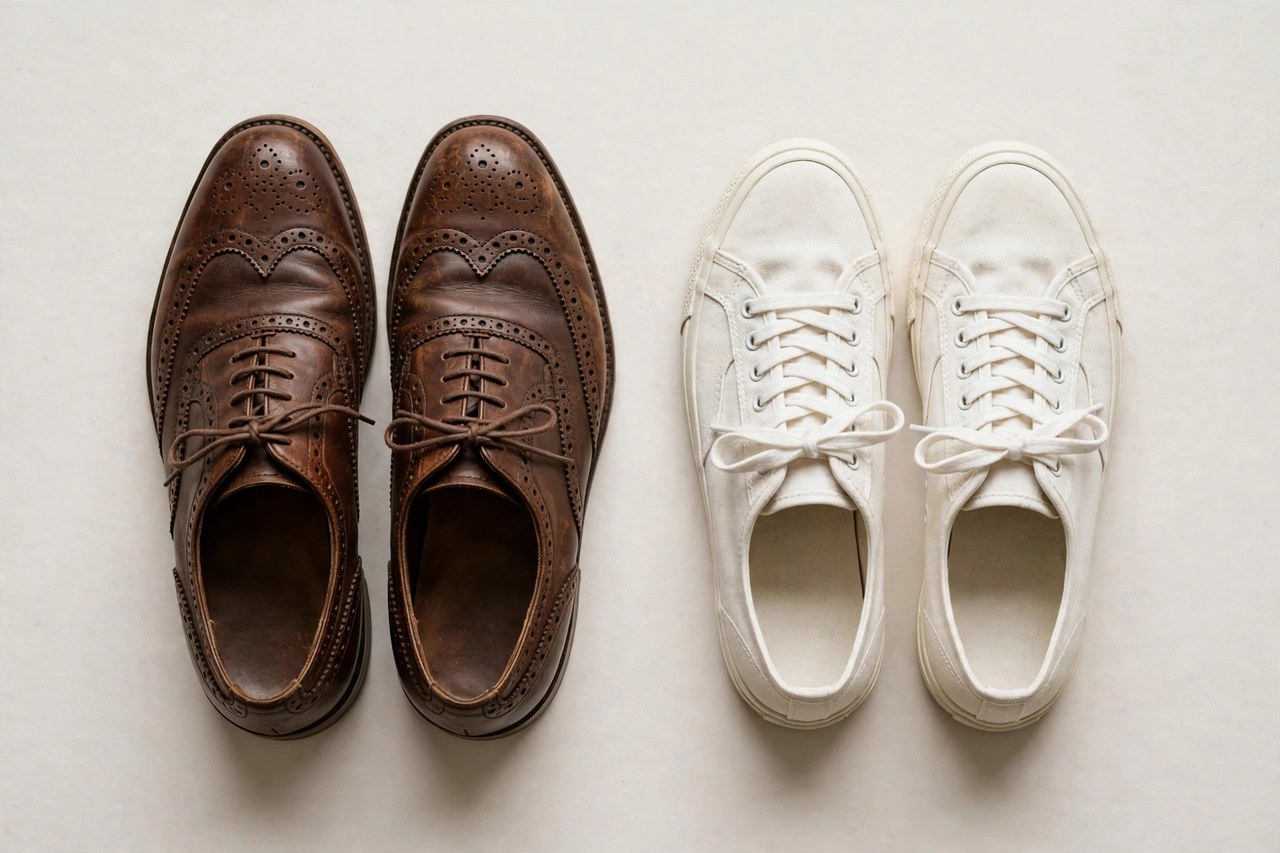
Vintage shoes for men include leather dress shoes and boots, canvas sneakers, loafers, and work footwear made in earlier decades, often with stitched soles and full-grain leather uppers. Quality older footwear was built to be repaired, with welted construction and materials that mold to the foot over time. Styles range from classic brogues to simple plimsolls. Because shoes absorb hard use and moisture, their internal condition matters as much as appearance, and careful assessment prevents uncomfortable, short-lived purchases. This guide is built around the questions buyers actually ask: which style, which size, which fabric, and what will it look like after a year of real use - answered in order, with the trade-offs stated plainly.
Styles and Construction
Inspect uppers for deep cracks across the flex point, dry or flaking leather, and split seams, which matter more than surface scuffs. Check soles and heels for uneven wear, soft spots suggesting rot, and previous repairs, and look inside for crumbling linings, damaged insoles, or persistent odor. Flex the shoe gently: leather should bend without cracking. Confirm both shoes match in size, color, and wear, since pairs were sometimes separated and mismatched over the years.
Judge footwear by attachment and compound: cemented soles are light and affordable, stitched or welted constructions cost more and can be repaired, and the outsole rubber decides grip against longevity - soft compounds bite, hard compounds endure. Linings decide comfort over hours, removable insoles decide whether your own supports can come along, and honest weight decides whether the pair disappears on the foot or taxes every mile of the day.
Fit and Sizing
Vintage shoe sizing varies by country, maker, and era, and leather that has molded to another foot will not reshape completely to yours. Measure your foot and compare insole length and width where provided, and favor sellers who give internal measurements. Allow a little room in boots for thicker socks. Shoes that are slightly roomy can work with an insole, but short or narrow leather footwear rarely stretches enough to become genuinely comfortable.
Fit footwear late in the day in the socks you will actually wear, with roughly a thumb's width beyond the longest toe, the heel held without lift, and the foot's widest point meeting the shoe's widest point. Sizes are unstandardized between makers - trust your measured length and width over the printed number, and require no break-in argument: a shoe that needs excuses in the shop delivers them on the road.
Wearing and Care
Rest vintage leather shoes at least a day between wears with wooden shoe trees inserted to absorb moisture and hold shape, and brush them clean after use. Condition leather sparingly, polish as desired, and resole welted shoes before the original sole wears through into the welt. Store footwear dry, away from heat and sunlight, and never seal damp shoes in plastic. Canvas styles can be washed gently by hand and air dried completely.
Rotation is the first care rule: a day of rest between wears lets linings dry and cushioning rebound, and it doubles a rotation's life compared with daily wear of one pair. Clean after use, dry at room temperature away from radiators, hold shape with trees or paper, and condition leather on a schedule rather than when it looks thirsty. Reproof weather finishes when water stops beading, and resole stitched footwear before the wear reaches the welt.
Common Questions
Are vintage shoes comfortable and practical to wear?
Well-preserved leather shoes and boots often become very comfortable, especially repairable welted styles, but leather already molded to another foot has limits. Check internal length and width carefully, avoid cracked uppers and crumbling linings, and rotate wear at first. A cobbler can replace soles and heels, extending practical life considerably.
What shoe damage should make me walk away?
Deep cracks across the flex point, dry rot, crumbling linings or insoles, and split seams are serious because they usually cannot be reversed economically. Surface scuffs, worn heels, and tired laces are minor by comparison. Always inspect inside the shoe and ask for photographs of soles, heels, and interiors before buying.
How do I care for vintage leather shoes?
Brush them after wear, insert wooden shoe trees, and rest them at least twenty-four hours between outings so moisture can escape. Condition only when leather looks dry, keep them away from radiators and direct sun, and have soles repaired before wear reaches the welt. Store clean, dry, and uncovered or in breathable bags.
More in Men's Clothes Guide V
Background
A shoe is an item of footwear intended to protect and comfort the human foot while the wearer is doing various activities. Shoes are also used as an item of decoration and fashion. The design of shoes has varied enormously through time and from culture to culture, with appearance originally being tied to function. Footwear fabrications, styles, colors, etc., have changed over the years. Similar to fashion, the footwear industry is constantly developing new manufacturing techniques and designs. Year after year, new offerings hit the menswear market. Vintage shoes is a generic term for footwear originating from a previous era. Retro, short for retrospective, or "vintage style" usually refers to sneakers or other types of footwear that imitates the style of a previous era. Reproduction, or repro, shoes are a newly made copy of an older shoe. In addition to collecting vintage sneakers, keep in mind that people have many other reasons to be interested in vintage shoes. They can be very fashionable as well as historical.
Looking for Men's Clothing Stores?
This guide explains men's vintage shoes. To browse where to buy, visit our men's clothing store directory, where you can find retailers that carry them.