Men's Vintage Jackets Guide
Vintage jackets for men include leather jackets, denim truckers, work coats, military styles, and tailored blazers made in earlier decades. Each period favored different fabrics, linings, zippers, and silhouettes, from boxy mid-century cuts to slimmer later shapes. Genuine vintage pieces often show heavier materials, metal hardware, and sturdy construction rarely found in modern copies. Shoppers value them for character, durability, and individuality, but condition varies widely, so careful inspection matters far more than a label or a claimed age alone.
Shop Men's Vintage Jackets Now
Shop Men's Vintage Jackets on Amazon Shop Men's Vintage Jackets on eBayThe Amazon and eBay links on this page are affiliate links. If you make a purchase through them, Apparel Search may earn a commission.
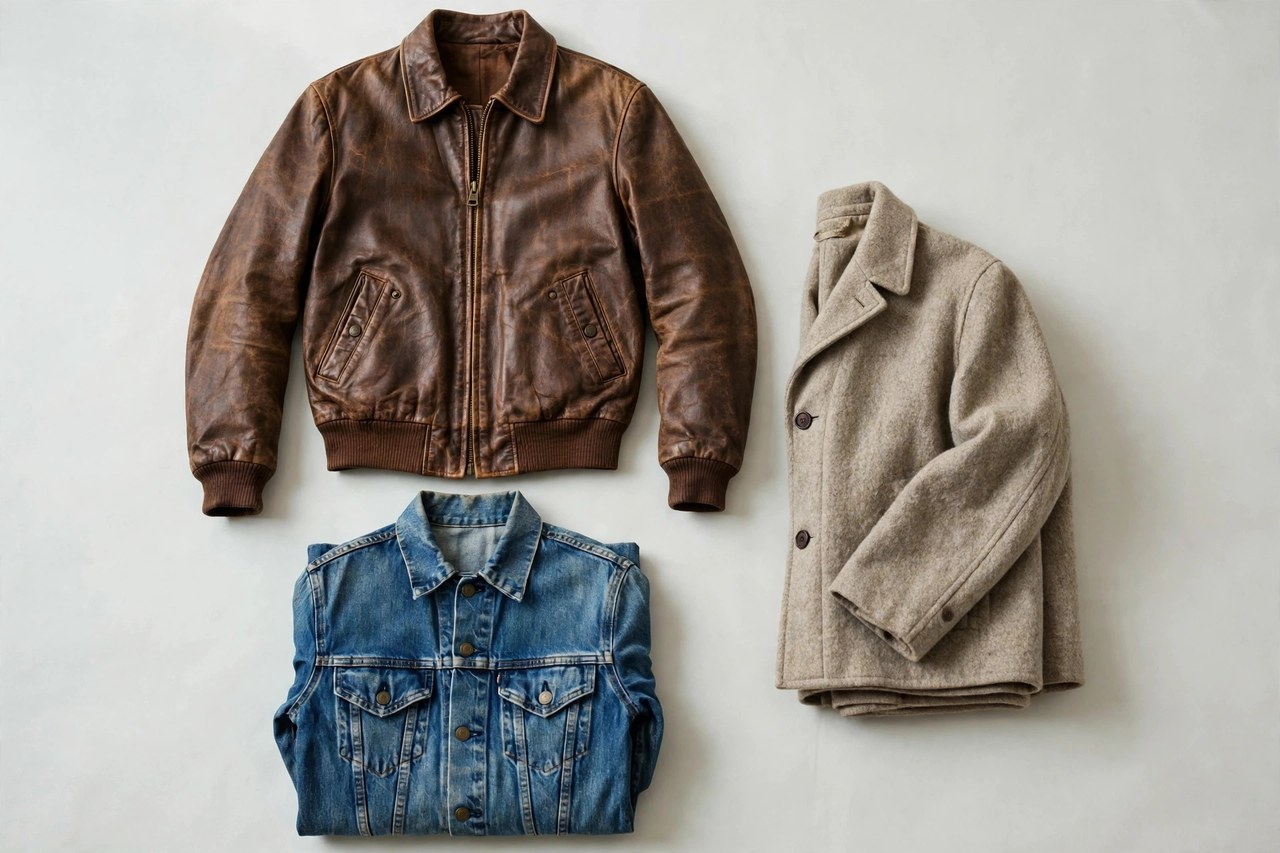
Vintage jackets for men include leather jackets, denim truckers, work coats, military styles, and tailored blazers made in earlier decades. Each period favored different fabrics, linings, zippers, and silhouettes, from boxy mid-century cuts to slimmer later shapes. Genuine vintage pieces often show heavier materials, metal hardware, and sturdy construction rarely found in modern copies. Shoppers value them for character, durability, and individuality, but condition varies widely, so careful inspection matters far more than a label or a claimed age alone. This guide covers the styles worth knowing, the fit points that decide comfort, the fabrics and construction that separate a good buy from a regret, and the simple care that makes the garment last.
Styles and Construction
Check the shell for scuffs, fading, moth holes, and cracked leather, and inspect linings for tears or thinning at the shoulders and cuffs. Test every zipper, snap, and button, since period hardware can seize, bend, or pull away from weakened fabric. Look at seams under the arms and around pockets for stress splits. Smell the garment for mildew or smoke, check collar edges for wear, and ask for close photographs of labels, lining, and any repairs before buying.
Outerwear value hides below the surface: taped versus merely stitched seams, a zipper whose slider runs true under one hand, cuffs and hems that adjust to seal weather out, and a lining slippery enough to glide over the layers beneath. Shoulder build decides the hang over knitwear or a jacket, and pocket engineering decides whether hands and kit ride where your body expects them. Specify for the worst honest day, not the brochure day.
Fit and Sizing
Vintage sizing runs smaller and shorter than modern sizing, so never buy by the tag number alone. Compare the seller's chest, shoulder, sleeve, and back-length measurements against a jacket you already own and like. Allow room for a sweater if you plan winter layering, and remember that leather and stiff denim relax only slightly. A tailor can shorten sleeves or take in a waist, but shoulders and overall length are difficult and costly to change.
Fit outerwear over the bulkiest layer it will honestly cover, and test the working range: arms forward as if driving, arms overhead, sitting with every closure fastened. The coat's shoulders should echo yours rather than extend past them, closures should meet without strain, and the hem must reach the coverage the garment exists to give. A coat fitted over a T-shirt alone belongs to a climate you may not live in.
Wearing and Care
Clean vintage jackets gently and only as needed, using a specialist for leather and structured wool rather than a standard wash. Air pieces after wearing, store them on wide padded hangers away from sunlight, and keep leather conditioned sparingly to prevent drying. Empty pockets before storage, fasten closures to hold shape, and use breathable garment bags instead of plastic. Address small tears and loose buttons promptly so minor damage does not spread during regular wear.
Hang outerwear on broad hangers that carry the shoulders, rest it between wears, and resist washing it often - spot-clean first, and wash by the maker's method with the detergent the fabric demands when a full clean is due. Refresh water-repellent finishes when rain stops beading, never store a coat dirty or compressed, and send leather and tailored pieces to professionals rather than experimenting at home.
Common Questions
What should I check before buying a vintage jacket?
Inspect the shell, lining, seams, and all closures, and ask for clear photographs of labels and any flaws. Check for odors, moth damage, and cracked leather, test zippers fully, and confirm measurements in writing. Honest wear can add character, but structural damage usually costs more to repair than expected.
Why do vintage jacket sizes feel smaller?
Older jackets were cut to the fit standards and average builds of their era, and many have shrunk slightly or been altered over time. Tag sizes are therefore unreliable. Always compare flat chest, shoulder, sleeve, and length measurements against a jacket that already fits you well before purchasing.
How should I store a vintage leather jacket?
Store it on a wide padded hanger in a cool, ventilated place away from direct sunlight and heat. Use a breathable cover rather than plastic, air it occasionally, and condition the leather sparingly only when it feels dry. Never fold leather for long periods, as creases can become permanent cracks.
More in Men's Clothes Guide V
Background
A jacket is a mid-stomach–length garment for the upper body. A jacket typically has sleeves, and fastens in the front or slightly on the side. A jacket is generally lighter, tighter-fitting, and less insulating than a coat, which is outerwear. Some jackets are fashionable, while others serve other purposes such as protective clothing. Jackets come in many different forms and fabrics including, blazers, flak jackets, chef's jacket, dinner jacket, leather jacket, windbreaker, varsity jacket, reversible jacket, rain jacket, etc. Some are meant for fashion and other types of garments have various functions. Vintage clothing is a generic term for garments originating from a previous era. Therefore, a vintage jacket is one that is from a different era. So, what is an era? An era is a span of time marked by character, events, changes on earth, etc. When used in science, for example geology, an era denotes a clearly defined period of time of arbitrary but well-defined length.
Looking for Men's Clothing Stores?
This guide explains men's vintage jackets. To browse where to buy, visit our men's clothing store directory, where you can find retailers that carry them.