Men's Xtreme Sports Apparel Guide
Men's xtreme sports apparel is the protective clothing and personal equipment worn for extreme sports — helmets, pads, guards and specialty garments for activities built on speed, height and risk.
Shop Men's Xtreme Sports Apparel Now
Shop Men's Xtreme Sports Apparel on Amazon Shop Men's Xtreme Sports Apparel on eBayThe Amazon and eBay links on this page are affiliate links. If you make a purchase through them, Apparel Search may earn a commission.
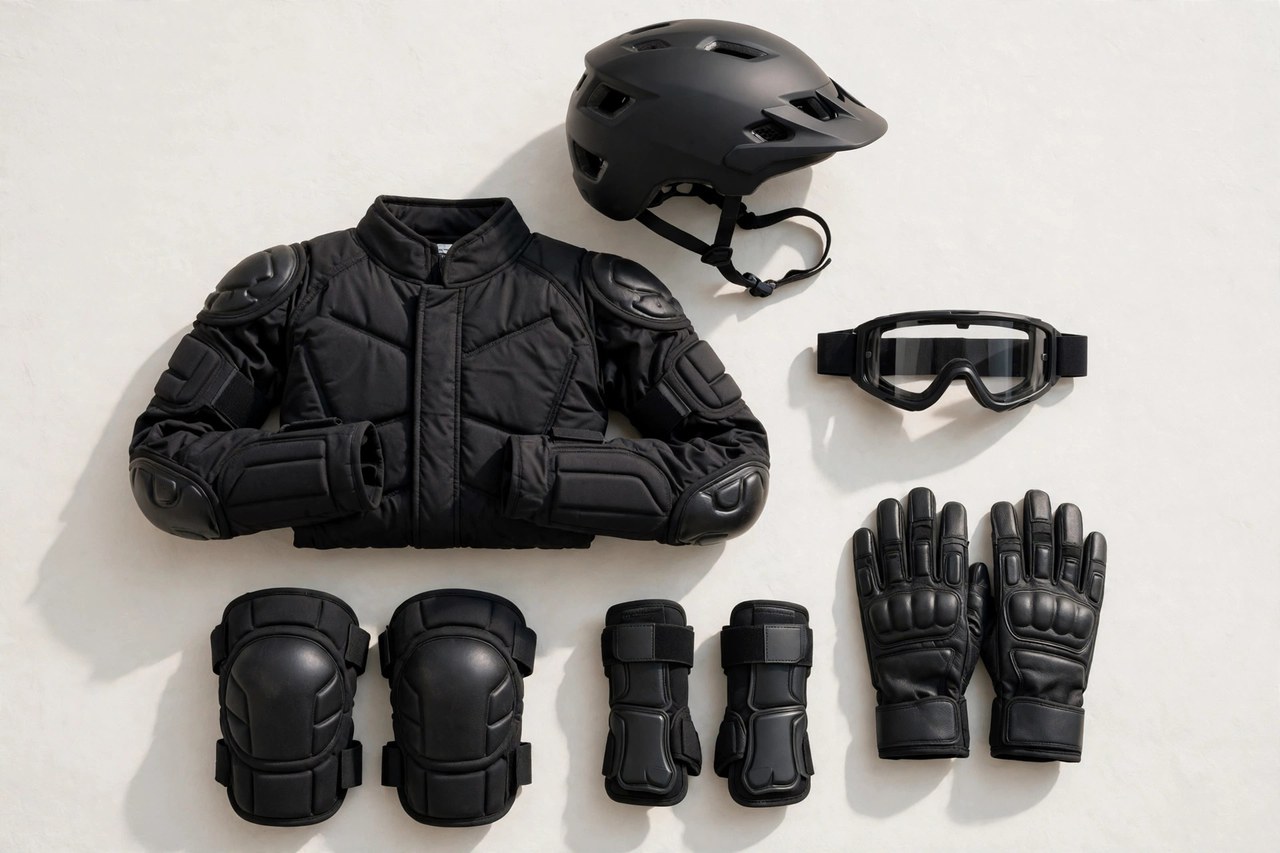
Men's xtreme sports apparel is the clothing and protective gear worn during extreme sports: recreational activities perceived as involving a high degree of risk, often involving speed, height, a high level of physical exertion and highly specialized clothing and gear. The definition of an extreme sport is not exact and the origin of the term is unclear, but it gained popularity in the 1990s when marketing companies picked it up to promote the X Games and the Extreme Sports Channel — and the clothing followed the sports into the mainstream.
What you wear in these activities is personal protective equipment, and it serves an integral role in maintaining the safety of the athlete. Proper protective clothing helps improve the odds of reducing injury, which is why the usage and development of protective gear has evolved through time and continues to advance: many professional leagues mandate the provision and use of protective gear, and usage is mandated in college athletics and occasionally in amateur sports as well.
What Makes a Sport 'Extreme'
Sports described as extreme are, in the older dictionary sense, 'of a character or kind farthest removed from the ordinary or average,' and they carry the potential risk of serious physical injury. Exactly which sports qualify is debatable, but several characteristics are common to most of them. They tend to be more solitary than traditional sports, they are typically youth-based, and they involve a higher number of inherently uncontrollable variables — environmental factors, frequently weather and terrain related, including wind, snow, water and mountains, which cannot be controlled and inevitably affect the outcome of the activity.
Judging follows the same pattern: while traditional sporting criteria such as distance, time and score may be adopted, extreme sports performers are often evaluated on more subjective and aesthetic criteria. The activity list is long and keeps growing — aggressive inline skating, BASE jumping, BMX, bodyboarding, bungee jumping, cave diving, downhill mountain biking, extreme skiing, freediving, hang gliding, ice climbing, kitesurfing, motocross, mountaineering, paragliding, parkour, rock climbing, skateboarding, skydiving, snowboarding, surfing, wakeboarding, whitewater kayaking, wingsuit flying and zorbing among them. Despite the risk, these sports also have the potential to produce real benefits for mental and physical health, which is part of why their clothing and gear deserve a serious guide.
The Protective Equipment Checklist
The checklist of key protective items is the category's foundation: helmets; mouthguards; gloves; a rib protector; hip, tail, thigh, knee, shoulder and elbow pads; wrist guards; goggles, eyeshields or protective glasses; athletic supporters and protective cups; and proper footwear — and many more, plus the joke that you could also wrap yourself in bubble wrap. Each item answers a specific impact: the helmet aids the skull in protecting the brain, pads cushion the joints and bones that meet the ground first, and guards keep wrists and eyes out of the injury statistics.
Padding itself deserves a definition, because it appears across the whole category: it is thin cushioned material added to clothes, usually in an attempt to soften impacts on certain zones of the body. Cushioning padding is included in some sporting goods especially, including those intended for combat sports such as fencing and some martial arts. When you shop any padded garment, judge where the padding sits, whether it stays in position during movement, and whether it can be removed for washing or replaced when it compresses with age.
Helmets and Specialty Protective Garments
A helmet is a form of protective gear worn to protect the head from injuries — more specifically, it aids the skull in protecting the human brain. In civilian life helmets are used for recreational activities and sports (jockeys in horse racing, American football, ice hockey, cricket, baseball and rock climbing among them), for dangerous work, and for transportation, from motorcycle helmets to bicycle helmets. Helmets are obviously important for many extreme sport activities, and each sport's helmet is built and certified for its own kind of impact, so a helmet is bought for a named discipline, never as a generic accessory.
Beyond the checklist sit specialty devices. The air bag vest is a personal safety device worn by some motorcyclists that has found its greatest use among equestrian competitors: worn over a standard padded vest, it inflates automatically with gas from a carbon dioxide canister when a tether attached to the saddle is extended during a fall. Anti-flash gear — flash gear — is basic protective equipment for fire risk, a fire-resistant hood and gloves often made of Nomex. An earplug, inserted in the ear canal, protects against loud noise, water, dust and excessive wind. And riders have long known the kidney belt, a wide elastic band worn around the lower torso intended to protect the internal organs from strain or shock.
Extreme Cold Weather Clothing (ECW)
Cold is an uncontrollable variable of its own, and extreme cold weather clothing — ECW for short — normally refers to clothing for Arctic or mountainous areas on land. The basic approach is to insulate the body from heat loss and keep liquid water or ice out of the insulation, because wet insulation stops insulating. The usual clothing for Arctic or mountain regions is a parka and heavy insulated mittens with long gauntlets to protect the wrist, gaiters to keep snow and moisture out of the top of the boots, and wool-felt or down-insulated booties.
That system matters to any man doing cold-weather sports, from snowmobiling and snowskating to ice climbing and winter mountaineering: when doing cold weather sports it is extremely important to wear the proper clothing, layered so the shell keeps weather out, the insulation stays dry, and extremities — wrists, ankles, feet — are sealed at exactly the gaps where snow works in. ECW is the xtreme category's reminder that protection includes protection from the environment, not only from impact.
Fitting, Inspecting and Replacing Gear
Protective clothing only protects where it sits, so fitting is done in the position of use, wearing the layers the gear will cover: pads centred over the joint they guard, straps snug without cutting circulation, helmets level and stable, footwear matched to the sport's surface and forces. Buy this equipment from retailers who specialize in your sport where you can — a specialist fits helmets, matches pads to disciplines, and keeps the mandated-gear lists for leagues and colleges, so the kit you buy is the kit your activity actually requires.
Inspect gear the way you would inspect any safety equipment. After a significant impact, examine helmets and pads before the next use: cracked shells, foam that stays compressed, torn straps and failed closures are retirement signs. Store the kit dry, uncompressed and out of sunlight, replace pieces on evidence rather than on age alone, and respect makers' service lives for helmets and inflatable devices. In a category bought to reduce the risk of injury, the inspection habit is the cheapest protection there is.
Common Questions
What makes a sport an 'extreme' sport?
There is no exact definition, but extreme sports share common characteristics: a high degree of perceived risk, often involving speed, height and intense physical exertion; a higher number of uncontrollable environmental variables such as wind, snow, water and mountains; mostly solitary, typically youth-based participation; and judging that is often subjective and aesthetic rather than purely distance, time or score. The term itself spread in the 1990s through the X Games and the Extreme Sports Channel.
What protective equipment should be on the checklist?
The core list: a helmet, mouthguard, gloves, a rib protector, hip, tail, thigh, knee, shoulder and elbow pads, wrist guards, goggles or protective glasses, an athletic supporter with protective cup, and proper footwear for the sport. Padding - thin cushioned material built into clothing - softens impacts on the zones it covers, and specialty items such as air bag vests and kidney belts answer specific risks in riding sports.
What is ECW, or extreme cold weather, clothing?
ECW is clothing for Arctic or mountainous conditions whose approach is to insulate the body from heat loss while keeping liquid water and ice out of the insulation. The usual kit is a parka, heavy insulated mittens with long gauntlets to protect the wrists, gaiters to keep snow out of boot tops, and wool-felt or down-insulated booties - essential protection for cold-weather sports such as snowmobiling, ice climbing and winter mountaineering.
More in Men's Clothes Guide X
X has a single topic, gathered with every other letter of the guide on the X hub:
Extreme Sports and Protective Gear
The catalogue of extreme sports activities is long: aggressive inline skating, airsoft, auto racing, BASE jumping, BMX, bodyboarding, bungee jumping, cave diving, downhill mountain biking, extreme ironing, extreme pogo, extreme skiing, flowriding, Formula One, freediving, freeflying, freerunning, freeskiing, freestyle scootering, gliding, hang gliding, hardcourt bike polo, ice canoeing, ice climbing, kitesurfing, land windsurfing, longboarding, mixed martial arts, motocross, motorcycle racing, mountain biking, mountainboarding, mountaineering, paragliding, parkour, powerbocking, rafting, rallying, rock climbing, roller derby, sandboarding, scuba diving, skateboarding, skimboarding, skydiving, slacklining, snowboarding, snowmobiling, snowskating, street luge, surfing, truck racing, wakeboarding, waveski, whitewater kayaking, windsurfing, wingsuit flying and zorbing.
Personal protective equipment serves an integral role in maintaining the safety of an athlete, its usage and development have evolved through time and continue to advance, many sports leagues and professional sports mandate the provision and usage of protective gear, and usage is also mandated in college athletics and occasionally in amateur sports. The protective checklist even ends with a joke — after helmets, mouthguards, gloves, rib protectors, pads, wrist guards, goggles and proper footwear, it adds: wrap yourself in bubble wrap (it was kidding). Although extreme sports have risk, they also have the potential to produce drastic benefits on mental and physical health.
More to Explore on Apparel Search
Looking for Men's Clothing Stores?
This guide helps you choose men's xtreme sports apparel and protective gear. To browse where to buy, visit our men's clothing store directory, where you can find retailers that carry them.