Women's Bamboo Clothing Guide
From camisoles to cardigans, a practical overview of the garments bamboo does best — and how to read the label before you buy.
Shop Women's Bamboo Clothing Now
Shop Women's Bamboo Clothing on Amazon Shop Women's Bamboo Clothing on eBayThe Amazon and eBay links on this page are affiliate links. If you make a purchase through them, Apparel Search may earn a commission.
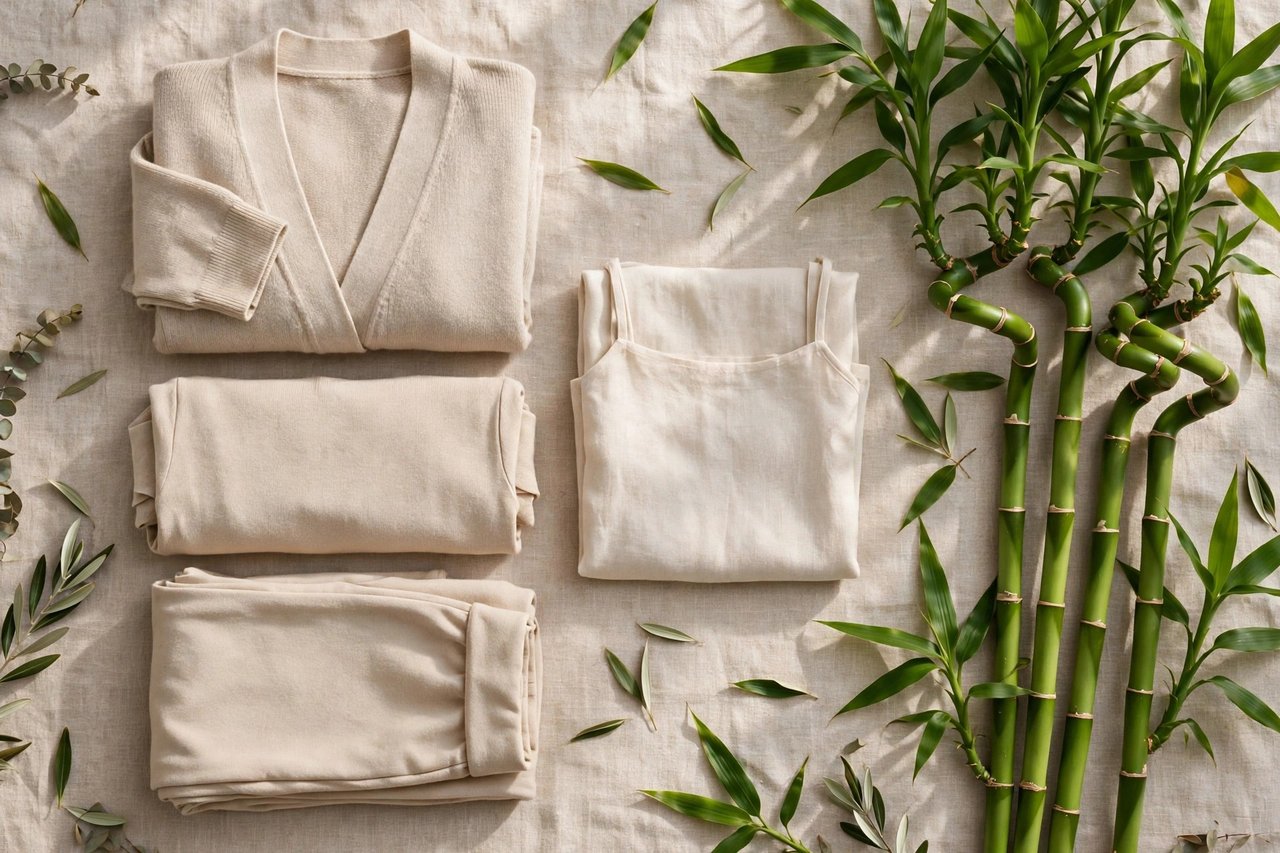
Once you start looking, bamboo clothing turns up across nearly every drawer in a wardrobe. Tees and tops are the most common entry point, but the same soft knit also appears in underwear, socks, leggings, pajamas, camisoles, dresses and light cardigans. That range exists because bamboo viscose is versatile: in a jersey it becomes a fluid t-shirt, in a rib knit it becomes a fitted tank, and blended with spandex it gains the stretch needed for leggings and fitted underlayers. This overview walks through which garments genuinely benefit from the fabric, how the drape and feel differ from cotton and synthetics, how to decode the wording on labels, and what fair prices look like so you can shop the category with confidence.
Which Garments Are Commonly Made From It
Next-to-skin pieces dominate the bamboo market, and for good reason. Underwear, socks, camisoles and sleepwear put the smooth fiber surface directly against skin, where its softness is most noticeable. Tees, tanks and long-sleeve tops come next, often in bamboo-cotton blends that add a little body to the fluid drape. Pajama sets and lounge pants are another strong category, since the fabric feels cool at first contact and comfortable through the night for many sleepers. Dresses and skirts in bamboo jersey appear too, usually in relaxed, flowing cuts that suit the way the fabric falls.
You will see fewer bamboo options in structured clothing. Tailored trousers, crisp blouses and anything that needs to hold a sharp crease are usually better in other fabrics, because bamboo viscose relaxes rather than holds shape. Denim-style pieces and heavy outerwear are rare, and when bamboo appears there it is usually a small percentage in a blend. Activewear is a middle ground: some brands use bamboo blends for yoga tops and light training layers, but high-intensity gear still leans on nylon and polyester for durability and compression. Matching the garment to the fabric strengths saves disappointment.
Drape and Feel in Real Wear
The signature quality of bamboo viscose is its fluid drape. A bamboo tee does not stand away from the body the way a crisp cotton tee does; it skims and flows, which many women find flattering in tops, tunics and dresses. The surface feels smooth and slightly cool, with none of the dry hand that some cotton develops after repeated washing. That said, the same fluidity means thin bamboo knits can reveal the outline of whatever is worn underneath, so camisoles and nude-tone underlayers are useful partners for lighter colors and lighter fabric weights.
Weight matters enormously. A lightweight bamboo jersey is wonderful for summer tops and sleepwear but can feel flimsy in a garment you expect to wear hard, while a midweight interlock or ponte-style knit offers more opacity and resilience for dresses and leggings. When product pages list fabric weight in grams per square meter, treat roughly 160–200 as light, 200–260 as a versatile middle, and anything above that as substantial. If no weight is given, customer comments about sheerness and cling are the next best guide, and ordering one test piece first is a sensible habit in this category.
Reading the Label: Viscose From Bamboo
Label literacy is the single most useful bamboo shopping skill. In the United States, the Federal Trade Commission requires that fabric made through the viscose process be labeled viscose from bamboo or rayon from bamboo, because calling it simply bamboo fiber would imply the natural plant fiber survived processing, which it does not. A label that follows the rules is actually a good sign — it suggests a brand that describes its product accurately. Look for the percentage as well. A top that is 95 percent bamboo viscose with 5 percent spandex will feel and behave very differently from one that is 70 percent bamboo, 25 percent cotton and 5 percent spandex.
Blends are not a drawback in themselves. Cotton adds structure and reduces cling, spandex adds recovery so necklines and waistbands keep their shape, and small amounts of nylon can improve abrasion resistance in socks and leggings. The right question is whether the blend suits the garment, not whether the bamboo percentage is maximal. Also check the care panel on the label before buying: if a brand expects hand washing and you know everything in your house goes into one machine load, that mismatch will shorten the garment life no matter how good the fabric is. Honest labeling plus realistic care is the combination to look for.
Price Expectations and Value
Bamboo clothing generally costs more than equivalent cotton basics and less than premium silk or branded performance fabrics. Expect a bamboo tee to run noticeably above a basic cotton tee from the same tier of retailer, with underwear, socks and sleepwear following the same pattern of a modest premium rather than a luxury markup. Part of that premium reflects fiber and processing costs, and part reflects the positioning of bamboo as a comfort upgrade. Sales are frequent in this category, so paying full price is rarely necessary if you can wait for a promotion or buy multipacks of basics like socks and underwear.
Value depends on how a piece holds up in your wash routine. A slightly more expensive bamboo top with a midweight knit and a sensible blend will usually outlast a bargain version in a very thin knit, even if both feel equally soft in the store. Consider cost per wear: a bamboo camisole worn weekly under cardigans earns its price quickly, while a novelty piece worn twice may not. Reading fiber content, weight and care together, rather than chasing the highest bamboo percentage or the lowest price alone, consistently leads to the purchases women in this category are happiest with a year later.
Building a Small Bamboo Rotation
If you are new to the fabric, a small, deliberate rotation beats a big speculative order. Start with one next-to-skin piece, such as underwear or a camisole, one daytime piece like a tee or top, and one pair of socks, then live with them for a month of wearing and washing. That trial tells you how the drape works with your other clothes, whether the fabric weight you chose is opaque enough, and how much care effort you are actually willing to give. From there, expanding into sleepwear or additional tops is an informed choice rather than a guess, and the pieces you add will match the way you really dress.
Related Women's Guides
Looking for Women's Clothing Stores?
This guide helps you choose women's bamboo clothing by style and fabric. To browse where to buy, visit our women's clothing store directory, where you can find retailers that carry them.