Women's Bamboo T-Shirts Guide
The bamboo t-shirt as a garment in detail — fabric weight, opacity, shrinkage and why screen printers reach for these blanks.
Shop Women's Bamboo T-Shirts Now
Shop Women's Bamboo T-Shirts on Amazon Shop Women's Bamboo T-Shirts on eBayThe Amazon and eBay links on this page are affiliate links. If you make a purchase through them, Apparel Search may earn a commission.
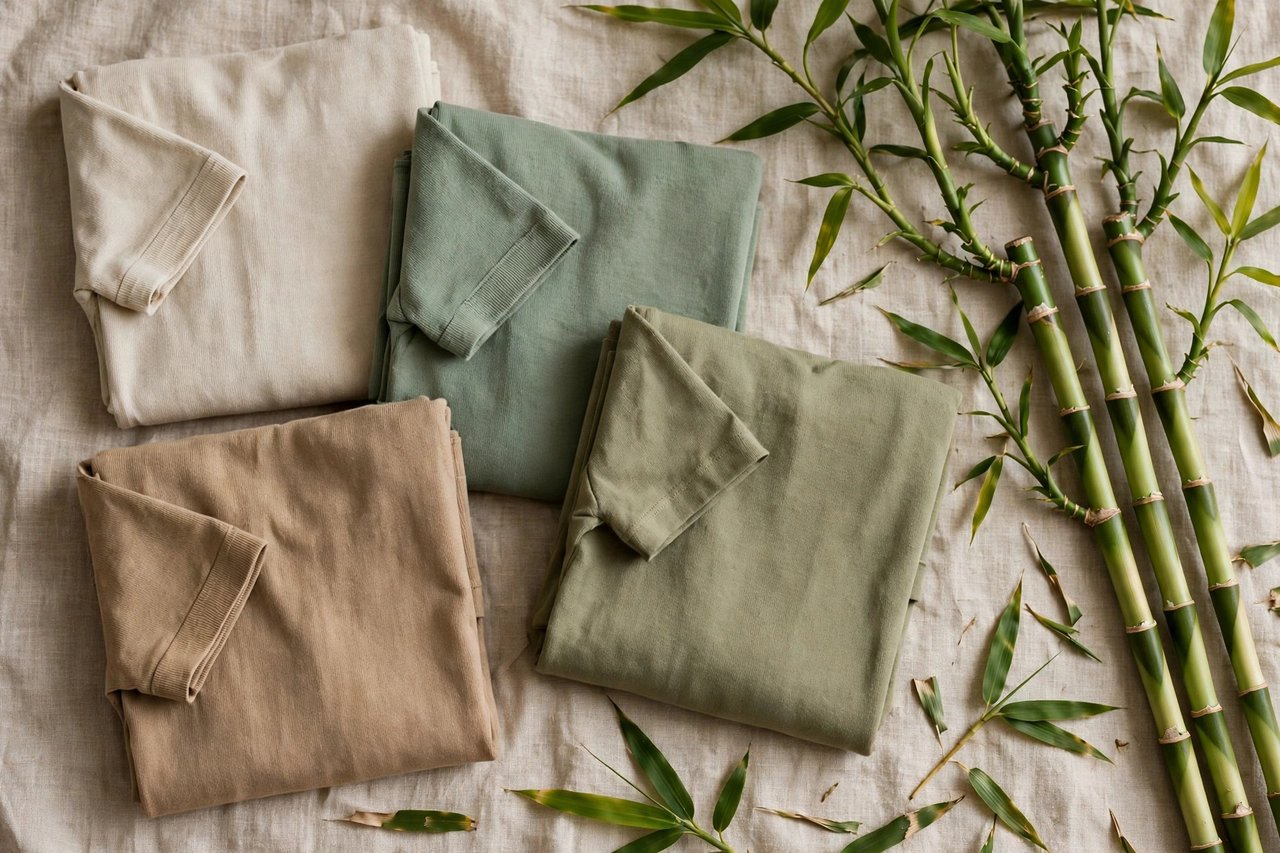
The bamboo t-shirt has quietly become a staple blank and a wardrobe basic at the same time. As a garment it behaves differently from the classic cotton tee: it drapes instead of standing, feels cool and smooth instead of dry and crisp, and asks a little more care in return. Those differences come down to measurable things — fabric weight, knit construction, fiber blend and how the shirt was cut — and once you understand them, choosing a bamboo tee that fits well, stays opaque and survives the wash becomes straightforward. This guide treats the bamboo t-shirt as a garment in its own right, then explains a side of the story most shoppers never hear: why printers and decorators so often choose bamboo blanks for printed designs.
Fabric Weight and What It Changes
Fabric weight, usually given in grams per square meter or ounces per square yard, predicts more about a bamboo tee than any marketing word. Lightweight jerseys around 140–180 gsm feel airy and cool, drape closely and work beautifully as layering pieces and summer tops, but they are the most likely to be sheer and the least forgiving of textured underlayers. Midweight fabrics around 180–220 gsm are the versatile heart of the category, offering a smoother silhouette, better opacity and enough substance to wear alone with trousers or a skirt. Heavier bamboo knits exist but are less common, since part of the fabric appeal is its lightness.
Weight also affects durability and care. Very light knits snag more easily and can develop small holes at friction points, while midweight knits resist that wear noticeably better. If a product page gives no weight, judge by the photos: a tee that holds a soft fold at the hem rather than floating is usually midweight, and reviews mentioning sheerness almost always refer to the lightest fabrics. When in doubt, order the midweight option first. It is the version of the bamboo tee that most women end up reordering, because it delivers the signature drape without the transparency and fragility trade-offs of the featherweight styles.
Opacity, Fit and Shrinkage
Opacity is the bamboo tee question asked most often, and the honest answer is that it depends on color and weight together. White and pastel bamboo tees in light knits are commonly semi-sheer, enough that a camisole or a smooth, skin-tone bra is part of wearing them well. Midweight fabrics and deeper colors — black, navy, charcoal, burgundy and forest — are reliably opaque in normal light. A quick test works when shopping in person: stretch the fabric slightly over your hand under bright light; if you can clearly see your fingers through it, plan on layering it.
Fit runs fluid. Bamboo jersey relaxes as you wear it, so a tee cut close in the morning may ease noticeably by evening, particularly around the hem and sleeves. Shrinkage adds the second variable: washed cool and air dried, a quality bamboo tee holds its size well, but hot water and a hot dryer can take meaningful length off the body. Many women size exactly as they do in cotton tees and simply protect the fit with gentle washing. If you prefer a dryer routine for everything, sizing up half a step or choosing a bamboo-cotton blend with better heat tolerance is the pragmatic answer.
Blends: Bamboo, Cotton and Spandex
Most bamboo t-shirts are blends, and the ratios tell the story. A 70 percent bamboo, 30 percent cotton tee is the classic printer and retail blank formula: the bamboo delivers softness and drape, while the cotton adds body, improves opacity and helps the shirt keep its shape and survive printing and washing. Higher bamboo shares, around 95 percent with 5 percent spandex, produce a silkier, more fluid shirt that feels luxurious and stretches comfortably, but clings more and shows underlayers more readily. Tri-blends that add polyester feel springier and dry faster, moving the shirt toward activewear territory.
Neither direction is better in the abstract; they suit different jobs. Choose cotton-rich blends for an everyday tee that behaves predictably, gets printed, and tolerates a normal laundry routine. Choose high-bamboo spandex blends when the tee is really a soft top — worn with leggings, layered under blazers, or chosen purely for how it feels against skin. Reading the ratio before buying takes five seconds and prevents the most common disappointment in this category, which is expecting one kind of shirt and receiving the other.
Why Printers Like Bamboo Blanks
Screen printers and direct-to-garment decorators reach for bamboo blanks for practical reasons. The smooth fiber surface presents an even ground for ink, so prints sit cleanly with fine detail and soft edges, and the finished print has a softer hand than the same design on a rough, heavyweight cotton shirt — a difference customers can feel immediately. Bamboo-cotton blanks also drape in a way that makes a printed tee look like a finished retail garment rather than a promotional giveaway, which is why boutique brands and fundraiser lines with a premium feel so often start from these blanks.
There are handling notes printers learn quickly. The fluid fabric needs careful placement on the press to keep designs straight, heat settings for curing inks must respect viscose sensitivity, and water-based inks are a popular pairing because they keep the print as soft as the shirt. For shoppers, the takeaway is simpler: a printed bamboo tee from a reputable decorator usually means a design that feels like part of the shirt rather than a stiff panel on top of it. If you are ordering custom shirts for a team, event or small brand, ask for the blend ratio and weight by name — you now know exactly what to ask for.
Washing and Keeping the Shape
A bamboo tee rewards a gentle routine and punishes a harsh one quickly. Wash cool, inside out, with similar soft garments, and keep it away from heavy denim loads whose rivets and zippers abrade the smooth surface. Skip fabric softener, which coats the fibers, and choose air drying or the lowest dryer heat, removing the shirt slightly damp and smoothing the hem and sleeves by hand. Fold rather than hang for storage, since the fluid knit can stretch at the shoulders on a hanger. Follow that pattern and the tee that draped so well on day one will still be the one you reach for a year of regular wear later.
Related Women's Guides
Looking for Women's Clothing Stores?
This guide helps you choose women's bamboo t-shirts by style and fabric. To browse where to buy, visit our women's clothing store directory, where you can find retailers that carry them.