Women's Bamboo Shirts Guide
Button shirts and casual shirts gain a softer hand and a fluid fall in bamboo — with a few wrinkle and care trade-offs to know.
Shop Women's Bamboo Shirts Now
Shop Women's Bamboo Shirts on Amazon Shop Women's Bamboo Shirts on eBayThe Amazon and eBay links on this page are affiliate links. If you make a purchase through them, Apparel Search may earn a commission.
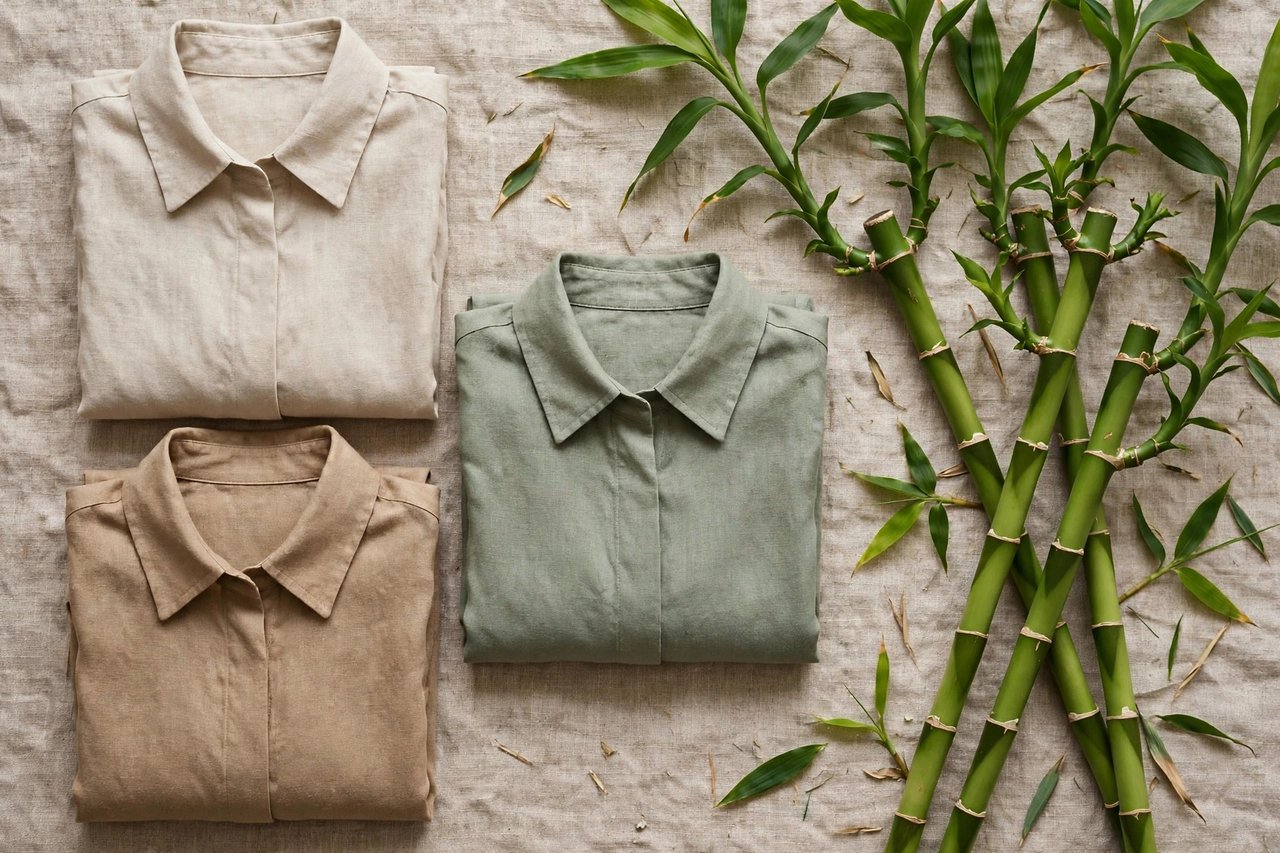
A shirt is where bamboo fabric meets its most interesting test. Unlike a soft tee that only needs to feel good, a shirt is expected to look composed — to sit neatly at the collar, fall cleanly over the shoulders and survive a full day without looking slept in. Bamboo viscose brings real advantages to that job, including a smooth hand, a graceful drape and a cool feel in warm offices and summer weather. It also brings honest compromises, especially around wrinkles and structure. This guide looks at bamboo button shirts and casual pull-on shirts separately, explains how blends change the result, and covers the care routine that keeps a bamboo shirt looking like a shirt rather than a rumpled knit.
Softness and Drape at the Collar and Cuff
The first thing most women notice in a bamboo shirt is how it feels at the neck and wrists, the two places a shirt touches skin all day. The smooth viscose surface has none of the slight roughness of a standard cotton poplin, so collars feel gentle even on sensitive skin and cuffs slide easily under a watch or bracelet. Through the body, the fabric falls in soft folds rather than the crisper planes of cotton, giving button shirts a relaxed, modern elegance that pairs well with trousers, skirts and denim. That drape is the main reason to choose bamboo here — it reads as polished without feeling starched.
Structure is the counterweight. A bamboo shirt will rarely hold a razor-sharp collar point or a firm cuff without help from interfacing, so the best designs build that support in with fused collar bands and plackets. When you shop, check product photos for how the collar sits: a collar that already looks soft and rolling in the photo will likely relax further with wear, which suits casual styling but may not suit a formal dress code. Camp shirts, popovers and relaxed button-downs are natural fits for the fabric, while very formal tailored shirts remain the territory of cotton and cotton blends.
Wrinkle Behavior, Honestly
Bamboo viscose wrinkles moderately — more than a wrinkle-resistant treated cotton, less dramatically than linen, and differently from both. Creases tend to be soft rather than sharp, and many release simply from body heat and hanging time, so a shirt hung in a steamy bathroom or on a hanger overnight often looks presentable by morning. Seatbelt lines, elbow creases and the fold marks from a suitcase, however, will show, especially in lighter solid colors where every shadow across the fabric is visible. A quick pass with a cool iron or a handheld steamer restores the surface without the high heat that can damage viscose fibers.
Travelers should weigh this realistically. A bamboo shirt packed carefully, rolled rather than folded and hung on arrival, performs respectably for casual and smart-casual trips, and its comfort on long flights or drives is a genuine plus. For a schedule of formal meetings straight off the plane, a wrinkle-resistant cotton shirt is still the safer tool. Many women end up using each where it shines: bamboo for everyday office wear, dinners and warm-weather days when comfort leads, and crisper fabrics when a boardroom finish is the whole point of the outfit.
Blends and Weaves That Work Best
Pure bamboo viscose shirts exist, but blends usually wear better. Bamboo with a proportion of cotton gains body and crease recovery while keeping much of the softness, and a small percentage of spandex — typically 2–5 percent — adds give across the back and bust that makes a fitted shirt far more comfortable. In woven shirts, look for twill or satin weaves if you want extra smoothness and a slight sheen for dressier looks, and plain poplin-style weaves for a matte, everyday finish. Knit shirts in bamboo jersey blur the line between shirt and top, offering a pull-on shape with a collar or Henley placket that reads more finished than a plain tee.
Button quality and construction deserve a glance, too. Fluid fabric moves more than crisp cotton, so buttons benefit from a firm placket behind them and stitching that is dense and even. Check that buttonholes are cleanly finished, since soft fabrics can fray at stressed points over time. Side seams that stay straight after washing, rather than twisting, signal a well-cut garment. None of this requires expertise to check — thirty seconds of looking at seams, placket and collar construction in person, or zooming into photos online, tells you most of what the price tag does not.
Fit, Sizing and Care
Bamboo shirts often fit a little differently from their cotton equivalents because the fabric relaxes. A size that feels perfect and close in the fitting room may ease out by half a size over a day of wear, which is comfortable in a relaxed cut but can leave a tailored cut looking tired. If you are between sizes and choosing a structured style, the smaller size often wears better over time, while relaxed and oversized styles are forgiving either way. Shrinkage is the other variable: viscose can contract in hot water or a hot dryer, so the shirt that fits today needs cool washing to stay that size next month.
Care is simple but non-negotiable. Wash cool on a gentle cycle with similar colors, button the shirt and turn it inside out to protect the surface, and avoid heavy loads where zippers and hardware can snag the smooth fibers. Reshape the collar and placket while damp, then hang or lay flat to dry. Iron, if needed, on the lowest effective setting with the shirt inside out. Followed consistently, that routine keeps bamboo shirts soft, smooth and presentable for years — and it is the difference between owners who swear by the fabric and owners who gave up on it after one hot wash.
Related Women's Guides
Looking for Women's Clothing Stores?
This guide helps you choose women's bamboo shirts by style and fabric. To browse where to buy, visit our women's clothing store directory, where you can find retailers that carry them.