Women's Bamboo Clothing Guide
Soft, breathable and widely marketed as eco-friendly — here is what bamboo clothing really is, and what to expect before you buy.
Shop Women's Bamboo Clothing Now
Shop Women's Bamboo Clothing on Amazon Shop Women's Bamboo Clothing on eBayThe Amazon and eBay links on this page are affiliate links. If you make a purchase through them, Apparel Search may earn a commission.
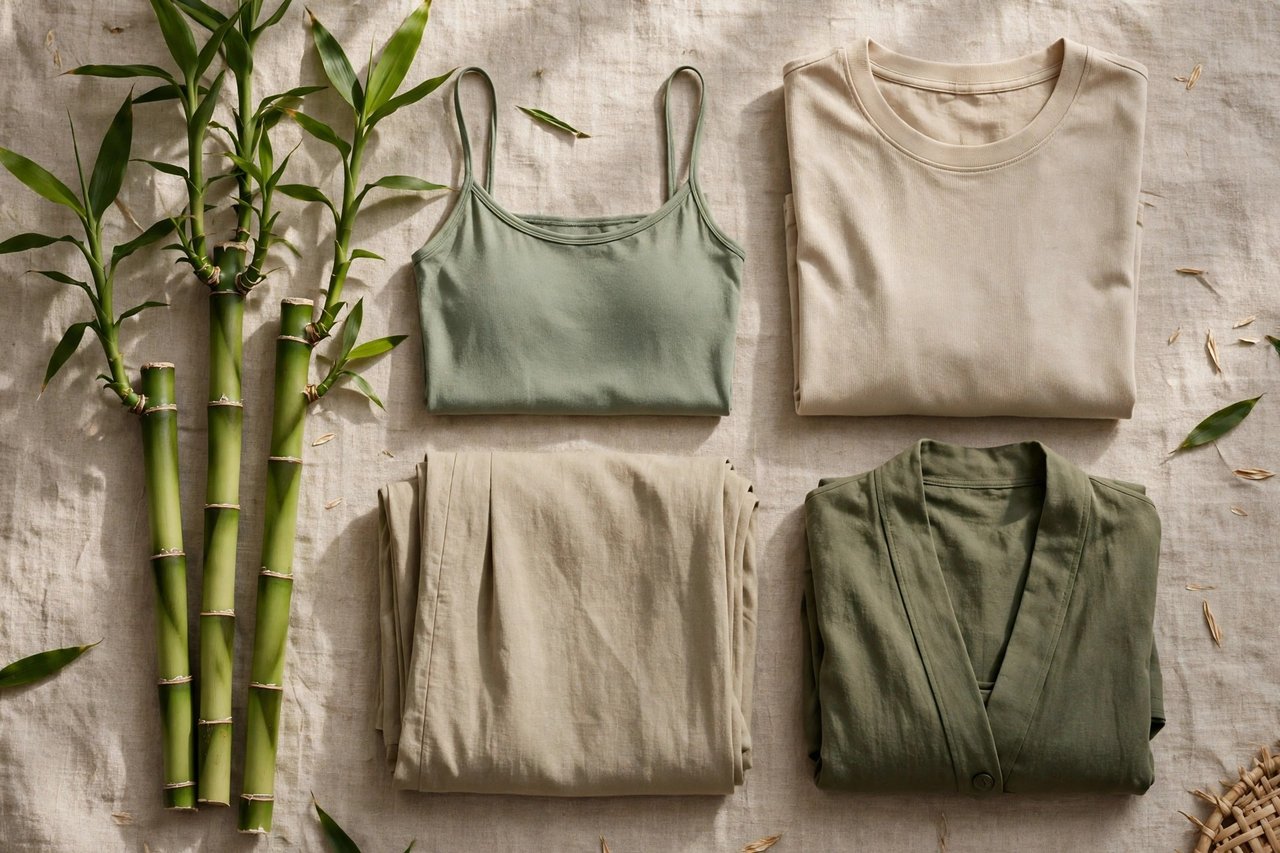
Bamboo has become one of the most talked-about fabrics in women's clothing, appearing on everything from socks and underwear to tees, tops and loungewear. The appeal is easy to understand at first touch. Bamboo-based fabrics feel exceptionally soft, often compared to a blend of silk and cashmere, they drape smoothly over the body, and they handle moisture in a way that keeps skin feeling drier than plain cotton in warm weather. Shoppers searching for a gentler option for sensitive skin, or a cooler option for summer and sleep, encounter bamboo again and again, and the marketing around it sounds almost too good to be true. This hub explains what the fabric actually is, how it is made, where it performs well, where it falls short, and how to read a label so you know exactly what you are paying for.
What Bamboo Fabric Actually Is
Almost all bamboo clothing sold today is bamboo viscose, also called bamboo rayon. The process starts with bamboo stalks that are pulped and dissolved in chemical solvents, then extruded into fibers that are spun into yarn. By the time that process is complete, the original plant fibers no longer exist in their natural form, which is why regulators in the United States require labels to say viscose from bamboo or rayon made from bamboo rather than simply bamboo fiber. That distinction matters because the softness, drape and moisture behavior come from the viscose structure, not from any intact bamboo plant material surviving in the finished shirt or sock.
A much smaller share of products uses bamboo linen, made by mechanically crushing and combing the plant, or bamboo lyocell, made in a closed-loop solvent process. Both are harder to find, cost more, and feel noticeably different — linen versions are crisper and less silky, while lyocell versions are closer to the smooth viscose most shoppers know. When a listing just says bamboo without qualification, it is safest to assume viscose unless the label names another method. Understanding that single point clears up most of the confusion around the category and helps you compare products fairly against cotton, modal and Tencel.
Real Benefits You Can Feel
The genuine strengths of bamboo viscose are comfort-related, and they are real. The fibers are round and smooth, so fabrics made from them feel soft against skin with very little scratchiness, which is why bamboo is popular for underwear, socks, camisoles and sleepwear worn close to the body. The fabric absorbs moisture well and releases it gradually, helping wearers feel less clammy in heat, and the fluid drape flatters tops, tees and dresses without clinging as tightly as many synthetics. Bamboo viscose also takes dye evenly, so colors tend to look rich and consistent across a garment.
Breathability is another practical plus. Knits in lighter weights allow air to move and feel cool to the touch, which suits warm climates, hot sleepers and anyone who layers under jackets or cardigans. Because the surface is smooth, it can be a comfortable choice for people who find wool itchy and some cotton weaves rough. None of these benefits require exaggeration to be worthwhile — for many women, the hand feel alone justifies choosing bamboo for next-to-skin pieces, provided expectations about durability and environmental impact stay realistic.
Drawbacks and Honest Limits
Bamboo viscose is not a miracle fabric, and an honest guide should say so plainly. The viscose process uses strong chemicals, and while responsible makers manage and recover those chemicals carefully, growing fast-renewing bamboo does not by itself make the finished fabric low impact. Claims that bamboo clothing is naturally antibacterial in a lasting way are also overstated — any such property of the raw plant does not reliably survive the viscose process, so treat strong odor-killing promises with skepticism and judge socks or underwear by fit, weight and washing results instead.
On the practical side, bamboo knits can be less hard-wearing than cotton or nylon blends. They may stretch out at knees, elbows and waistbands, pill in high-friction areas, and shrink if washed hot or tumble dried on high heat. Light colors can be slightly sheer in thin knits, and very fluid fabrics show every layer beneath them. Prices also run higher than comparable cotton basics, so it pays to reserve bamboo for the pieces where softness matters most rather than rebuilding an entire wardrobe in it at once.
How to Shop This Section
This bamboo section breaks the category down by garment so you can focus on what you actually need. The clothing overview covers which pieces are commonly made from bamboo and how to read labels across a whole outfit. Dedicated pages look at shirts, t-shirts and tees — which overlap but differ in cut and styling — along with tops for layering, socks for everyday and sport use, and underwear chosen for softness and moisture handling. Each page discusses fabric weight, fit, care and value for that specific garment, because a bamboo fabric that is perfect for a camisole may be far too delicate for a hard-working sock.
A useful strategy is to start with one or two pieces, wear and wash them several times, and see how the fabric holds up in your routine before buying more. Check the fiber content percentage, since blends with cotton, spandex or nylon behave differently from pure bamboo viscose, and note the care label before you commit. If a price seems unusually low for a claimed high bamboo content, read the full fiber breakdown carefully. Good bamboo basics are widely available at fair prices, and knowing the vocabulary on the label is the fastest way to find them.
Care Basics That Protect the Fabric
Gentle care makes a visible difference to how long bamboo clothing lasts. Wash in cool or warm water on a gentle cycle, ideally inside a mesh bag for smaller items, and skip fabric softeners that can coat the fibers and reduce absorbency. Air drying flat or on a line preserves shape and prevents the shrinkage that high dryer heat can cause; if you do use a dryer, choose the lowest setting and remove pieces while they are just barely damp. Store knits folded rather than hung, because fluid bamboo fabrics can stretch under their own weight on a hanger. With that routine, quality bamboo pieces stay soft and smooth through many seasons of regular wear.
Related Women's Guides
Looking for Women's Clothing Stores?
This guide helps you choose women's bamboo clothing by style and fabric. To browse where to buy, visit our women's clothing store directory, where you can find retailers that carry them.