Women's Bathing Suits Guide
The umbrella guide to bathing suits — silhouettes, fabrics, and honest fit advice for the pool, the beach, and beyond.
Shop Women's Bathing Suits Now
Shop Women's Bathing Suits on Amazon Shop Women's Bathing Suits on eBayThe Amazon and eBay links on this page are affiliate links. If you make a purchase through them, Apparel Search may earn a commission.
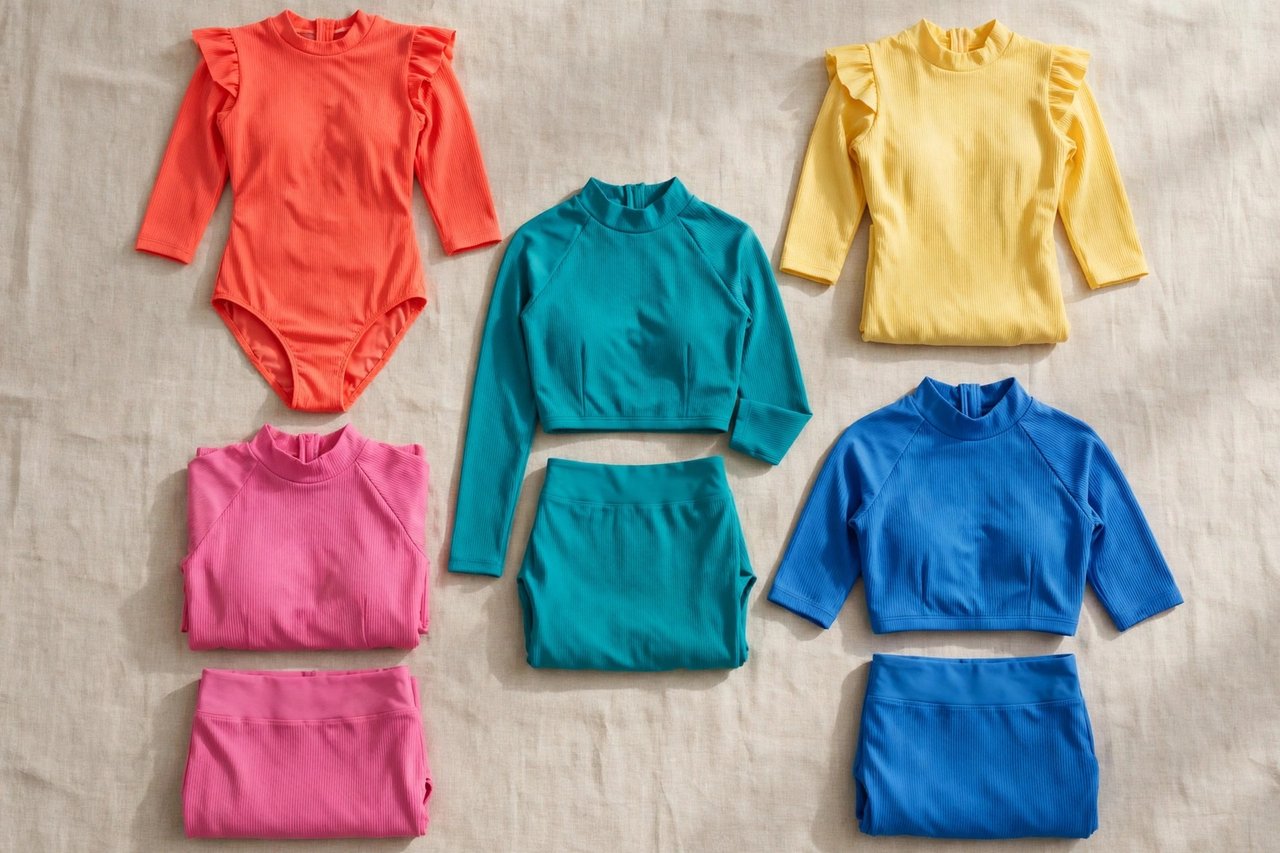
A bathing suit has one job description with many dialects: it must stay in place in the water, dry reasonably fast, feel comfortable for hours, and make the wearer feel good about being at the beach or pool in the first place. This umbrella guide maps the whole landscape — sleek one-pieces, flexible two-pieces, practical tankinis, modest swim dresses, and athletic racing suits — so you can match the silhouette to your plans instead of guessing in a fitting room. The right choice depends less on trends than on honest questions: Will you swim laps or mostly read in the shade? Do you want adjustable coverage? How much sun protection matters? Answer those, and the crowded swim wall narrows quickly to a handful of suits that genuinely suit your summer.
One-Piece Versus Two-Piece: The Core Choice
The one-piece offers uninterrupted coverage, built-in tummy smoothing, and the most secure fit for active swimming, diving, and water sports; modern versions avoid any matronly reputation with cutouts, interesting backs, and bold prints. The two-piece wins on flexibility — mix sizes top and bottom, adjust coverage, and make bathroom breaks simple — and it spans everything from sporty crop tops to classic triangle bikinis. Between them sits the tankini, a tank-style top over brief or short bottoms, which delivers two-piece convenience with one-piece coverage and is a favorite for long beach days and maternity wear. Swim dresses and skirted suits add a feminine, modest silhouette that transitions gracefully to the boardwalk cafe. Neither family is better in the abstract; they simply optimize for different days.
Choosing by Activity
Let your calendar shop for you. Lap swimmers and fitness swimmers need a streamlined one-piece or secure athletic two-piece with wide straps, a racer or cross back, and chlorine-resistant fabric that will not bag out mid-season. Surfers and paddleboarders should prioritize snug fits, secure closures, and bottoms that stay put in a wipeout — boardshort-inspired and boyshort bottoms shine here, often layered with a rash guard. Beach loungers and vacationers can indulge in the prettier, less technical suits: bandeaus, embellished pieces, and mix-and-match bikinis that spend more time dry than wet. Water aerobics and active classes call for high necklines, full support, and bottoms with real coverage for jumping and stretching. Buying one suit per main activity beats one compromise suit that does everything adequately and nothing well.
Fabrics: Nylon, Polyester, and Elastane Explained
Nearly every suit blends a base fiber with elastane — the stretch fiber sold as spandex or Lycra — typically at ten to twenty percent. Nylon blends feel silky, fit smoothly, and take color beautifully, but chlorine and sunlight degrade them faster. Polyester blends are the durability champions, resisting chlorine, fading, and stretching out, which is why training suits favor them; the trade-off is a slightly less silky hand. PBT, a polyester variant, is the premium chlorine-proof choice for daily swimmers. Ribbed and textured knits add visual interest and a forgiving fit, while recycled nylon and polyester options now perform on par with virgin fibers. Whatever the label, more elastane means a snappier fit and a faster decline once the fiber tires, so rinse after every wear to slow the clock.
Fit, Support, and Sizing That Works in Water
Try suits on with movement in mind: raise your arms, bend, sit, and take a few brisk steps, because a suit that only poses well will fail you in the surf. Remember that most swim fabrics relax slightly when wet, so a suit should feel snug and smooth on dry land — not painful, but without wrinkles of spare fabric. Bust support ranges from soft shelf bras to molded cups and true underwires sized like bras; fuller busts generally do best in bra-sized tops with adjustable straps. Torso length is the silent deal-breaker in one-pieces, so long-torso shoppers should seek long-torso sizing rather than sizing up overall. Bottoms should stay put in a gentle tug test, and straps should not dig. When between sizes in a two-piece, you can often size each piece independently — one of the format's great advantages.
Styling, Sun Sense, and Cover-Up Pairings
A bathing suit anchors a whole beach wardrobe. Prints hide water spots and add energy; dark solids are timeless and pair with everything; color blocking can balance proportions by drawing the eye where you want it. Coordinate your cover-up to the suit's mood — a sarong or wrap skirt for an elegant two-piece, an oversized shirt or kaftan for a sporty one-piece, beach pants for a tankini headed to lunch. Sun protection deserves equal billing with style: a wide-brim hat, sunglasses, and sunscreen on exposed skin, plus a UPF rash guard for long midday sessions, will do more for your skin than any suit choice alone. Many swimmers keep a light, quick-dry layer in the beach bag for the walk home. Build the outfit around the suit and the day runs smoother from the first swim to the last photo.
Rinsing, Washing, and Chlorine Care
Five minutes of care after each swim doubles a suit's useful life. Rinse promptly in cool, clean water to flush out chlorine, salt, and sunscreen, then wash gently by hand with a mild detergent or a swimsuit-specific wash — never machine wash on a regular cycle, and never use bleach or hot water, which destroy elastane. Squeeze water out without wringing, roll the suit in a towel to absorb moisture, and dry it flat or hung in shade; direct sun and dryer heat both accelerate fading and fiber breakdown. Rotate two suits if you swim daily so each gets a full day to recover its shape. Store clean and fully dry. Even with perfect care, elastane eventually tires — when a suit sags, thins, or loses its snap, thank it for its service and replace it before it fails you in public.
Related Women's Guides
More to Explore
Photos

Looking for Women's Clothing Stores?
This guide helps you choose women's bathing suits by style, activity, and fabric. To browse where to buy, visit our women's clothing store directory, where you can find retailers that carry them.