Women's Beachwear Guide
Everything beyond the suit — cover-ups, sarongs, kaftans, and resort layers that take you from sand to lunch.
Shop Women's Beachwear Now
Shop Women's Beachwear on Amazon Shop Women's Beachwear on eBayThe Amazon and eBay links on this page are affiliate links. If you make a purchase through them, Apparel Search may earn a commission.
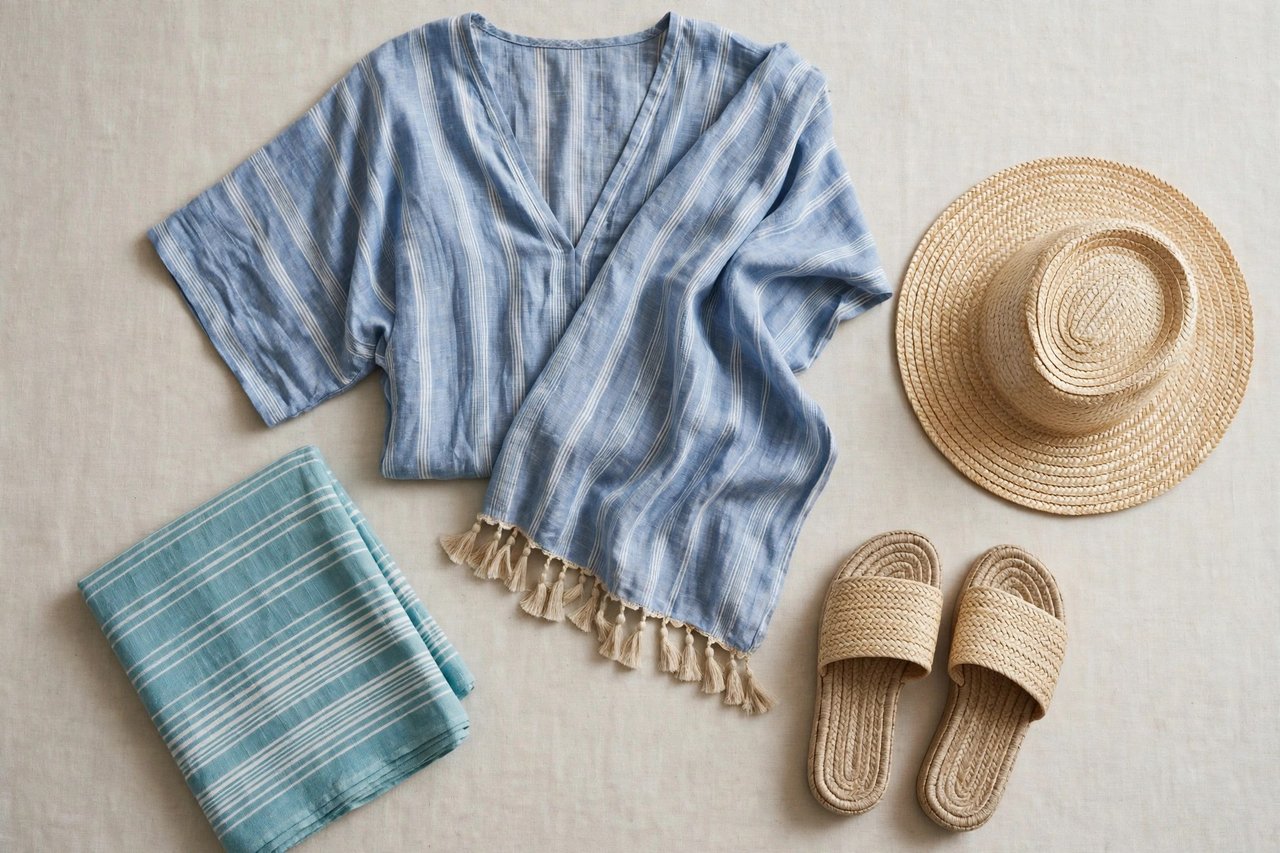
Beachwear is everything you wear to, from, and around the water that is not the swimsuit itself: the cover-up tossed on for the walk to the beach bar, the sarong that becomes a skirt, a shade, and a picnic blanket in a single afternoon, the kaftan that carries you to dinner. It is the hardest-working layer of a vacation wardrobe, and the most underestimated. Good beachwear protects skin from midday sun, respects the dress codes of cafes and hotel lobbies, dries fast, packs small, and makes a simple suit look like a considered outfit. This guide surveys the main categories — cover-ups in their many forms, sarongs, kaftans, resort dresses, and sun-protective layers — with fabric and styling advice to help you build a small beach wardrobe that handles a whole trip gracefully.
Cover-Ups: Tunics, Shirts, and Dresses
The cover-up is beachwear's anchor piece, and its styles suit different days. Tunic cover-ups pull over the suit to mid-thigh, offering quick coverage with a polished neckline that works in a cafe. Oversized shirt cover-ups, borrowed from menswear styling, button or hang open and double as a light layer on breezy evenings. Wrap and kimono cover-ups tie at the waist, adjust to any suit, and move beautifully in sea air. Cover-up dresses, from simple jersey shifts to crochet and lace designs, are the most outfit-like option and the safest choice where swimwear alone is not welcome. Length is the practical dial: short cover-ups suit pool decks and beach clubs, while knee-length and maxi versions handle town walks, markets, and sightseeing between swims. Choose one great cover-up you genuinely love wearing, and it will outperform three mediocre ones on every trip.
Sarongs and Kaftans: The Versatile Classics
The sarong is a large rectangle of light fabric, and its simplicity is its genius. Tied at the waist it is a skirt, at the chest a strapless dress, over the shoulders a shawl, and spread on the sand an extra towel or shade cloth. Rayon and cotton voile sarongs drape best; fringe and batik prints hide wrinkles and wet spots gracefully. The kaftan is the sarong's more structured cousin — a flowing, wide-cut tunic, short or floor-length, often with embroidery or embellishment at the neckline. Kaftans suit resort formality beautifully: a long, elegant kaftan over a plain suit reads as dinner-ready in many beach destinations, and its loose cut is the coolest silhouette in tropical heat. Both pieces pack to almost nothing, which is why experienced travelers build their beach wardrobe around them and let the suitcase breathe.
Resort Dresses and Beach-to-Town Pieces
Some beach days flow straight into town, and a small category of dresses is designed for exactly that current. Maxi dresses in jersey or crinkle cotton cover fully, travel without wrinkles, and pair with flat sandals for markets and lunches. Beach pants and palazzo trousers in gauze or linen pull over a suit for instant modesty and sun cover on the legs, then work again at dinner with a fresh top. Rompers and beach jumpsuits offer one-piece ease for active days. The test for any beach-to-town piece is threefold: it must be opaque over a damp suit, respectable in a place of business, and comfortable in heat — which usually means natural or breathable fabrics, a forgiving cut, and a color or print that does not broadcast water spots. Pack two such pieces on a week-long trip and every transition of the day is covered.
Sun Protection as Beachwear
The most functional beachwear is the kind that blocks ultraviolet light. UPF-rated shirts, rash guards, and cover-ups carry a tested protection factor that does not wash off, sweat off, or need reapplying, making them ideal for long midday sessions, boat days, and fair or sensitive skin. A wide-brim hat shades the face, ears, and neck that suits leave exposed, and a legionnaire-style or UPF hat protects during paddling and beach walks. Long, loose layers — a kaftan at noon is not just elegant, it is strategy. Build sun protection into the wardrobe rather than relying on sunscreen alone: sunscreen guards the gaps, clothing guards the expanses, and shade guards the hours around midday. Children and adults alike benefit, and the habit pays for itself the first evening nobody is nursing a burn at dinner.
Beach Fabrics: What Dries Fast and Packs Well
Beachwear fabrics must handle water, sand, and a suitcase. Cotton gauze and voile are featherlight, breathable, and quick to dry, though cotton holds water longer than synthetics once soaked. Rayon drapes like a dream in sarongs and kaftans and packs tiny, but it wrinkles and weakens when wet, so handle it gently. Linen is the premium warm-climate choice — cool, strong, and characterfully rumpled. Synthetic microfiber and mesh dry fastest of all and dominate sporty cover-ups and UPF layers. Crochet and open-knit styles look beautiful and breathe well but offer little sun protection and can snag, so they are style pieces rather than workhorses. For a capsule beach wardrobe, combine one fast-dry synthetic layer, one elegant natural-fiber kaftan or sarong, and one town-ready dress, and nearly every beach scenario is answered.
Care, Packing, and Making Beachwear Last
Beachwear care starts at the beach: shake sand out thoroughly before packing pieces away, because grit left in folds abrades fibers all the way home. Rinse salt and chlorine from cover-ups worn into the water, and wash most beachwear in cool water on a gentle cycle, with rayon and embellished kaftans hand washed to protect their drape and trim. Dry in shade to preserve color — beachwear lives in the sun all day and does not need more of it on the line. For packing, roll sarongs and gauze pieces, which resist creasing better rolled than folded, and use a kaftan as a wrap around fragile items. At season's end, store everything clean and fully dry, since mildew loves a forgotten beach bag. Well-kept beachwear lasts for many summers, gathering exactly the kind of traveled, sun-washed character that makes it a favorite in the first place.
Related Women's Guides
More to Explore
Photos From Our Original Guide

Looking for Women's Clothing Stores?
This guide helps you choose women's beachwear by cover-up style, fabric, and sun protection. To browse where to buy, visit our women's clothing store directory, where you can find retailers that carry them.