Women's Clogs Guide
From wooden work shoes to the nurse's best friend — the clog's closed toe, open back, and solid sole have served hardworking feet for centuries.
Shop Women's Clogs Now
Shop Women's Clogs on Amazon Shop Women's Clogs on eBayThe Amazon and eBay links on this page are affiliate links. If you make a purchase through them, Apparel Search may earn a commission.
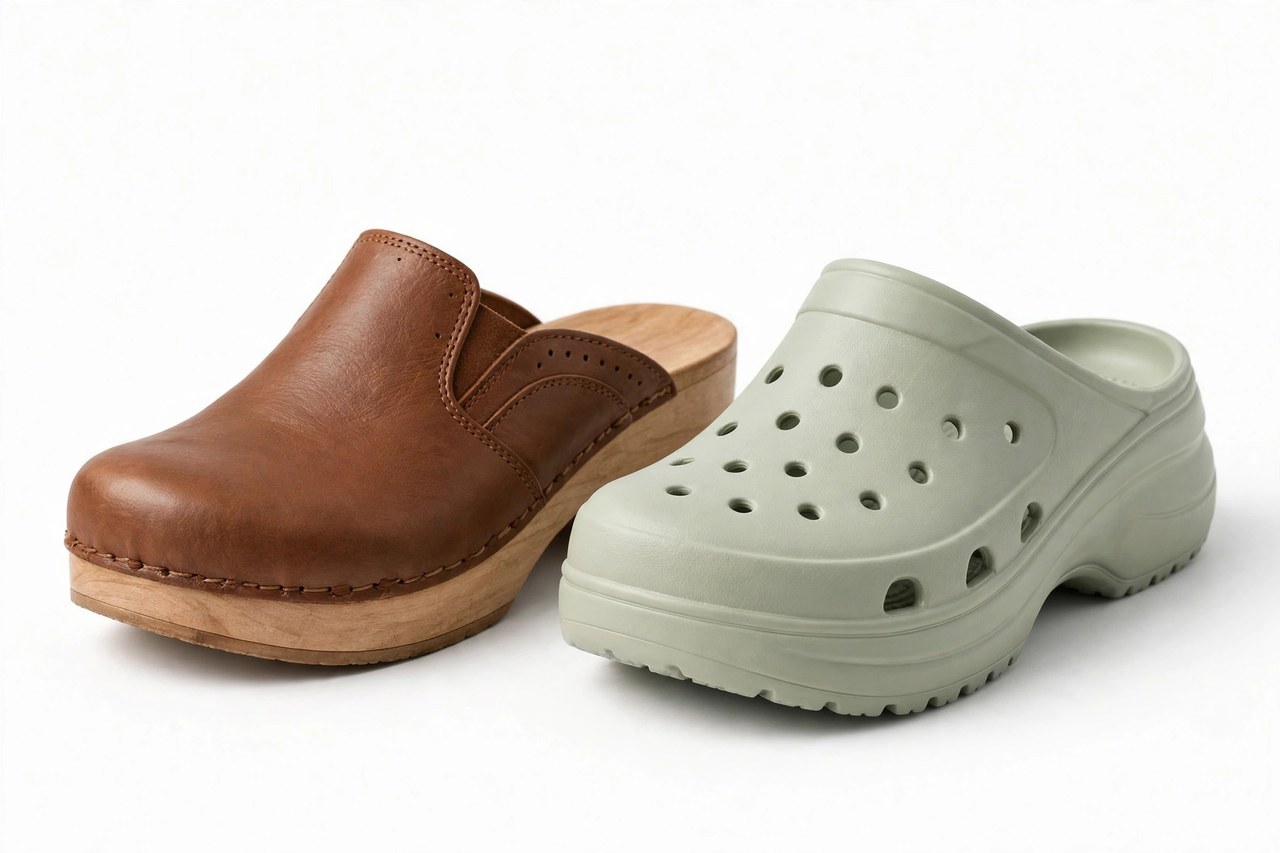
A clog is a shoe with a substantial, usually rigid sole, a closed toe, and — in its classic form — an open back that lets the foot slip in and out freely. The type began as an all-wood work shoe carved across Europe, protecting feet in fields, factories, and dairies where a dropped tool or a hoof could do real damage. The modern clog keeps the silhouette but rebuilds it: a leather or synthetic upper stapled or stitched to a wooden, cork, or molded polyurethane base. That combination explains the clog's double life today. It is a fashion shoe with a folk heritage, worn with dresses and denim, and simultaneously a serious work shoe, standard issue for nurses, chefs, hairdressers, and gardeners who stand all day and need a shoe they can kick off, hose down, or slip into in seconds. Both lives depend on the same virtues: toe room, a stable platform, and easy entry.
Wooden Heritage and the Swedish Clog
The all-wood clog is ancient, but the style most women recognize is the Swedish clog, popularized worldwide in the 1970s and revived by fashion regularly ever since: a thick alder or pine sole, shaped with a slight rocker, topped by a leather upper fixed with visible staples. The rigid wooden base cannot flex, so its curve does the walking for you, rolling the foot forward with each step — a motion wearers either love immediately or never forgive. Wood insulates against cold floors, shrugs off water and mud better than fabric, and lasts for years; it is also noisy on hard floors, heavy compared with modern materials, and unforgiving if the fit is wrong. Traditional clogs were workwear for centuries precisely because they were cheap, durable, and protective, with the closed wooden toe acting like an early safety shoe.
Modern Comfort Clogs for Work
Today's dominant clog is the professional comfort clog: a closed-toe, usually closed- or convertible-back shoe on a molded polyurethane sole with a contoured, often removable insole. Healthcare workers made it famous, because nursing shifts demand exactly what it offers — roomy toes that never pinch during a twelve-hour shift, a sole that resists slips on polished hospital floors, an upper that wipes clean, and an open or loose heel that keeps feet cooler and lets the shoe double as a slipper between rounds. Chefs choose heat- and spill-resistant versions, hairdressers value the stable standing platform, and gardeners live in rubber garden clogs that hose clean and ignore mud entirely. Look for the work features that matter: slip-resistant outsoles with real tread, stain-resistant or wipe-clean uppers, adequate toe-box height for swollen end-of-shift feet, and insoles that can be replaced or washed. A fashion clog and a professional clog may look alike in photographs; their soles and insoles tell the true story.
Styles: Open Back, Closed Back, and Platforms
The classic clog is backless, and that openness defines the wearing experience: cool, convenient, and requiring a particular rolling walk so the shoe stays with the foot. Closed-back clogs add a heel cup or strap, trading some convenience for security on stairs, ladders, and fast hospital corridors; convertible straps that swing forward or back offer both. Platform and heeled clogs push the style into fashion territory, adding height on that characteristically chunky base and pairing with wide-leg trousers and midi dresses. Mule-clogs, clog boots, and studded or embroidered fashion versions widen the family further. Garden clogs sit at the utilitarian end in molded rubber or plastic, often in bright colors, with drainage and dirt in mind rather than silhouette.
Fit: The Rolling Gait and Toe Room
Clogs fit differently from every other shoe, and first-time buyers often choose them too small. Your heel is meant to lift slightly as you walk — the famous clog looseness — and your toes need clear space at the front because the rigid sole does not flex to forgive a short fit. Many makers advise a finger's width behind the heel when standing, with the instep strap or upper holding the shoe on rather than the toes gripping. The upper should feel firm across the top of the foot without pressing, since toes that claw to keep a clog on will ache within the hour. Walk in them properly before judging: short steps, letting the rocker sole roll, rather than shuffling. Some initial heel slip and a little clatter are normal; pain across the instep, toes striking the front, or a heel that slaps violently are not.
Styling and Care
Fashion clogs thrive on contrast: their chunkiness grounds floaty dresses, wide-leg jeans, and long skirts, and they bring a handcrafted note to simple outfits of denim and knits. Swedish-style clogs with jeans and a tucked shirt are a proven warm-weather uniform, while closed-back professional clogs stay firmly in workwear territory, styled by the uniform they serve. Socks are a legitimate styling and comfort choice — ribbed or patterned socks with clogs have moved from gardening practicality to deliberate fashion. Care splits by material. Wooden soles need only wiping and occasional sanding of chips, but should not soak, since wood can crack as it dries; keep them from radiators. Leather uppers take normal conditioning, stapled joins should be checked for looseness, and polyurethane soles should be inspected for crumbling if stored unused for years, an aging quirk of the material. Rubber garden clogs simply hose off.
Related Women's Guides
Photos


More to Explore on Apparel Search
- Clog Factories
- geta
- Women's Athletic Shoes
- Women's Boots
- Women's Casual Shoes Guide
- Women's Clothes Directory A
- Women's Clothes Directory B
- Women's Clothes Directory D
- Women's Clothing Directory E
- Women's Clothing Directory F
- Women's Dress Shoes Guide
- Women's Footwear
- Women's Sandals
- Women's Shoes
- Women's Trend Shoes
Looking for Women's Clothing Stores?
This guide helps you choose women's clogs by style, material and fit. To browse where to buy, visit our women's clothing store directory, where you can find retailers that carry them.