Women's Corporate Apparel Guide
Dress codes, uniform programs, and the work capsule — dressing professionally without dressing identically every day.
Shop Women's Corporate Apparel Now
Shop Women's Corporate Apparel on Amazon Shop Women's Corporate Apparel on eBayThe Amazon and eBay links on this page are affiliate links. If you make a purchase through them, Apparel Search may earn a commission.
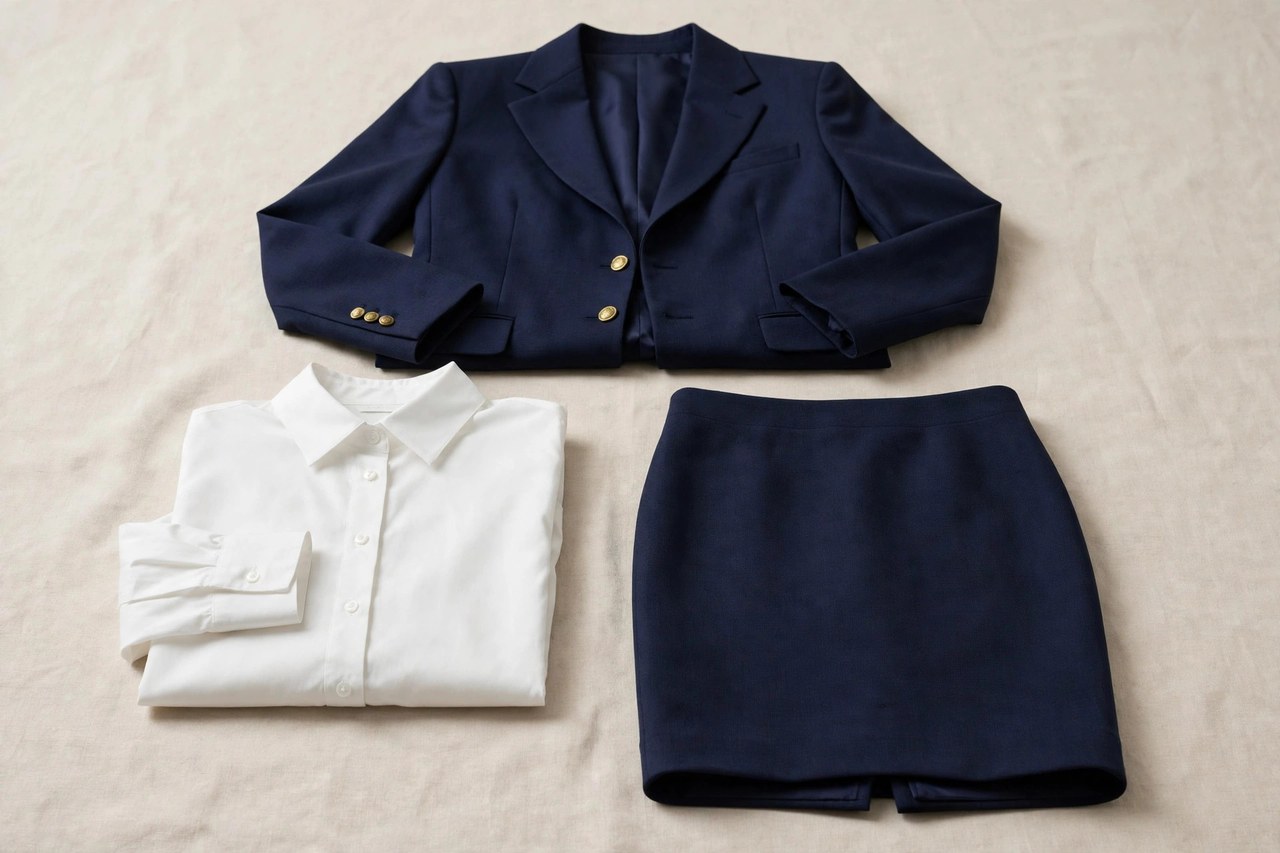
Corporate apparel covers two related worlds: the clothes individual professionals choose for office life, and the coordinated workwear programs organizations provide — suiting for client-facing teams, logo polos and blouses for events, hospitality and service uniforms with a polished finish. Both worlds run on the same principles: consistency, appropriateness, durability, and garments that look as good at the end of a long day as at the start. For the individual shopper, corporate dressing means decoding a dress code, then building a small wardrobe that satisfies it without daily stress. For employers and team buyers, it means choosing styles, sizes, and fabrics that work across many bodies and survive industrial or frequent laundering. This guide serves both readers, moving from dress codes to capsules to program buying and care.
Dress Codes Decoded
Formal business attire remains the standard in law, finance, and executive settings: a matching suit in navy, charcoal, or black, a blouse or fine knit top, closed-toe pumps or polished flats, and minimal jewelry. Business professional relaxes the match — separates are acceptable, color widens slightly, and knit tops replace blouses — while keeping tailoring central. Business casual, the most common and most confusing code, allows trousers, chinos, and skirts without a blazer, plus loafers and neat knitwear, but still excludes denim, sneakers, and athletic wear in most traditional offices. Smart casual and dress-for-your-day policies trust employees to mirror their schedule: suit-level polish for client meetings, relaxed separates for desk days. When a code is unwritten, observe what leadership wears, not what the most casual colleague gets away with, and keep one interview-level outfit ready regardless of your daily norm.
Building a Work Capsule Wardrobe
A corporate capsule of roughly a dozen well-chosen pieces can cover a full work rotation. Anchor it with two suits or suit-equivalent sets in different neutrals, three to four trousers and skirts that interchange with both jackets, five tops spanning blouses, knit shells, and a fine sweater, one work dress that pairs with either blazer, and a tailored coat. Shoes usually need only two pairs — one pump or heeled loafer, one flat — in colors that serve every combination. The math is the appeal: a dozen pieces styled in rotation create weeks of distinct outfits, laundry stays manageable, and morning decisions shrink to weather and meetings. Buy the best fabric and fit you can afford for the anchors, since they are worn constantly, and refresh the capsule with tops and accessories seasonally. A capsule also travels brilliantly: one suitcase of corporate basics covers a week of conferences without repetition anxiety.
Uniform and Logo Programs
Organization programs add requirements beyond personal shopping. Consistency is paramount: the same style, color, and logo placement for every wearer, with size ranges inclusive enough that the whole team looks equally polished. Buyers should evaluate total program cost — initial outfitting, replacements, size exchanges, and laundering — not just unit price, and should order fit samples before committing, because women's program garments cut from unisex patterns rarely fit well. Good programs offer genuinely women's cuts in blouses, polos, and suiting, plus maternity and extended sizes without singling anyone out. Fabric choices balance appearance with service life: wrinkle-resistant blends, soil-release finishes, and colorfast dyes keep teams looking uniform after many washes. Logo application — embroidery for permanence and polish, print for large or temporary branding — should be tested on the actual garment fabric, and a small stock of common sizes prevents a new hire waiting weeks to look like part of the team.
Fit and Tailoring at Work
Professional credibility lives in fit details. Blazers should button without pulling, end sleeves at the wrist bone, and sit smoothly across the back; trousers should break lightly over the shoe or end cleanly at the ankle for cropped styles; skirts should allow a normal stride and stay in place when seated. Corporate garments are designed to be tailored, so budget for hemming and waist adjustments rather than settling for almost-right. Comfort is a professional issue too: waistbands with discreet stretch, blouses with enough ease to reach and present, and shoes broken in before a big day all prevent the fidgeting that undermines presence. For program buyers, fit sessions and a clear alterations allowance produce far better adoption than a size chart alone. When in doubt between sizes at work, choose the one that looks smooth standing and seated — corporate photographs, panels, and video calls all judge the seated fit as much as the standing one.
Care, Rotation, and Longevity
Workwear earns longevity through rotation and routine. Rest suits at least a day between wearings on proper hangers so wool and blends recover their shape, brush off surface dust, and steam out light creases instead of pressing daily, which shines fabric. Blouses and knit tops should be laundered promptly, since collar and underarm marks set with time, and white pieces stay white only when washed with whites in water warm enough for the fiber. Keep a small repair habit: replace loose buttons immediately, mend hems before they drop fully, and use shoe care weekly — scuffed footwear undermines an otherwise immaculate outfit. Program garments should follow their specified laundering method consistently, because mixed home and industrial washing fades colors unevenly across a team. A corporate wardrobe is an investment in professional image, and disciplined, unglamorous care is what keeps that investment paying out year after year.
Related Women's Guides
More to Explore on Apparel Search
Looking for Women's Clothing Stores?
This guide helps you choose women's corporate apparel by style, fabric and fit. To browse where to buy, visit our women's clothing store directory, where you can find retailers that carry them.