Women's Corporate Casual Shoes Guide
Where career polish meets all-day comfort — the right shoes for business-casual offices, smart enough for clients and kind enough for the commute.
Shop Women's Corporate Casual Shoes Now
Shop Women's Corporate Casual Shoes on Amazon Shop Women's Corporate Casual Shoes on eBayThe Amazon and eBay links on this page are affiliate links. If you make a purchase through them, Apparel Search may earn a commission.
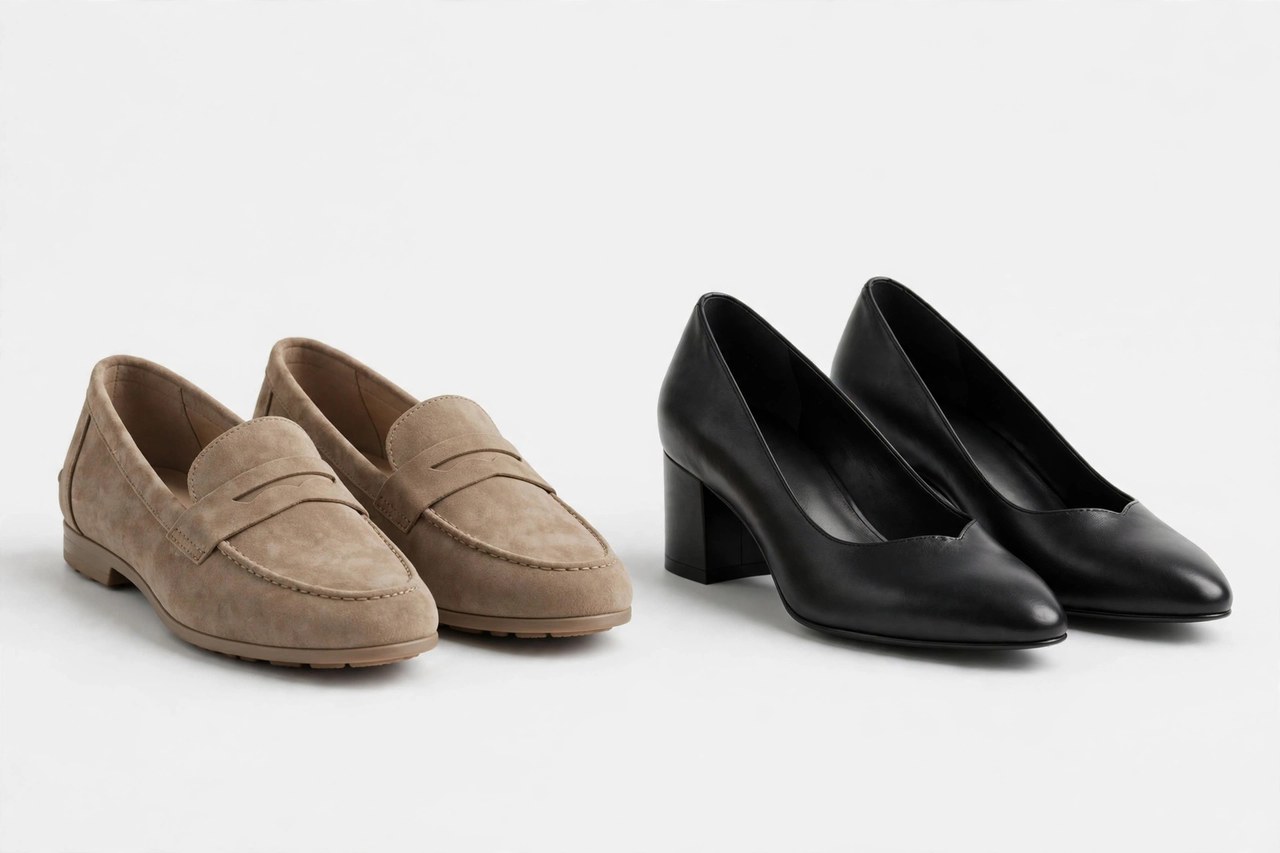
Corporate casual shoes live at the overlap of two other categories: they borrow their polish from career shoes and their engineering from comfort shoes, in service of the business-casual dress code that now governs most offices. That code relaxed suits into separates, chinos, knitwear, and dark denim, and footwear relaxed with it — but only so far. The corporate casual shoe must still read as deliberate and professional across a desk from a client, while being comfortable enough for hybrid days that mix commuting, standing presentations, office floors, and after-work errands. Loafers, block-heel pumps, smart flats, refined ankle boots, and minimalist leather sneakers define the category. Its challenge is calibration: one step too formal and you look dressed for a job interview at your own desk; one step too casual and the outfit slips toward the weekend. This guide maps the boundaries and the shoes that sit safely, comfortably, inside them.
The Business-Casual Boundary
Smart-casual boundaries vary by industry, and reading yours correctly is a workplace skill. Finance, law, and consulting keep the line high: closed toes, leather, muted colors, and structure still rule, with loafers and low heels as the relaxed end. Technology, creative, and media offices stretch further, accepting clean minimalist sneakers and more casual textures. Everywhere, some items stay outside the line for most workplaces: athletic trainers, flip-flops and beach sandals, scuffed canvas shoes, very high or spiky heels, and anything visibly worn out. Within the line, neatness does the heavy lifting — a polished, well-kept loafer reads more professional than an expensive pump with a broken heel tip. When unsure, match your shoes to the senior people in your office rather than to the written policy, and dress footwear up for client days and down only on genuinely internal ones.
The Key Styles for Corporate Casual
The loafer is the corporate casual champion: slip-on ease, tailored looks, flat or low-heeled comfort, in leather for polish or suede for softer days, pairing with everything from trouser suits to dresses. The block-heel pump or court shoe gives height with stability, its wide heel forgiving of office carpets, hard floors, and the walk from the station, in the one-and-a-half to two-and-a-half inch range most wearers can keep all day. Smart ballet and pointed flats in structured leather cover the no-heel preference without reading casual, especially with a small stacked heel and clean lines. Refined ankle boots — Chelsea and fitted zip styles in smooth leather — carry the category through winter. The minimalist leather sneaker, plain, low, and kept immaculate, is the newest member, accepted in many offices with tailoring and knit dresses. What unites them all: closed or nearly closed shapes, quality materials, quiet colors, and comfort features hidden inside rather than advertised outside.
Comfort Engineering, Office Edition
Corporate casual is where comfort technology goes undercover. The best examples carry the full comfort toolkit — contoured or heavily padded insoles, arch support, flexible soles that bend at the ball, cushioned heel collars, breathable linings — inside silhouettes no client would distinguish from ordinary smart shoes. This matters because office days are deceptively hard on feet: hard floors, long corridors, standing conversations, and the commute at both ends. Seek out shoes with removable insoles if you use orthotics, rubber or rubber-topped soles for quiet, secure walking on polished floors, and heels attached firmly enough never to click loose or wobble. Weight counts by evening, so favor lighter constructions for days that include travel between sites. Many women keep the system honest with rotation: two or three corporate casual pairs alternated daily, each resting and drying between wears, which doubles their life and keeps cushioning alive.
Choosing and Fit for Hybrid Days
Fit corporate casual shoes for the whole day they must survive, not the ten minutes at your desk. Try them in the afternoon, with the tights or socks you will wear, and walk briskly: loafers should not slip at the heel once the leather eases, flats should neither pinch toes nor gape, and block heels should feel stable on a turn. Allow for feet swelling across a working day, especially in warm offices and after a commute. If you walk any real distance to work, be strategic: either choose the walkable end of the category — loafers, flats, and cushioned sneakers genuinely can commute — or keep a pair of office shoes at your desk and travel in something sturdier, accepting the small ritual as the price of both comfort and polish. Women returning after foot problems, pregnancy, or injury often rebuild confidence at this category's supportive end, where orthotic-friendly loafers and cushioned courts exist in fully professional dress.
Styling Across the Business-Casual Week
Build outfits from the shoes' formality level outward. Loafers anchor chinos, tailored trousers, and pleated skirts, and modernize a blazer-and-jeans combination instantly. Block heels lift knit dresses, wide-leg trousers, and midi skirts into client-ready territory while staying walkable. Pointed flats sharpen cropped trousers and give dresses a neat, contemporary finish. Leather sneakers work when the rest of the outfit is unmistakably smart — tailoring, structured knitwear, no athletic clothing anywhere else — and they must be clean enough to pass a glance test. Color strategy mirrors career dressing: black, navy, tan, and burgundy rotate through most wardrobes, with a lighter neutral earning its place in summer. Keep one unmistakably polished pair reserved for presentations, interviews within your own company, and client visits, so you are never caught underdressed by a surprise meeting.
Related Women's Guides
Looking for Women's Clothing Stores?
This guide helps you choose women's corporate casual shoes by style, material and fit. To browse where to buy, visit our women's clothing store directory, where you can find retailers that carry them.