Women's Credit Card Wallets Guide
Just the cards, nothing else — slim wallets for light carry, and honest advice on when you still need a full wallet.
Shop Women's Credit Card Wallets Now
Shop Women's Credit Card Wallets on Amazon Shop Women's Credit Card Wallets on eBayThe Amazon and eBay links on this page are affiliate links. If you make a purchase through them, Apparel Search may earn a commission.
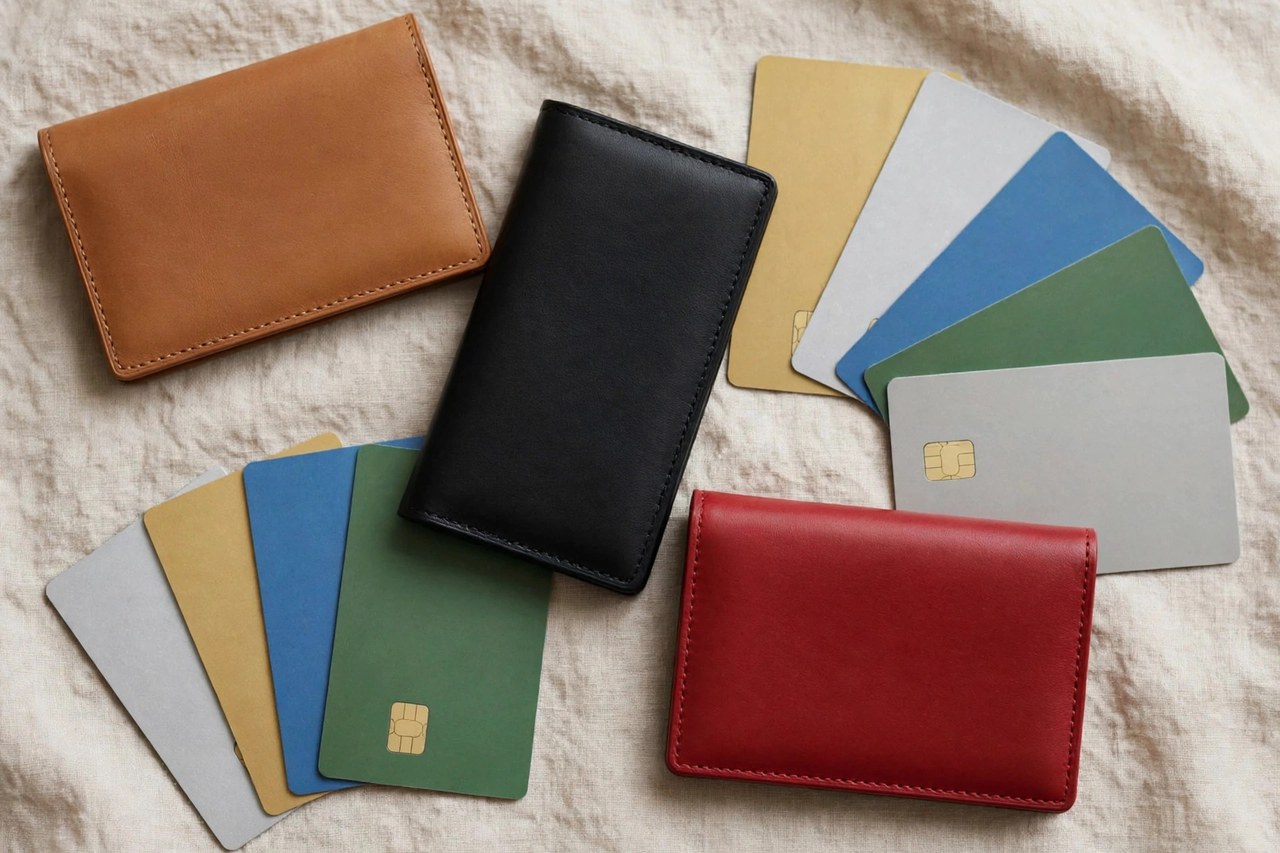
A credit card wallet — also sold as a card case, card holder, or slim wallet — is a wallet reduced to its modern essentials: slots for payment and ID cards, a place for a little folded cash, and nothing else. It exists because carry habits changed: most transactions need two or three cards, receipts went digital, and coins all but vanished. In exchange for the checkbook flap, coin purse, and photo windows, you get something that slips into a coat pocket, a small crossbody, or an evening clutch where a full wallet simply does not fit. The trade is real on both sides, and this guide is honest about it: a card wallet is a superb primary wallet for light carriers and an essential second wallet for everyone else.
Slim Card Wallet Versus Full Wallet: The Trade-Offs
A full wallet carries everything: many cards, unfolded bills, coins, receipts, and loyalty cards, at the cost of size and weight that demands a proper handbag. A card wallet carries roughly four to twelve cards plus folded cash, weighs almost nothing, and fits anywhere — but forces decisions about what truly travels with you. The practical question is your overflow: if your daily life involves coins for parking, paper receipts for expenses, or a dozen store cards, a card wallet alone will frustrate you, and a hybrid works better — card wallet in the pocket or clutch, full wallet in the tote. If your phone already holds loyalty programs and payment backups, the card wallet alone is often enough. Many women keep both and swap by bag size, an inexpensive system that ends the nightly ritual of stuffing a large wallet into a small bag and hoping the clasp agrees.
Formats: Card Case, Bifold Slim, and Zip Styles
The simplest format is the flat card case: two to four slots per side around a center pocket for folded bills — the thinnest option and the clutch-friendly one. Slim bifold card wallets fold open to six or more slots with a full-width cash sleeve, still half the thickness of a traditional bifold. Zip-around card wallets add security for loose items and a gusseted interior that swallows a key or folded receipts, trading a little slimness for containment. Accordion styles fan open to display many cards at once, suiting card-heavy carriers. Metal and hard-shell card holders use a lever or fan mechanism to eject cards and block most bending and crushing. Across formats, count slots against your real card list plus two — one for the card you will inevitably add, and one so slots are not stretched to their limit from day one.
RFID Protection: What It Does and Does Not Do
Many card wallets advertise RFID blocking — a lining that shields contactless cards from being read by a nearby scanner without your knowledge. The honest picture: unauthorized contactless skimming in the wild is rare, and modern cards carry protections of their own, but the shield does no harm and matters more when traveling in crowded transit systems abroad, where the peace of mind alone can be worth it. A blocking wallet typically shields only the lined compartments, so confirm which slots are protected if that is your reason for buying. Note the trade-off: a fully shielded wallet also blocks the transit card or building pass you may want to tap without removing — some designs cleverly leave one outer slot unshielded for exactly that tap-and-go card. Treat RFID as a useful secondary feature, never a reason to accept poor leather, weak stitching, or slots that fight you at the checkout.
Materials: Leather, Fabric, Cork, and Metal
Leather remains the standard because it molds slightly to your cards, ages gracefully, and survives years of pocket friction; full-grain leather outlasts coated and bonded leathers, which peel at the edges. Saffiano and other cross-grain finishes resist scratches and suit a polished look. Fabric and recycled nylon card wallets are lighter, washable, and sportier, with softer slots that stretch sooner. Cork and other plant-based materials offer a distinctive, lightweight alternative that handles moisture surprisingly well, though corners wear faster than leather. Aluminum and metal cases give maximum crush protection and easy card ejection but hold the fewest cards and can feel rigid in a back pocket. Whatever the material, inspect slot stitching and edge finishing, since a card wallet's slots flex thousands of times; a wallet that sheds cards in your bag because a slot stretched loose has failed its one job, so prefer snug slots that loosen slightly with use over loose slots that only get looser.
Carrying Well and Care
Load a new card wallet thoughtfully: primary payment card and ID in the easiest slots, backup card and insurance card behind them, cash folded once in the center or cash sleeve. Resist refilling it with every receipt and loyalty card offered — the weekly two-minute purge is what keeps a slim wallet slim, and most loyalty programs live happily in a phone app instead. In a handbag, carry it in an interior pocket or a fixed spot so it can be found by touch; in a pocket, front placement is kinder to both the cards and you on long seated days. Care follows the material: wipe leather with a dry or barely damp cloth and condition occasionally, never soaking it; empty and shake out fabric styles before a gentle wash; and replace any wallet whose slots no longer grip, since a lost payment card costs more than the wallet ever did. Slim carry is one of the easiest daily upgrades there is.
Related Women's Guides
More to Explore on Apparel Search
Looking for Women's Clothing Stores?
This guide helps you choose women's credit card wallets by style, fabric and fit. To browse where to buy, visit our women's clothing store directory, where you can find retailers that carry them.