Women's Denim Dresses
Shirt dresses, pinafores and fit-and-flare styles — the right weights for every season, plus belts, boots and care that keeps denim dresses crisp.
Shop Women's Denim Dresses Now
Shop Women's Denim Dresses on Amazon Shop Women's Denim Dresses on eBayThe Amazon and eBay links on this page are affiliate links. If you make a purchase through them, Apparel Search may earn a commission.
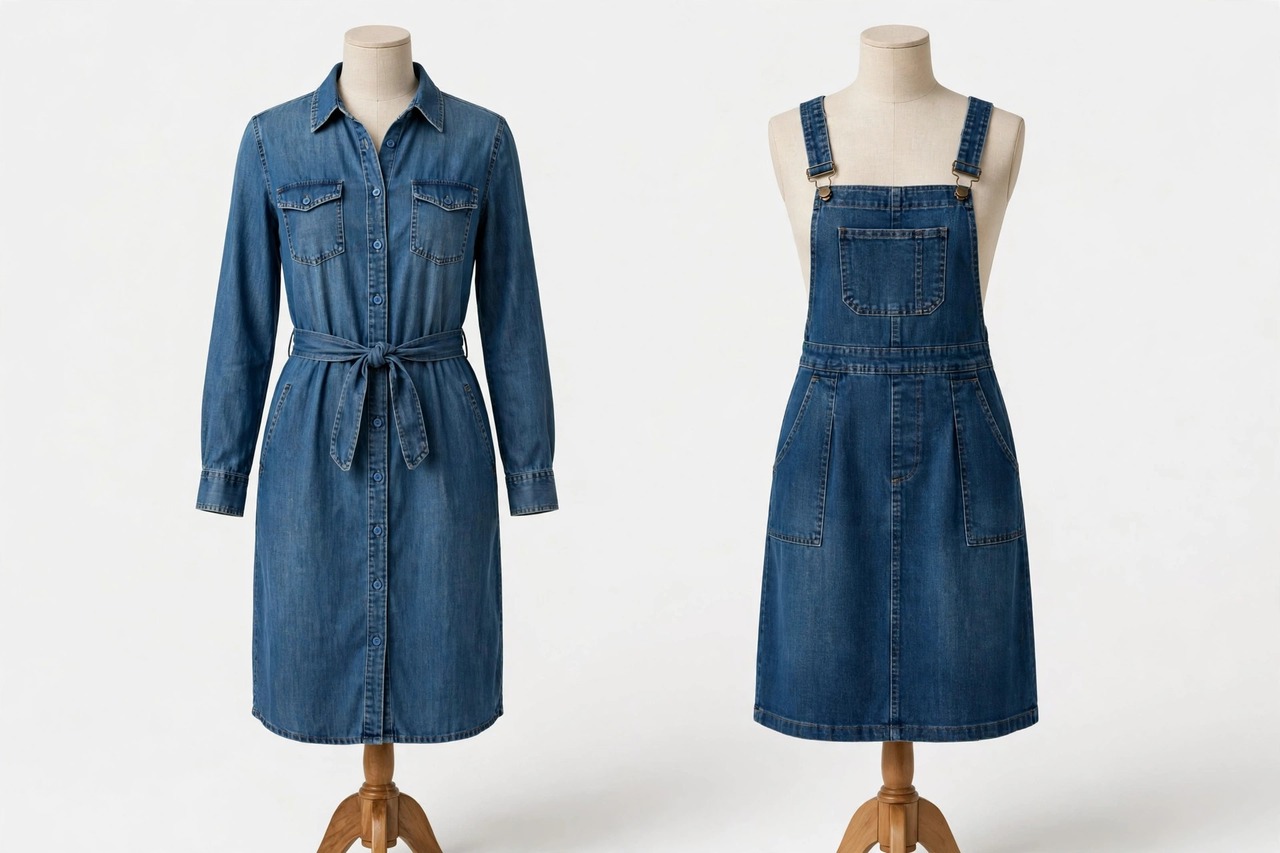
A denim dress does something few garments manage: it is a complete outfit with the durability of workwear. Zip it or button it, add shoes, and you are dressed — for school runs, creative offices, weekend markets and most dinners where jeans would feel too casual but a formal dress too much. The category spans far more than one silhouette, and choosing well is mostly about matching the cut and the fabric weight to the season and the occasion.
This guide walks through the main families of denim dresses, the weights that make each one work, and the styling moves — belts, boots, layers — that keep a denim dress looking intentional rather than merely practical. It closes with the simple care that preserves its shape and color.
Shirt Dresses, Pinafores and Fit-and-Flare
The shirt dress is the cornerstone: a button-front silhouette borrowed from shirting, usually with a collar, a defined or belted waist and a skirt that falls straight or gently A-lined. In lightweight denim or chambray it is a summer staple; in midweight cloth with long sleeves it works three seasons. Pinafore dresses layer by design — a sleeveless, bib or overall-front dress worn over tees, turtlenecks and blouses — which makes them the hardest-working transitional piece in the denim wardrobe, changing character completely with what goes underneath.
Fit-and-flare denim dresses fit closely through the bodice and swing from the waist, a forgiving, occasion-friendly shape that suits weddings-guest and dinner settings in dark rinses. Column and shift dresses hang straighter and read more modern, especially in longer lengths. Wrap-style denim dresses define the waist with a tie and suit a wide range of figures. When comparing styles, check the back view and the closure: a full button front that gaps needs a size or style change, while a back zip keeps the front line clean for dressier versions.
Weights by Season and What to Look For
Weight decides whether a denim dress drapes or stands. Summer dresses need light cloth, roughly 5 to 8 ounces, which moves, breathes and packs without bulk; chambray-weave dresses sit at the softest end. Spring and fall dresses perform best around 8 to 11 ounces, holding a shirt dress's collar and a pinafore's straps with real structure. True winter denim dresses are rarer and heavier, designed for layering over knits and under coats; many shoppers instead carry a midweight dress through winter with tights, boots and a sweater beneath the jacket line.
Quality checks are quick. Seams should lie flat without puckering, especially down a button front. Buttons and snaps must feel firmly attached, since a shirt dress closure works hard all day. Pockets, ideally in-seam and deep enough for a phone, add genuine utility. And check the skirt's lining or facing on structured styles: a smooth interior finish keeps the dress sliding over tights instead of clinging, a small detail that separates an all-day dress from an hour-long one.
Styling with Boots and Belts, and Care
A belt is the denim dress's best friend. Most shirt dresses arrive with a self-fabric tie; swapping it for a leather belt in tan, black or woven texture instantly adds polish and defines the waist more firmly. Footwear steers formality: white sneakers keep a shirt dress weekend-easy, ankle boots and a jacket take it into fall, knee boots with a midi pinafore look tailored, and heeled sandals lift a dark fit-and-flare dress to evening. Layer a fine turtleneck under sleeveless styles in cold months, or a tee under a pinafore in spring, and one dress covers three seasons.
Care is straightforward. Wash denim dresses inside out in cold water with the buttons fastened and zips closed, which protects hardware and holds the front placket straight. Reshape while damp, paying attention to collars and waist seams, and line dry rather than tumbling, since dresses twist in dryers and crease sharply. A warm iron or steamer restores the crispness that makes denim dresses look smart. Store hanging by the shoulders on padded hangers; folded heavy denim creases across the skirt and needs re-pressing before every wear.
Before buying, give any denim dress the movement test it will face in real life: sit, reach overhead, climb a step and twist as if getting into a car. Shirt dresses should not pull open between buttons, pinafore straps should stay on the shoulder, and the skirt should allow a full stride. Two minutes of honest testing prevents a season of tugging and adjusting.
Related Women's Guides
Photos

More to Explore on Apparel Search
Looking for Women's Clothing Stores?
This guide helps you choose women's denim dresses by silhouette, weight and season. To browse where to buy, visit our women's clothing store directory, where you can find retailers that carry them.