Women's Denim Guide
Jeans, jackets, dresses, skirts and more — twelve focused guides to help you choose denim by garment, fabric weight, wash and fit.
Shop Women's Denim Now
Shop Women's Denim on Amazon Shop Women's Denim on eBayThe Amazon and eBay links on this page are affiliate links. If you make a purchase through them, Apparel Search may earn a commission.
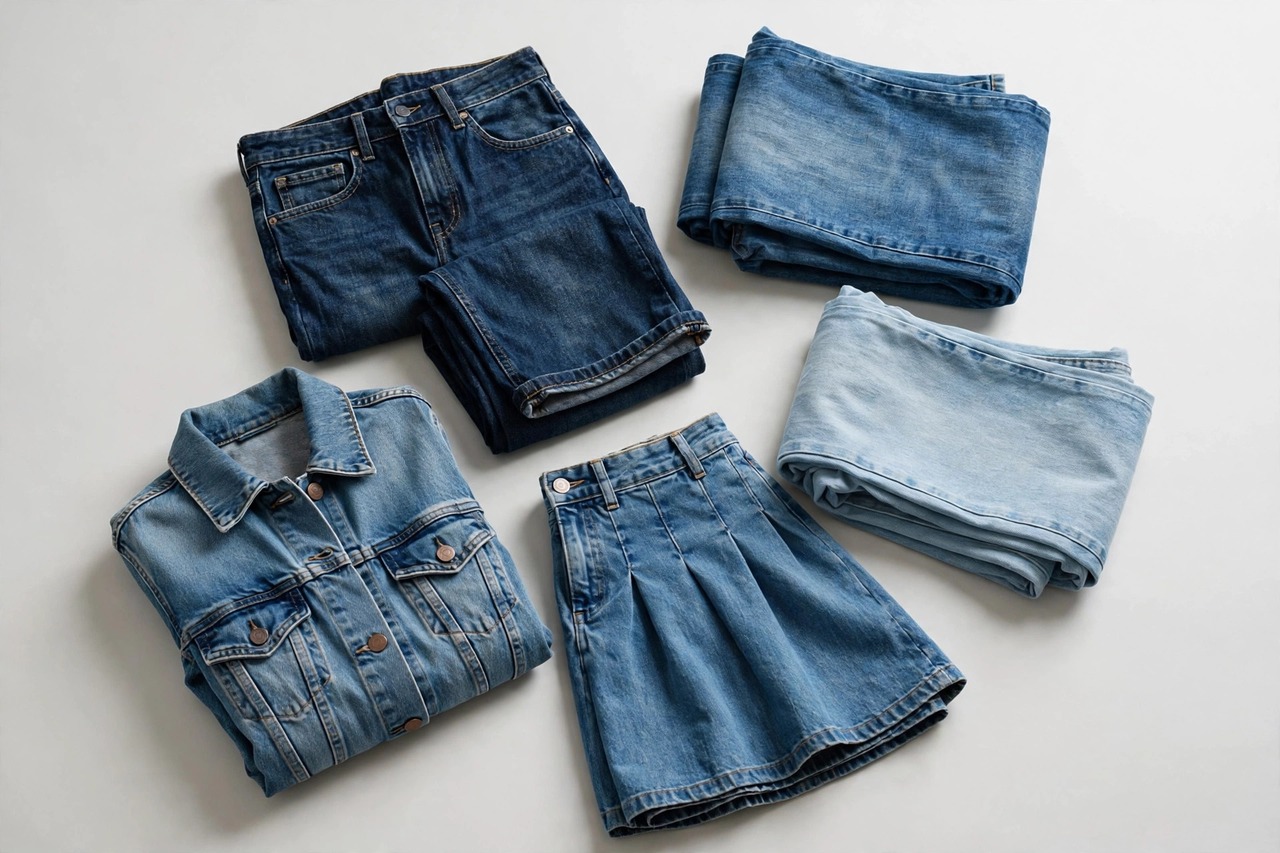
Denim is the hardest-working fabric in most women's wardrobes, and also the most misunderstood. The same word covers a feather-light chambray shirt dress, a rigid pair of vintage-style jeans that takes weeks to break in, and a dark tailored trouser that passes easily in an office. This denim collection gathers twelve focused guides so you can shop by the decision you are actually making — choosing a garment, understanding the fabric, or deciding whether premium denim is worth the extra money — instead of wading through one endless page that tries to cover everything at once.
Start wherever your question lives. If you are rebuilding a wardrobe, begin with the overview guides. If you already know you need jeans, a jacket or a skirt, go straight to that garment guide, where fits, rises, lengths and washes are compared in detail. And if you are puzzling over ounces, selvedge or stretch percentages on a product listing, the fabric guide explains what those numbers mean in plain language, so the garment guides make more sense when you return to them.
How the Twelve Guides Divide Up
Three guides act as umbrellas. Denim Apparel maps the full range of garments denim can become, from jeans and jackets to dresses, skirts, shorts and handbags, and shows how to build them into a capsule. Denim Clothes is the everyday-wearing guide: double denim, denim at work, seasonal rotation and a realistic laundering routine. Denim Clothing goes underneath the garments to the cloth itself — how denim is woven and dyed, how weight is measured in ounces, and how raw, washed and stretch denims differ. Denim Fashion sits alongside them as the styling and trends guide, tracking rise and leg-shape cycles and offering outfit formulas that survive them.
Eight guides are garment-specific, each with its own fits and pitfalls. Denim Jeans is the deep dive on the five-pocket jean, Denim Jackets covers the trucker and its variations, and Denim Dresses, Denim Skirts and Denim Shorts each handle lengths, silhouettes and seasonal styling. Denim Handbags looks at totes, crossbody bags and patchwork styles, including the one caution every denim bag owner should know: indigo can rub off onto light clothing. Two further guides form the premium tier, covered next, for shoppers weighing a much larger spend.
The Premium Tier: Designer Denim
Denim Designer Jeans explains what actually changes when jeans cost $150 to $400 and more: Japanese selvedge woven on slow shuttle looms, cloth from respected Italian and Japanese mills, hand finishing, and small limited runs. It includes a plain worth-it analysis and a checklist for spotting genuine premium details, so you can judge a pair on construction rather than on a famous label. Denim Designer Pants covers a different garment entirely — tailored, non-jean denim trousers and chinos in dark rinses that work with blouses and blazers — and clarifies how they differ from premium jeans in cut, detailing and formality.
Neither premium guide assumes the higher price is automatically justified. Sometimes it buys measurably better cloth, stitching and longevity; sometimes it mostly buys branding. Reading those two guides before a big purchase helps you tell the difference, and the fabric guide gives you the vocabulary — ounce weight, weave, stretch content — to compare a premium pair against a well-made standard pair honestly.
Denim Buying Basics, in Brief
Three ideas from these guides will improve almost any denim purchase. First, weight: denim is sold by ounces per square yard. Lightweight denim under about 10 ounces drapes softly and suits dresses, shirts and summer pieces. Midweight denim, roughly 10 to 13 ounces, is the versatile standard for jeans, jackets and skirts. Heavyweight denim above 13 ounces feels stiff at first, molds to the body over time, and lasts for years. Match the weight to the garment and season before you fall for a wash or a fit.
Second, wash: the color ladder runs from dark rinse, which reads dressiest and fades slowest, through medium stonewash to pale, sun-faded blues and white. Darker denim pairs with more of a wardrobe and suits workplaces; lighter washes feel casual and summery. Third, stretch: a small amount of elastane, around 1 to 2 percent, adds comfort while holding shape; higher stretch feels legging-soft but can bag at the knees. Rigid 100 percent cotton starts firm and rewards patience. Every garment guide in this collection returns to these three basics with specifics for its own category, so use the chips below to jump to the guide that matches what you are buying.
Related Women's Guides
More to Explore on Apparel Search
Looking for Women's Clothing Stores?
This guide helps you choose women's denim by garment, wash and fabric weight. To browse where to buy, visit our women's clothing store directory, where you can find retailers that carry them.