Women's Denim Designer Jeans
What $150 to $400+ really buys — selvedge and shuttle looms, great mills, hand finishing, limited runs, and an honest answer to whether premium denim is worth it.
Shop Women's Designer Denim Jeans Now
Shop Women's Designer Denim Jeans on Amazon Shop Women's Designer Denim Jeans on eBayThe Amazon and eBay links on this page are affiliate links. If you make a purchase through them, Apparel Search may earn a commission.
Designer jeans occupy denim's premium tier: the same five-pocket garment as the standard jean, rebuilt with costlier cloth, slower production and closer finishing, and sold at $150 to $400 and beyond. The obvious question — is the difference real, or are you paying for a label on the back pocket? — deserves a material answer rather than a fashionable shrug. This guide explains what premium production actually involves, how to recognize it in a fitting room, and when the upgrade is and is not worth your money.
It helps to separate two kinds of premium. Craft premium spends on fabric and construction, often from Japanese and Italian mills and specialist factories. Brand premium spends on design cachet and marketing; the jeans may be perfectly good, but the price reflects the name. Both exist at the same price points, which is why inspection skills matter more in this tier than in any other.
Selvedge, Shuttle Looms and Great Mills
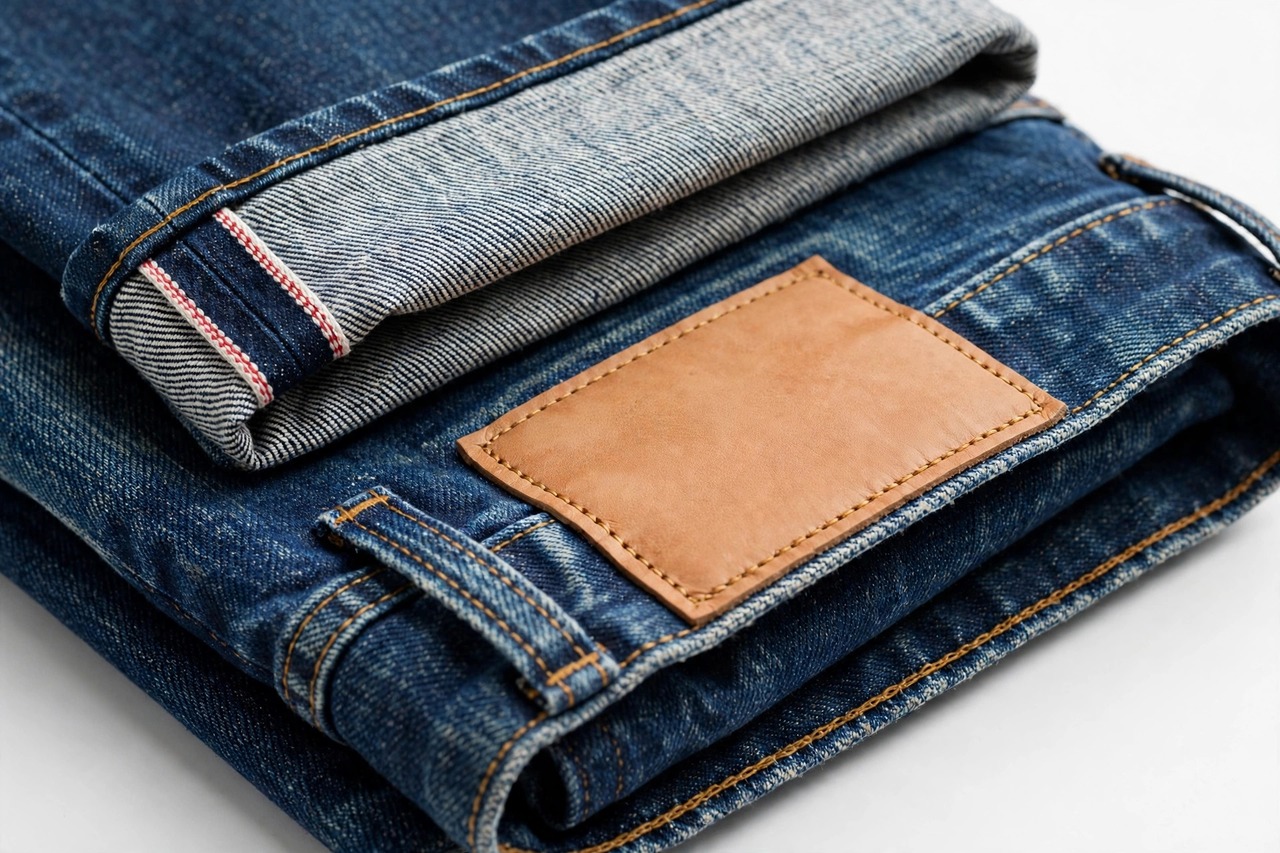
The emblem of craft denim is selvedge: cloth woven on vintage shuttle looms that pass a single continuous weft thread back and forth, sealing the fabric's edges so they cannot fray. These looms run slowly and produce narrow cloth with natural irregularities — slubs and texture that enthusiasts prize as character. Most prized selvedge comes from Japanese mills in Okayama and Hiroshima, regions that preserved shuttle looms and indigo dyeing expertise when other producers modernized; respected Italian mills supply softer, more fashion-oriented premium cloth. Turn a cuff: a clean, colored selvedge ID line signals this cloth instantly.
Mill quality shows in more than the edge. Better mills use longer-staple cotton that pills less and fades in richer gradients, dye warp yarns repeatedly for depth of indigo, and control tension so the fabric drapes consistently. The result is denim that feels substantial without being heavy, breaks in along your body's lines, and develops the high-contrast fades raw-denim wearers chase. None of this is visible in a product photo, which is why premium shopping rewards touch: good cloth feels dense, dry and alive compared with the flat smoothness of commodity denim.
Hand Finishing, Limited Runs and Price Logic
Above the fabric, premium production adds human time. Hand-sanding and whiskering place wear patterns individually rather than by stencil; careful washing in small batches controls shrinkage and color precisely; chain-stitched hems, hidden rivets, leather or high-grade patches and reinforced belt loops extend the garment's working life. Limited runs follow naturally: narrow loom cloth, small wash batches and seasonal mill fabrics cannot scale like commodity production, so styles appear in the hundreds rather than the tens of thousands, and sell out rather than linger.
The price logic, honestly stated, is this: cloth may cost three to five times more per yard, labor several times more per garment, and distribution adds the rest. A $200 pair can absolutely contain $80 more material and workmanship than a $60 pair; whether the final step to $350 buys more craft or mostly more brand is the judgment call. Spotting premium details helps: even, dense stitching with high stitch counts; clean interior finishing; hardware with weight and crisp stamping; a size and fabric-content label that names the mill or at least the fabric origin; and a fit that feels engineered rather than merely small or large.
The Worth-It Analysis
Premium jeans are worth it when three conditions meet: you wear jeans several times a week, the fit is genuinely better on your body than standard options, and you will keep the pair for years — because cost per wear is where craft denim wins. A $240 pair worn 200 times costs $1.20 per wear and will likely look better at wear 150 than a budget pair looks at wear 40. They are not worth it for a silhouette you will tire of next season, for a body in transition, or when the premium buys a logo rather than cloth; a trend fit in standard denim is the smarter spend there.
Shop the tier strategically. Try premium fits in store to learn your size in each label, since cuts vary widely; consider raw or one-wash selvedge only if you enjoy the break-in ritual described in the fabric guide; and check the non-jean alternative in our Denim Designer Pants guide if what you really need is polish rather than five-pocket authenticity. Bought with clear eyes, a premium pair is less a luxury than a long-service tool — the jean equivalent of good boots.
Related Women's Guides
Photos

Looking for Women's Clothing Stores?
This guide helps you choose women's denim designer jeans by mill, construction and value. To browse where to buy, visit our women's clothing store directory, where you can find retailers that carry them.