Women's Denim Clothing
From warp thread to finished wash — how denim is woven and dyed, what ounce weights really mean, and how fabric choice drives drape, comfort and price.
Shop Women's Denim Clothing Now
Shop Women's Denim Clothing on Amazon Shop Women's Denim Clothing on eBayThe Amazon and eBay links on this page are affiliate links. If you make a purchase through them, Apparel Search may earn a commission.
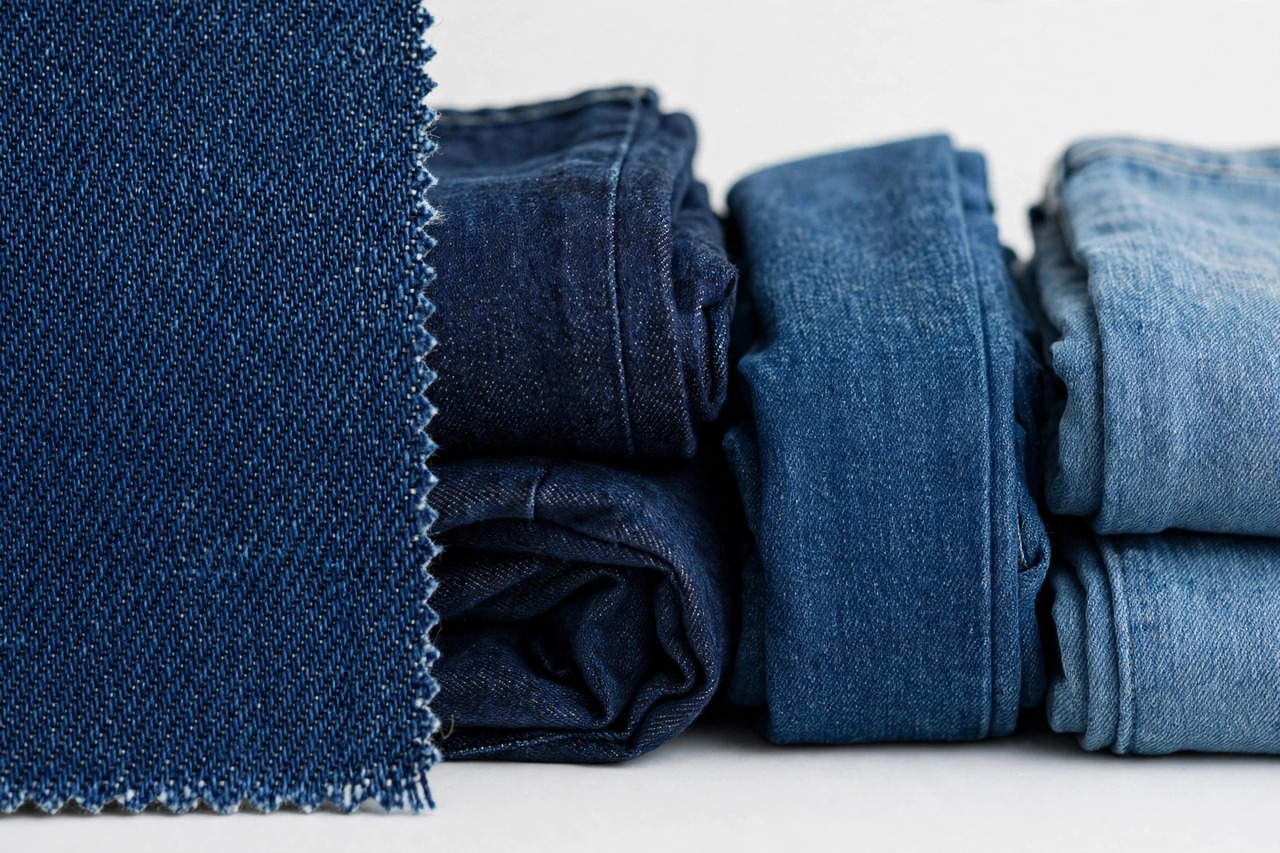
Denim clothing begins as cloth, and the cloth explains almost everything that follows: why one jean feels board-stiff and another drapes like a dress fabric, why dark jeans fade at the thighs, and why two similar-looking pairs can differ by a hundred dollars. This guide stays at fabric level — weaving, dyeing, weight, stretch and finishing — so that when garment guides talk about fit and styling, you understand the material those choices are made from.
None of this requires technical training. A handful of concepts, clearly understood, will let you read any product listing with confidence and predict how a garment will feel, fade and age before it arrives.
How Denim Is Woven and Dyed
Denim is a twill weave built from two sets of cotton yarns. The warp threads run lengthwise and are dyed indigo blue; the weft threads run across, are left natural or pale, and pass under the warp in a diagonal pattern that creates denim's familiar ridged surface. Because the blue warp dominates the face of the cloth while the pale weft shows on the inside, jeans are blue outside and light inside — and as the indigo surface abrades with wear, the pale core shows through, which is exactly why denim fades so characterfully at knees, thighs and seat.
Indigo is a surface dye: it coats the yarn rather than penetrating it fully, so every wash and rub removes a little more color. That behavior is a feature, not a flaw — it is what gives old denim its personal fade patterns. Mills vary the weave, too. Most denim uses a right-hand twill; broken twills soften the diagonal and reduce leg twist, while selvedge denim, woven on older shuttle looms, has a tightly finished self-edge that premium brands display at the cuff. The Denim Designer Jeans guide explores selvedge in depth for shoppers considering that tier.
Weights in Ounces: Light, Mid and Heavy
Denim weight is measured in ounces per square yard, and it is the single best predictor of how a garment will behave. Lightweight denim, roughly 5 to 9 ounces, is soft and fluid; it makes shirts, shirt dresses, summer skirts and easy jumpsuits, and it is sometimes blended or woven loosely enough to resemble chambray, its lighter cousin. Midweight denim, about 10 to 13 ounces, is the workhorse for jeans, jackets and structured skirts: firm enough to hold a silhouette, forgiving enough to wear all day.
Heavyweight denim, 14 ounces and above, is the province of raw-denim enthusiasts and hard-wearing jackets. It starts stiff, molds gradually to the wearer, resists abrasion for years, and can feel punishing in hot weather. When a garment disappoints, weight mismatch is the usual cause: a dress cut from 12-ounce cloth will stand away from the body, while jeans cut from 8-ounce cloth will stretch out and show wear quickly. Check the ounce listing before the size chart; it tells you more about the garment's character than any photograph.
Raw vs Washed, Stretch, Washes and Finishes
Raw, or unwashed, denim leaves the mill stiff with starch and deep in color; the wearer creates the fades personally over months, and the first wash causes noticeable shrinkage, which is why raw jeans are bought with length and patience in mind. Most women's denim is washed before sale, softened and pre-shrunk for predictable fit. Stretch denim blends in elastane: around 1 to 2 percent gives comfort stretch that recovers well, while 3 percent and above, often with polyester in the mix, produces a soft, legging-like feel that is comfortable immediately but can lose shape and show wear sooner. Rigid 100 percent cotton sits at the other pole: demanding at first, rewarding for years.
Washes and finishes set color and surface. Stonewashing tumbles cloth with pumice for softness and fading; enzyme washes achieve similar effects more evenly. Laser fading and hand-sanding create whiskers and worn thighs without water-heavy processes, while resin treatments can set creases permanently. Dark rinses receive a single light wash to remove excess dye while keeping color deep. Each step adds cost and changes hand-feel, which is why fabric choice drives price as surely as branding does: better cotton, slower looms, careful dyeing and gentler finishing all show up in the cloth long before they show up in advertising.
Related Women's Guides
What Is Denim? The Short History
Denim is a sturdy cotton warp-faced twill, traditionally colored blue with indigo dye to make blue jeans — though "jean" formerly denoted a different, lighter cotton fabric. Denim has been used in the United States since the mid-19th century, and it gained lasting popularity in 1873, when Jacob W. Davis, a tailor from Nevada, manufactured the first pair of rivet-reinforced denim pants; Davis was hired by Levi Strauss & Co., and the rest was history. In indigo denim the warp thread is dyed while the weft is left white, so one side of the textile is dominated by blue warp threads and the other by white weft — the reason jeans are white on the inside. Because the indigo dye leaves the core of the warp threads white, wear creates denim's signature fading. For the full technical description, read our denim definition.
Looking for Women's Clothing Stores?
This guide helps you choose women's denim clothing by fabric weight, weave and wash. To browse where to buy, visit our women's clothing store directory, where you can find retailers that carry them.