Women's Denim Pants Guide
Denim that goes far beyond the five-pocket jean — trouser cuts, wide legs and dark tailored styles that work from smart-casual offices to evenings out.
Shop Women's Denim Pants Now
Shop Women's Denim Pants on Amazon Shop Women's Denim Pants on eBayThe Amazon and eBay links on this page are affiliate links. If you make a purchase through them, Apparel Search may earn a commission.
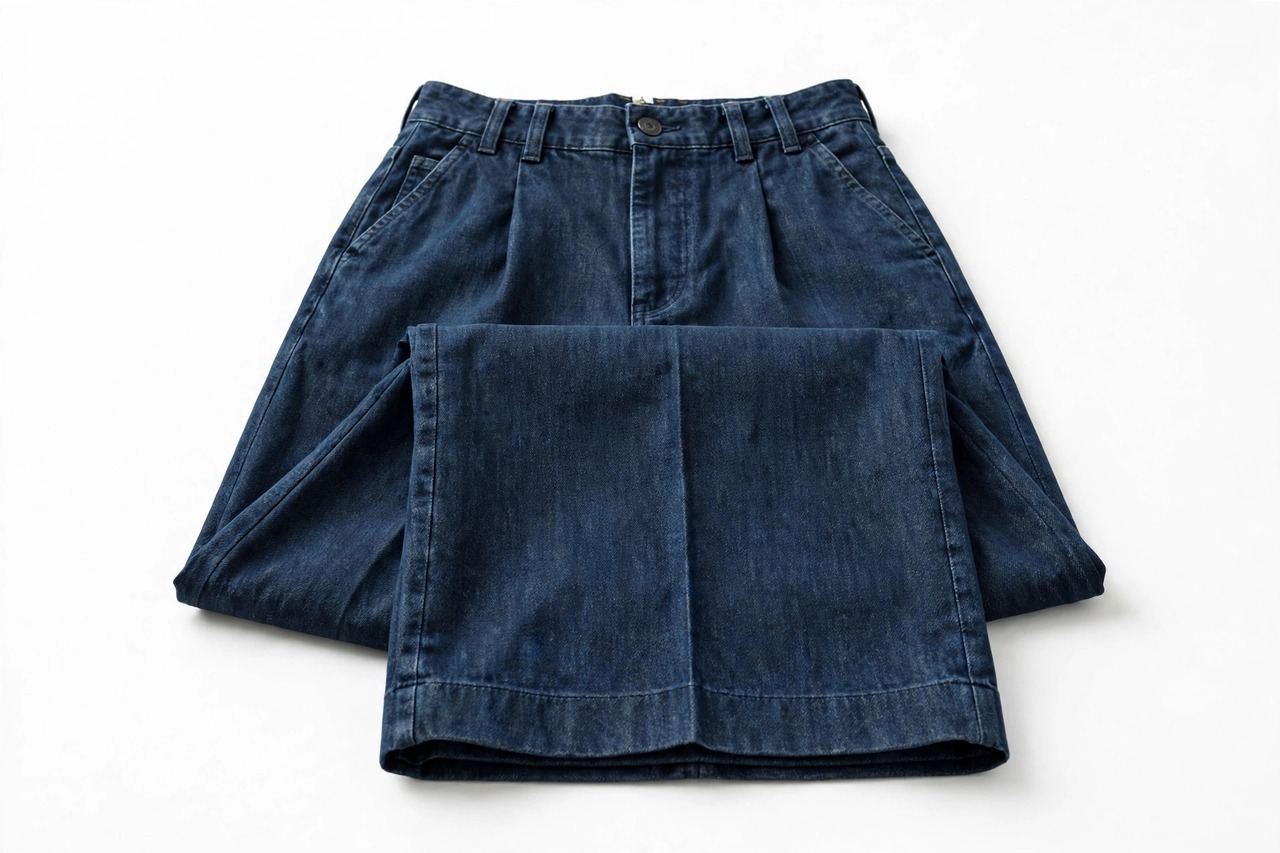
Denim pants are everything denim trousers can be once they step outside the classic five-pocket jean. The fabric is the same hard-wearing cotton twill, but the pattern is borrowed from tailoring: flat fronts, slash or welt pockets, hook-and-bar closures, pressed creases and hems finished like dress pants. The result is a pant with denim's durability and easy care but a noticeably smarter outline — one that pairs naturally with blazers, blouses and loafers rather than only tees and sneakers.
That distinction matters when you are dressing for settings where jeans feel too casual but wool trousers feel too formal. Denim pants fill the middle ground beautifully, especially in dark, even washes. This guide separates them clearly from jeans, walks through the main cuts from trouser to palazzo, and explains the fabrics, fits and care that keep tailored denim looking sharp rather than slouchy.
Styles Beyond the Five-Pocket Jean
The trouser-cut denim pant is the anchor style: a flat front, a waistband that sits at the natural waist, and a leg that falls straight or gently widens from the knee, often with a pressed crease. Wide-leg and palazzo denim take the volume further, with a fluid, floor-skimming leg that moves like a skirt and balances fitted tops. Both styles usually use lighter, drapier denim or denim blended with lyocell so the wide leg hangs smoothly instead of standing stiffly.
Denim chinos borrow the casual trouser pattern — flat front, slash pockets, a slightly tapered leg — in lighter denim or denim-look twill, making them the most relaxed member of the family. Cropped wide-leg and culotte versions suit warm weather and show off footwear. What all of these share, and what separates them from jeans, is the absence of jean signatures: no rivets, no contrast stitching showpiece, no coin pocket, and hardware kept quiet and tailored.
Fabrics, Dark Rinses and Tailored Details
Tailored denim usually starts lighter than jean denim. Mid-weight cloth in the eight- to eleven-ounce range drapes and creases well, while very heavy denim belongs to workwear jeans. A small amount of elastane, typically one or two percent, helps a flat front stay smooth through sitting without bagging at the knee. Blends with lyocell or modal add fluidity for palazzo cuts and a softer hand for all-day office wear.
Wash is the formality dial. Dark-rinse and raw-look finishes — deep, even indigo with minimal fading — read almost like navy trousers and are the office-safe choice. Medium washes feel smart-casual, and black denim pants split the difference between trousers and jeans for evenings. Details reinforce the tailored message: extended waistband tabs, interior buttons, belt loops wide enough for a real belt, and hems that can be altered. A subtle tonal stitch, rather than gold jean thread, keeps the whole pant quiet and versatile.
Fit and Choosing the Right Cut
Fit tailored denim as you would fit trousers. The waistband should sit flat without gaping at the back, the front should lie smooth when you sit, and the rise should match your proportions — high rises lengthen the leg and tuck in neatly, mid rises feel more relaxed. Wide legs need length discipline: the hem should just clear the floor in the shoes you plan to wear, because pooling denim quickly looks untidy rather than dramatic.
Consider your day when choosing between cuts. Trouser cuts are the safest for conservative and client-facing workplaces. Palazzo and wide-leg styles shine in creative offices and for events, but need a defined waist and a closer-fitting top to keep the silhouette balanced. Petite frames often do best with a cropped wide leg or a slimmer trouser cut, while tall frames can carry full-length volume. Always check stretch content: higher stretch feels comfortable at first but can relax a full size with wear.
Styling for Smart-Casual and Beyond
For the office, build around contrast in formality: dark-rinse trouser denim with a silk or crepe blouse, a blazer and loafers or low pumps reads polished and intentional. A fine knit tucked in with a leather belt works the same quiet magic. Denim chinos pair with tucked tees, Breton stripes and clean sneakers for elevated weekends, while palazzo denim with a fitted tank, statement earrings and heeled sandals handles summer dinners with ease.
Care keeps tailored denim tailored. Wash inside out in cold water to protect dark rinses, skip heavy fabric softener, and hang dry by the waistband so the leg keeps its line. Re-press the crease with a steam iron and a press cloth while the pants are slightly damp, and store them hung by the cuffs or folded over a hanger bar rather than crumpled. Rotate dark pairs and wash them less often — spot cleaning and airing preserve both the deep color and the crisp finish that make denim pants work so hard.
Related Women's Guides
More to Explore on Apparel Search
Looking for Women's Clothing Stores?
This guide helps you choose women's denim pants by cut, wash and fit. To browse where to buy, visit our women's clothing store directory, where you can find retailers that carry them.