Women's Polyester Swimwear Guide
Polyester swimwear is the durable, fast-drying choice for regular swimming — colorfast, chlorine-resistant fabric with stretch, built for laps, lessons and frequent pool use.
Shop Women's Polyester Swimwear Now
Shop Women's Polyester Swimwear on Amazon Shop Women's Polyester Swimwear on eBayThe Amazon and eBay links on this page are affiliate links. If you make a purchase through them, Apparel Search may earn a commission.
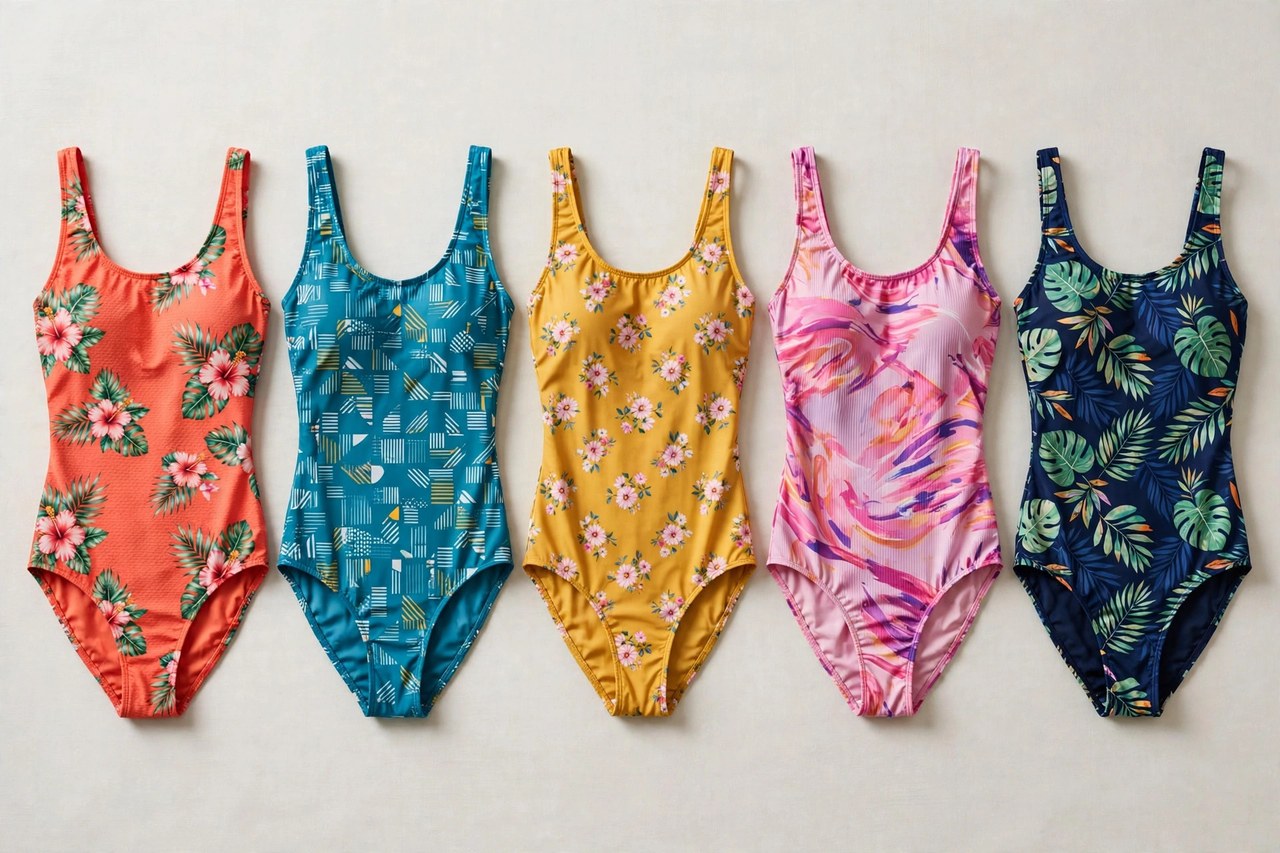
Polyester swimwear is swimwear knitted primarily from polyester yarn with elastane added for stretch. It is the standard fabric family for training suits, lap-swimming suits, swim-team practice wear and any suit expected to spend many hours in chlorinated water. This guide is strictly product-focused: it covers fabric properties, garment construction, sizing and care, so you can compare suits on specifications rather than on appearance alone.
The reason polyester dominates frequent-use swimwear is a cluster of practical properties that all come from the fiber itself. Polyester is durable, fast-drying and lightweight yet strong. It is naturally wicking, stain-resistant and wrinkle-resistant, holds its shape in and out of the water, and is more resistant to chemicals and chlorine than many other swim fabrics. For a swimmer choosing between a soft occasional-use suit and a suit that must survive a season of daily laps, those properties are the deciding specifications.
Fabric Requirements: Quick-Drying, Colorfast, With Stretch
Any swim fabric, polyester included, has to meet three basic requirements. It must be quick-drying, so the garment sheds water between swims and does not stay cold and heavy on the body. It must be colorfast, holding its dye against chlorine, salt water, sunlight and repeated washing without bleeding or fading unevenly. And it must have stretch with recovery, typically from elastane blended into the knit, so the suit fits closely, moves with the stroke and returns to its original shape after every wear. Polyester meets the first two requirements inherently and, blended correctly, meets the third for far longer than nylon-based knits in chlorinated pools.
When comparing labels, look at the blend percentages. Training and lap suits commonly use a high polyester content with roughly 15 to 22 percent elastane or a PBT-type stretch yarn, balancing compression against comfort. Higher elastane gives a firmer, more compressive fit; lower elastane feels softer but may relax sooner. Check also for a stated UPF rating for outdoor swimming, and note whether the fabric is described as chlorine-resistant — on polyester suits this reflects the fiber's genuine chemical resistance, not a surface coating that washes away. Dark colors and prints both disguise gradual fade well over a long service life.
Construction and the Lap Swimmer's Alternative
Polyester suits are most often sewn as one-pieces for training, with two-piece and tankini versions for recreational swimming. Construction points to check are the same regardless of style: flat, smooth seams that will not rub during repetitive strokes, a full or front lining so the fabric stays opaque when wet, securely finished leg and armhole elastic that grips without cutting, and straps wide enough or sufficiently anchored for the suit's intended activity. Athletic cuts use higher necklines and secure backs; recreational cuts trade some of that security for easier on-and-off, so match the construction to the swimming you actually do.
Historically, the default stretch swim fabric was a nylon-spandex blend, valued for its silky feel. Polyester swimwear is the lap swimmer's alternative to those spandex suits: slightly firmer in hand, but far slower to lose its stretch, color and fit under daily chlorine exposure. A nylon-spandex suit used for daily laps commonly bags and fades within a season, while a comparable polyester suit keeps its compression and color through hundreds of pool hours. For occasional holiday swimming the difference matters little; for lessons, fitness swimming and team practice it is the main buying decision in the category.
Sizing and Care
Size polyester swimwear snugly. The fabric relaxes slightly when wet, so a suit that feels merely comfortable when dry will feel loose in the water, especially for lap swimming where drag and shifting fabric are immediately noticeable. Use the maker's torso measurement for one-pieces rather than dress size alone, confirm the straps stay seated when you raise both arms and rotate your shoulders as in a stroke, and check that leg openings stay in place through a knee lift. Between sizes for training, choose the snugger fit; for recreational wear, choose comfort, since long stationary wear rewards ease over compression.
Care extends the fabric's built-in advantages. Rinse the suit in cold fresh water immediately after every swim to remove chlorine before it can act on the elastane, hand wash occasionally with mild soap, and never use bleach or hot water. Roll the suit in a towel instead of wringing it, and dry it flat or folded over a rail away from heat and direct sun. Rotating two suits for daily swimming gives each a full rest day to recover its stretch. Even durable polyester eventually loses elastane to chlorine and heat — hot tubs are the fastest stress test — but with rinsing and rotation, a polyester training suit delivers the longest service life of any common swim fabric.
Related Women's Guides
Photos

More to Explore on Apparel Search
Women’s Clothes Guide by Letter: Women's Clothing Directory S
Looking for Women's Clothing Stores?
This guide helps you choose women's polyester swimwear. To browse where to buy, visit our women's clothing store directory, where you can find retailers that carry them.