Women's Retro Fashion Guide
The overview guide to retro as a fashion movement: what retro means, how it differs from vintage and antique, why the past keeps returning, and how each decade's look is quoted today.
Shop Women's Retro Fashion Now
Shop Women's Retro Fashion on Amazon Shop Women's Retro Fashion on eBayThe Amazon and eBay links on this page are affiliate links. If you make a purchase through them, Apparel Search may earn a commission.
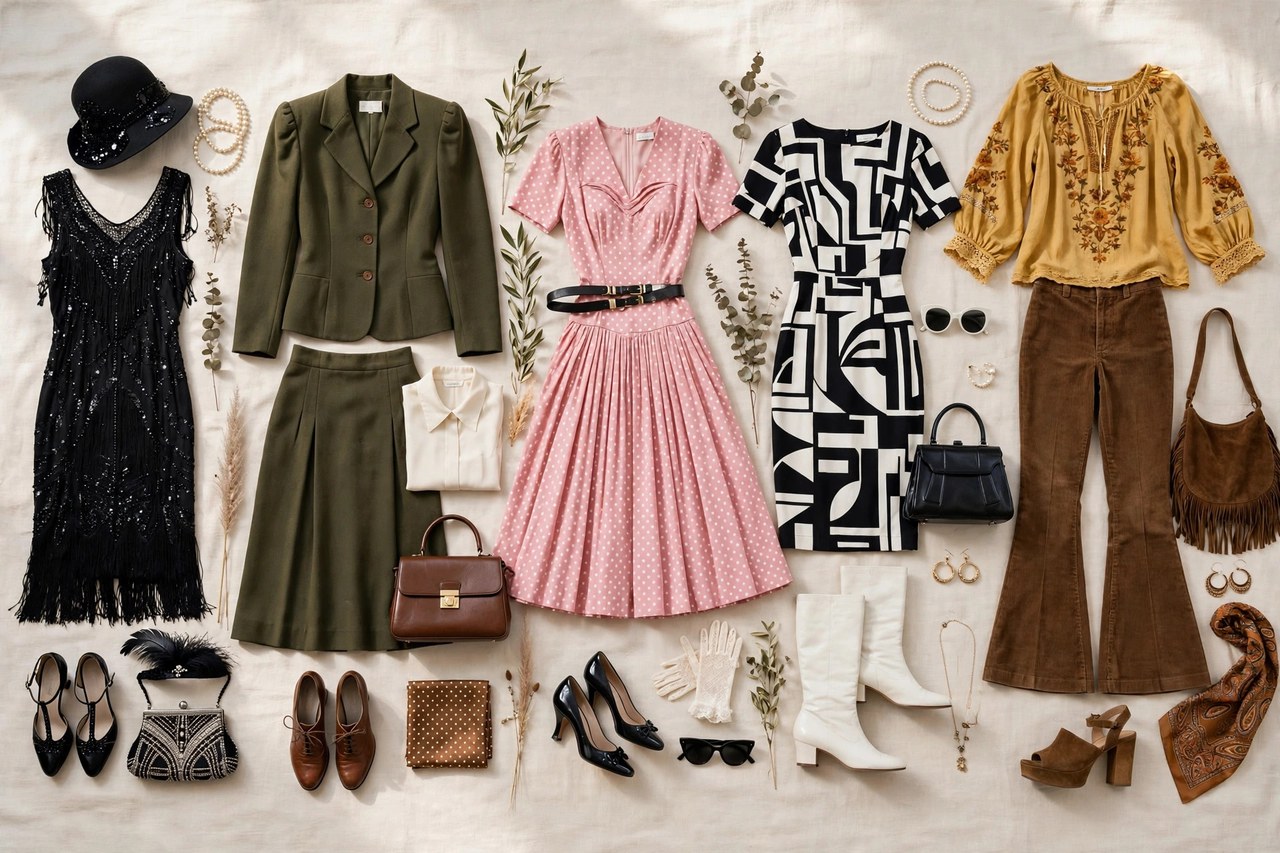
This guide is the overview of the retro section: an explanation of retro fashion as a movement, the idea underneath every other page here. Retro, from the Latin for backward, describes fashion that looks back on purpose — clothing and styling that consciously imitate the looks of earlier decades, whether the garments themselves are old or newly made. Retro is a permanent feature of fashion rather than a passing trend, because fashion has been quoting its own past for as long as it has had a past to quote.
Understanding the movement helps with every practical decision in this section: what to call a garment, which decade an outfit belongs to, and why a style you remember from one revival returns in another. This guide defines the key terms — retro, vintage, antique and revival — walks the signature look of each major decade, explains the machinery of the roughly twenty-year revival cycle, and closes with notes on wearing the movement well and caring for the older garments it depends on.
Retro, Vintage, Antique: The Terms
The words are often used loosely, but sellers and collectors draw real distinctions. Vintage properly means a genuine garment from an earlier era, generally at least twenty years old. Antique clothing is older still, conventionally a century or more, and usually studied or displayed rather than worn. Retro describes the style rather than the age: a dress sewn yesterday in a 1950s pattern is retro, not vintage, and a genuine 1950s dress is vintage whether or not anyone calls its style retro. A revival is the moment when a past style returns to current fashion in new production.
The distinctions matter because they carry honest expectations. Vintage brings real period fabric, construction and history, with vintage sizing, condition questions and no possibility of ordering another. Retro production brings the look in modern sizes, fabrics and quantities, with modern returns policies. Neither is superior in the abstract: collectors prize the genuine article, working wardrobes run on reproduction, and most retro dressing, sensibly, mixes both. What is never acceptable is the blurred label — new clothing sold as vintage, or vintage described without its flaws.
The Decades, Quoted
Each era supplies the movement with a shorthand look. The 1920s: dropped waists, beading, cloches and long necklaces. The 1930s: bias cuts, flutter sleeves, tea dresses and Hollywood glamour. The 1940s: strong shoulders, shirtwaist dresses, high-waisted trousers and utility neatness. The 1950s: fit-and-flare dresses, pencil skirts, twinsets and polished accessories — the most quoted decade of all. The 1960s: shifts, minis, bold prints and space-age white. The 1970s: wrap dresses, flares, peasant blouses and earth tones. The 1980s: power shoulders, bold color and glamour turned up loud.
Notice that these shorthands are caricatures, useful ones. Real wardrobes in every decade were more varied and more ordinary than their retro quotations, which select the most distinctive ten percent of an era and polish it. That selection is not a failure of accuracy; it is how the movement works. Retro fashion is an edited anthology of the past, and knowing the original texts — the fuller fashion history behind each shorthand — is what separates the informed wearer from the fancy-dress version of the same outfit.
Why the Past Keeps Coming Back
Revivals run on a rough twenty-to-thirty-year cycle, and the mechanism is human. Designers revive the decades of their youth; shoppers in their thirties buy back the styles of their teens, now with adult money; and each generation discovers the era just before its own memory as exotic. Film, television and music set the triggers — a period drama can move a silhouette from archive to high street in a season — while vintage shops and now online marketplaces make the genuine articles findable, so inspiration and supply arrive together.
Retro also persists because it solves modern problems. Vintage silhouettes offer alternatives when current fashion's dominant shape flatters few people; older construction and natural fabrics appeal to buyers tired of disposable clothing; and wearing a chosen past is a form of self-expression that trend-following cannot provide. The movement's center of gravity keeps moving — the 1990s and 2000s are the current revival frontier, which makes yesterday's retro shoppers into today's vintage sources — but the backward glance itself shows no sign of going out of fashion. It is, in the end, one of fashion's oldest styles.
Related Women's Guides
Photos

Looking for Women's Clothing Stores?
This guide helps you choose women's retro fashion. To browse where to buy, visit our women's clothing store directory, where you can find retailers that carry them.