Women's Retro Fashion Styles Guide
Retro fashion styles are the recognizable silhouettes of past decades — the shapes, lengths and details that let you date a garment at a glance and wear that history today.
Shop Women's Retro Fashion Now
Shop Women's Retro Fashion on Amazon Shop Women's Retro Fashion on eBayThe Amazon and eBay links on this page are affiliate links. If you make a purchase through them, Apparel Search may earn a commission.
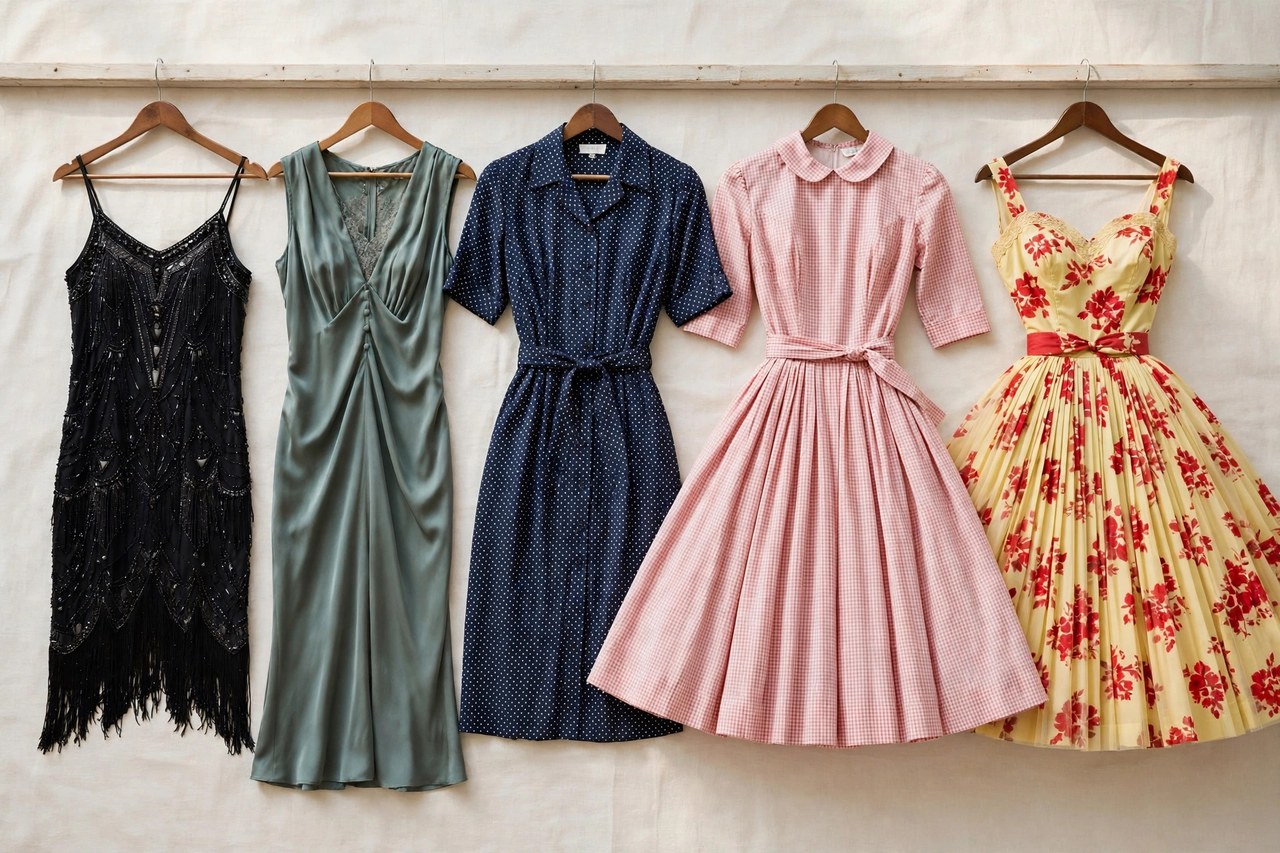
Every decade of the twentieth century left behind a silhouette so distinct that a single garment can announce its era across a room. Retro fashion styles is the study of those shapes: the straight, dropped-waist line of the 1920s, the padded shoulder and nipped waist of the 1940s, the sweeping full skirt of the 1950s, the clean shift of the 1960s, the flowing layers of the 1970s and the bold, oversized tailoring of the 1980s. This guide walks through them decade by decade, as styles rather than as individual garments.
Understanding silhouettes is the fastest way to shop retro well. A label can be missing, a fabric can be a modern reproduction, but the cut rarely lies: hem length, waist placement, shoulder line and skirt volume together fix a piece in its period. Learn the six classic shapes below and you can sort a rail in any vintage shop by era in minutes.
The 1920s to the 1940s: Straight Lines to Strong Shoulders
The 1920s dropped the waist to the hip and straightened everything: tubular dresses, low belts, cloche hats and hems that rose to the knee for the first time. Decoration did the work that shaping no longer did, in beading, fringe and Art Deco geometry. The 1930s answered with bias cutting, which let fabric fall in soft, body-skimming diagonals, longer hems and flutter sleeves — an elegant, grown-up line that still flatters almost everyone and returns in evening wear every few seasons.
The 1940s silhouette was shaped by wartime economy and utility rules: shorter skirts, narrow hips, and strong, squared, padded shoulders above a clearly nipped waist. That shoulder-and-waist contrast is the decade's signature, seen in tailored suits, shirtwaist dresses and the peplum jackets that added a short flare at the hip. When you spot a garment with military neatness, restrained fabric use and that emphatic shoulder, you are almost certainly looking at forties styling, whether the piece is original or a faithful later revival.
The 1950s and 1960s: Full Skirts to the Shift
Post-war prosperity announced itself in fabric. The 1950s New Look silhouette paired a tiny, fitted waist with either a very full, calf-length skirt worn over petticoats or a slim pencil skirt, and the hourglass became the decade's ideal. Shirtwaist dresses, twinsets, capri pants and circle skirts all belong to this polished, coordinated world. It remains the most commercially revived retro style of all, because the waist emphasis and skirt movement photograph beautifully and suit celebrations, dancing and vintage-themed events.
The 1960s broke the hourglass in two directions. Early sixties styling kept fifties polish, but the youth-driven mid-decade introduced the shift and the A-line mini: straight, waistless dresses, hems above the knee, bold color blocking and graphic prints, worn with flat shoes and strong eyeliner. Late sixties style then drifted toward the romantic and ethnic influences that flowered in the seventies. A retro wardrobe can hold both sixties looks, but they style very differently — the shift wants simplicity and geometry, not fifties accessories.
The 1970s and 1980s: Flow and Power
The 1970s silhouette is long, soft and layered: maxi dresses, peasant blouses, flared trousers, platform shoes, suede, fringe and earthy or psychedelic prints. Two sub-styles share the decade — bohemian flow and disco shine — and both prize movement over structure. Waistlines wandered from empire to natural to dropped, sleeves ballooned, and knit fabrics stretched the whole wardrobe. Seventies pieces mix easily into modern dress because their softness matches current casual clothing, and a single vintage maxi or flare can carry an otherwise plain outfit.
The 1980s reversed the softness into power dressing: oversized blazers with padded shoulders, strong color, metallic evening fabrics, leggings, miniskirts, big belts cinching loose tops, and athletic wear worn as street style. Eighties retro is the loudest and often the most affordable vintage to collect, because so much of it was made in durable synthetics that survive well. Choose one bold eighties element at a time — a shoulder, a color, a belt — unless the occasion is a themed party, where the full look is exactly right.
Wearing a Decade Without a Costume Effect
The line between retro style and costume is usually quantity. One era-defining piece — a fifties circle skirt, a sixties shift, a seventies maxi — styled with modern shoes, bag and hair reads as fashion; head-to-toe period dress with matching accessories reads as fancy dress, which is wonderful when intended and awkward when not. Fit matters as much as era: vintage sizing runs smaller than modern sizing, and original garments were often made for period foundation garments, so judge by measurements, never by the label size.
Build a retro wardrobe by decade strengths. Petite frames often shine in sixties shifts and twenties straight lines; curvier figures are flattered by fifties waist emphasis and thirties bias cuts; tall frames carry seventies maxis and eighties tailoring with ease. Whatever you choose, inspect construction before buying: seams, zips and fabric condition decide whether a vintage piece will wear for years or only pose for one photograph.
Women's Retro Topics A-Z
- Women's Retro Apparel
- Women's Retro Blouses
- Women's Retro Clothing
- Women's Retro Corsets
- Women's Retro Denim
- Women's Retro Dresses
- Women's Retro Equestrian Clothing
- Women's Retro Eyewear
- Women's Retro Fashion
- Women's Retro Fashion Accessories
- Women's Retro Footwear
- Women's Retro Gloves
- Women's Retro Gowns
- Women's Retro Hats
- Women's Retro Headwear
- Women's Retro Jeans
- Women's Retro Levi Jeans
- Women's Retro Lingerie
- Women's Retro Pants
- Women's Retro Shirts
- Women's Retro Skirts
- Women's Retro Sleepwear
- Women's Retro Sweaters
- Women's Retro T-Shirts
- Women's Retro Tops
- Women's Retro Veils
- Women's Retro Vests
- Women's Retro Wedding Dresses
- Women's Retro Wedding Gowns
Retro is one family in the R guide. The full Women’s Clothes Guide R also covers raglan and rib knit tops, rain boots, raincoats and rainwear, resort fashion, ruffles and running shoes — all 50 topics gathered on the letter hub.
Explore the Full Women's Clothes Guide R »More to Explore on Apparel Search
Looking for Women's Clothing Stores?
This guide helps you choose women's retro fashion styles. To browse where to buy, visit our women's clothing store directory, where you can find retailers that carry them.