Women's Retro Sleepwear Guide
A product-focused guide to vintage and retro-style sleepwear as garments — nightgowns, pajama sets and robes by fabric, cut and construction across the decades.
Shop Women's Retro Sleepwear Now
Shop Women's Retro Sleepwear on Amazon Shop Women's Retro Sleepwear on eBayThe Amazon and eBay links on this page are affiliate links. If you make a purchase through them, Apparel Search may earn a commission.
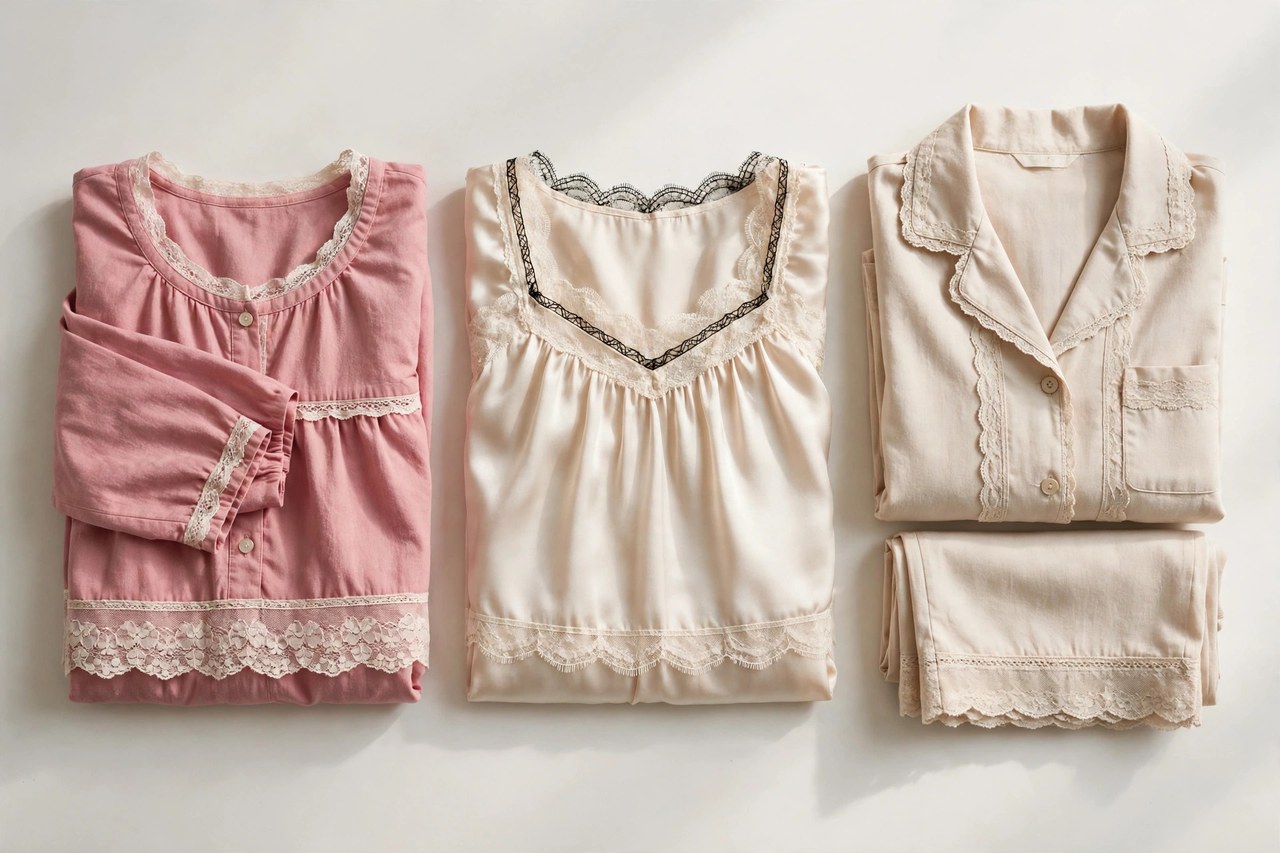
This is a strictly product-focused guide to retro sleepwear as garments: the nightgowns, pajama sets, bed jackets and robes of past decades, considered by fabric, cut and construction. Sleepwear changed as dramatically as daywear through the twentieth century — from long cotton lawn nightgowns, through bias-cut rayon gowns of the 1930s, to the nylon tricot peignoir sets of the 1950s and the short baby-doll styles of the 1960s — and vintage examples survive in remarkable numbers because they were often bought as gifts and lightly used.
That survival makes retro sleepwear one of the most collectible and wearable vintage categories, provided you read it like a garment specialist: fiber content first, then cut, seams and trim. The sections below walk the decades by construction, explain the fabrics you will meet most often, and cover the sizing and care points that matter for pieces made long before modern easy-care labels. Everything here is about the clothing itself — its materials, making and keeping.
Nightgowns by Decade: Lawn, Bias Rayon and Nylon
Early twentieth-century nightgowns were cotton lawn, cambric and flannel: loose, long and simply made, with yokes, pin tucks and whitework embroidery doing the decorative work. The 1930s transformed the nightgown into the most glamorous garment many women owned — floor-length gowns of rayon and silk cut on the bias, with lace inserts and low backs echoing evening dresses. Bias gowns cling by geometry rather than elastic, hang beautifully, and are the most sought-after vintage sleepwear pieces today, as well as the most delicate.
Post-war sleepwear belongs to nylon tricot. The 1950s produced the classic full-length nylon nightgown with a lace-trimmed bodice, often sold as a peignoir set with a matching sheer robe, in pastels and black. The 1960s shortened the line into baby-doll pajamas — brief, full tops with matching panties or tap pants — and the 1970s swung between long, flowing granny-style gowns in printed cotton and sleek jersey sets. Pajama sets run parallel through every decade: tailored, button-front, menswear-derived in the forties, softer and more printed thereafter.
Construction and Fabrics in Detail
Judge a vintage nightgown the way you would a dress, because the good ones were made like dresses. Look for French seams on silk and rayon, neat narrow hems, lace applied by insertion rather than simply topstitched, and straps that are fabric tubes or ribbon backed with fabric rather than plain ribbon, which frays. Bias-cut garments should hang evenly; a twisted hang signals stretched or damaged bias that will not recover. Cotton lawn and seersucker pieces are sturdier, with seams and embroidery that tolerate regular gentle washing.
Fiber behavior decides comfort and care alike. Cotton breathes, absorbs and softens with washing, ideal for warm sleepers in its lawn and voile forms and for winter in brushed flannel. Rayon drapes cold and smooth but weakens when wet and can shrink, so it needs the gentlest handling. Nylon tricot is light, quick-drying and nearly wrinkle-free, but builds static, can yellow with age and heat, and melts under a hot iron. Later retro reproductions in polyester charmeuse imitate silk's shine at low cost, with less breathability — check the label and price accordingly.
Sizing, Collecting and Care
Vintage sleepwear sizing is inconsistent: nightgowns were often sold in small, medium and large or by bust size, and a 1950s medium can measure closer to a modern small. Shop by flat bust and length measurements, allow generous ease — sleepwear was cut to move in — and for bias gowns, remember the fabric will give across the body but not in length. Pajama tops follow shirt sizing of their era; trousers usually have elastic or drawstring waists whose elastic may need replacing, a simple, invisible repair that restores wearability.
Wash vintage sleepwear cool and gentle: hand wash silk and bias rayon in a delicate wash, support the garment's weight when wet, and dry flat or over a line away from sun. Nylon tolerates a mesh-bag machine wash but should never meet a hot dryer or iron. Store gowns folded with tissue rather than hung, since straps and bias shoulders stretch under hanging weight, and keep lace-trimmed pieces away from zips and hooks in the drawer. Cared for this way, a well-made vintage nightgown or pajama set remains comfortable, handsome clothing with decades of use still in it.
Related Women's Retro Guides
More to Explore on Apparel Search
- Retro Fashion
- Women's Sleepwear
- Vintage Clothes
- Vintage Clothing Stores
- Vintage Clothes Wholesalers
- Women's Sleep Pants
- Women's Sleep Shirts
- Women's Pajamas
- Women's Nightdress
- Women's Nightgowns
- Women's Plus Size Sleepwear
- Women's Petite Sleepwear
- Women's Silk Sleepwear
- Women's Sleepwear Stores
- Fashion
- Clothing Retail Stores
- Women's Clothing Stores
- Women's Clothing Wholesalers
- Women's Fashion
Looking for Women's Clothing Stores?
This guide helps you choose women's retro sleepwear. To browse where to buy, visit our women's clothing store directory, where you can find retailers that carry them.