Women's Retro Lingerie Guide
A product-focused guide to vintage and retro-style lingerie as garments — the fabrics, seams, lace and construction details that define pieces from each era.
Shop Women's Retro Lingerie Now
Shop Women's Retro Lingerie on Amazon Shop Women's Retro Lingerie on eBayThe Amazon and eBay links on this page are affiliate links. If you make a purchase through them, Apparel Search may earn a commission.
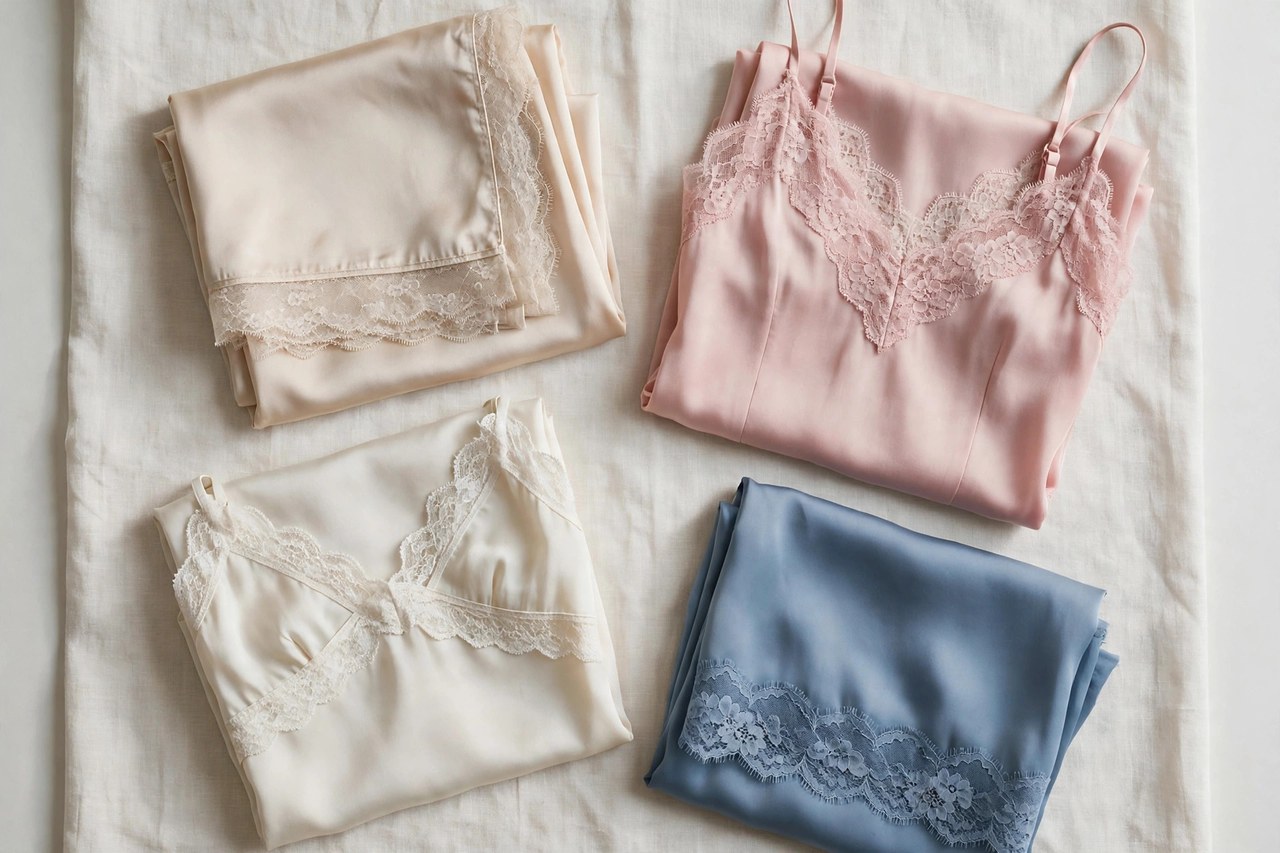
This is a strictly product-focused guide to retro lingerie as garments: the slips, camisoles, tap pants, bed jackets and foundation pieces of past decades, studied the way a collector or seamstress studies them — by fabric, cut, seam finish and trim. Vintage undergarments were engineered clothing, built to shape the dresses worn over them, and their construction quality often exceeds that of the modern equivalents, which is why original pieces and faithful retro reproductions remain in steady demand.
Each era left its signature in the drawer. The 1920s favored loose silk camisoles and step-ins; the 1930s cut slips on the bias to glide under bias dresses; the 1940s and 1950s built structured foundation garments and the famous full nylon slip; the 1960s lightened everything into sheer nylon tricot; and later decades revived lace-trimmed satin. Reading those differences helps you date a piece, size it correctly and care for fabrics that were never meant for a hot wash or a tumble dryer.
Fabrics by Era: Silk, Rayon and Nylon Tricot
Silk dominated fine lingerie into the 1930s: feather-light, naturally temperature-regulating and usually trimmed with real lace, but fragile, water-sensitive and expensive, so surviving silk pieces are collector items to be handled and stored with care. Rayon — often sold as artificial silk — took the everyday market between the wars, draping well at a fraction of the price, though it weakens when wet and needs gentle washing. Bias cutting defines both eras: garments were sliced diagonally to the weave so the cloth itself supplied the shaping, without elastic.
The post-war decades belong to nylon. Nylon tricot — a fine, smooth knit — made slips, camisoles and nightwear affordable, washable and nearly indestructible compared with silk, and makers competed on lace: wide Alencon-style lace hems, appliqued bodices and pastel color ranges of pink, blue, mint and lilac beside basic white and black. Later retro reproductions add modern elastane for fit, which original pieces lack; a true vintage garment shapes by cut and fastening alone, an important difference when you choose a size.
Construction Details That Date and Define a Piece
Seams tell the story first. Fine vintage lingerie uses French seams, which enclose raw edges completely, or narrow pinked seams on rayon and nylon; modern overlocked edges signal a reproduction. Closures are equally informative: tiny buttons, hook-and-eye tapes, side zips on structured 1950s foundation pieces, and adjustable straps with metal sliders on better slips. Boning in period foundation garments was spiral steel or, in wartime and budget lines, featherbone, and its channels and stitching are worth inspecting before any purchase.
Trim quality separates the grades. Hand-rolled hems, inset lace rather than lace simply stitched on top, embroidered monograms on pre-war silk, and woven brand labels (printed labels came later) all point to older, better-made pieces. For the buyer, the practical checks are simple: hold knit nylon to the light for runs and thinning, test elastic for crackle and snap — perished elastic is the commonest fault in vintage foundation wear — and check straps and seam junctions, where the garment's small stresses concentrate.
Sizing, Collecting and Care
Vintage lingerie sizing follows the dress sizes of its day for slips and camisoles, and bust measurements for structured foundation pieces, and neither matches modern labels. Shop by flat measurements — bust, waist, hip and length — and remember that a bias-cut 1930s slip clings by design while a 1950s full slip was cut to stand slightly away under a full skirt. Pieces bought as a layer under vintage dresses should be tried with the dress: the whole point of a period slip is that its straps, neckline and hem suit the garment above it.
Care decides whether a collection lasts. Wash silk and rayon by hand in cool water with a gentle wash made for delicates, never wring, and dry flat away from sunlight, which yellows both fibers. Nylon tolerates a cool machine wash in a mesh bag but melts and distorts under heat, so never tumble dry on hot or iron directly. Store pieces folded with acid-free tissue, not on hangers that stretch straps, and keep lace-trimmed items separate from hooks and zips that snag. Treated this way, well-made vintage lingerie remains wearable, study-worthy clothing for decades more.
Related Women's Retro Guides
Looking for Women's Clothing Stores?
This guide helps you choose women's retro lingerie. To browse where to buy, visit our women's clothing store directory, where you can find retailers that carry them.