Women's Retro Wedding Dresses Guide
Retro wedding dresses are bridal dresses in the styles of past decades — from 1920s straight silhouettes to 1950s tea lengths and 1970s bohemian gowns.
Shop Women's Retro Wedding Dresses Now
Shop Women's Retro Wedding Dresses on Amazon Shop Women's Retro Wedding Dresses on eBayThe Amazon and eBay links on this page are affiliate links. If you make a purchase through them, Apparel Search may earn a commission.
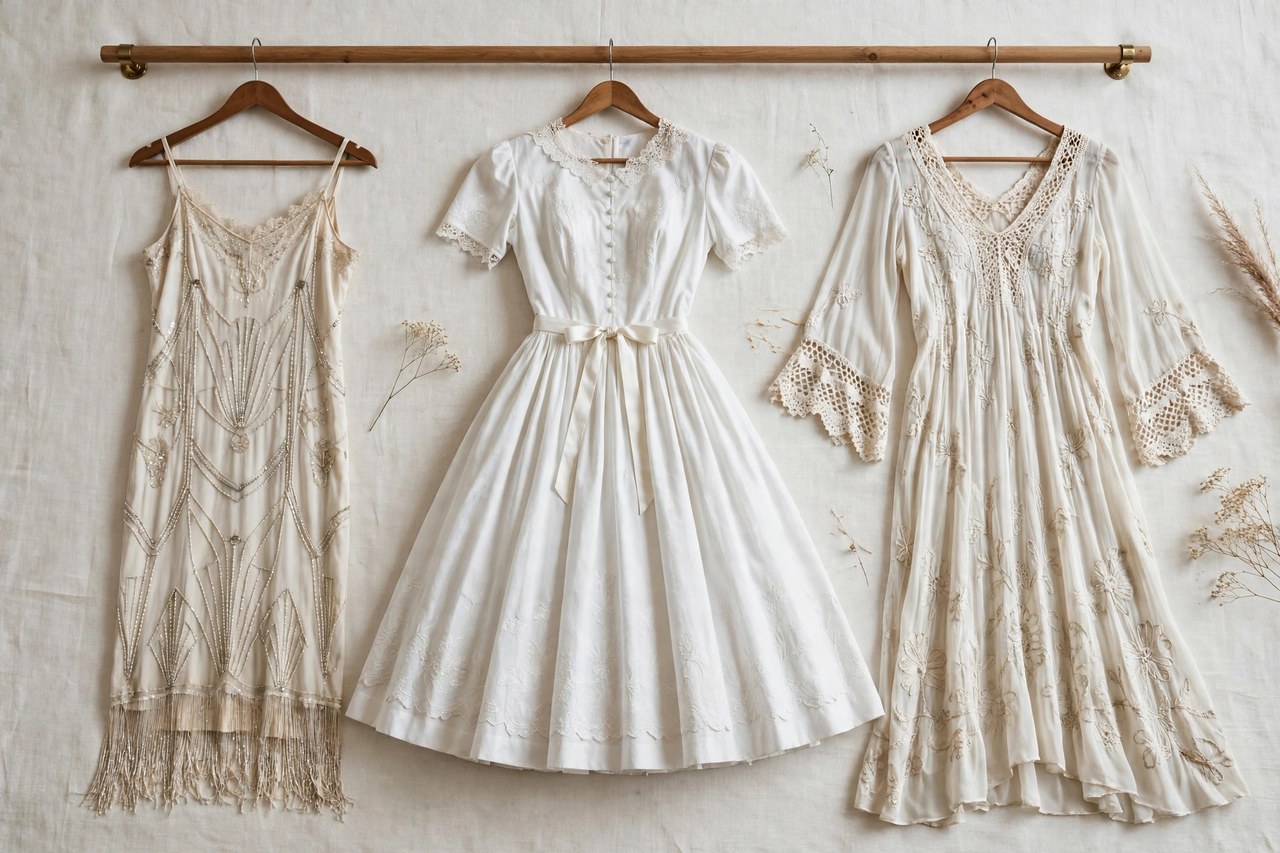
A wedding dress is the most era-faithful garment most women ever wear, because bridal fashion follows its decade closely and the dress is then kept, photographed and remembered. Retro wedding dresses therefore read like a timeline: the straight, dropped-waist dresses of the 1920s, the liquid bias-cut satin of the 1930s, the modest wartime dresses of the 1940s, the tea-length and full-skirted dresses of the 1950s, the short, simple dresses of the 1960s and the romantic, flowing dresses of the 1970s. This guide covers the dress by decade.
The companion guides divide the subject further: retro wedding gowns takes the formal, floor-length end of bridal wear and its terminology, while retro veils covers the headpiece alone. Here the focus is the dress as brides of each era actually chose it — its length, fabric, neckline and sleeves — and on the practical questions of buying vintage bridal today: sizing, condition, alteration and cleaning, which differ from ordinary vintage because these dresses were worn once, stored for decades and made in fabrics that age in storage.
Twenties to Forties: Dropped Waists, Bias Satin, Wartime Sense
The 1920s wedding dress mirrored day fashion: a straight or dropped-waist silhouette, knee to calf length by the decade's end, in silk, satin, crepe and lace, often with beading, worn with a cap or cloche-style veil and sometimes a wax orange-blossom headdress. The 1930s brought the most elegant silhouette in bridal history for many collectors: long, bias-cut satin or crepe dresses that poured over the body, with cowl or high necklines, long sleeves, buttoned backs and court trains — demanding to wear, unforgiving of poor fit, and unforgettable when right.
The 1940s simplified under wartime rules: rayon satin and crepe replaced rationed silk, trains shortened or vanished, and many brides married in their best suit or a simple long dress with sweetheart neckline, fitted bodice and modest sleeves. Post-war late-forties dresses began the return to fullness as fabric freed up, with peplums, net overskirts and growing skirts pointing toward the fifties. Vintage forties bridal is comparatively affordable and very wearable, its restraint suiting modern register-office and small weddings particularly well.
Fifties to Seventies: Tea Lengths, Minis and Bohemian Romance
The 1950s wedding dress split into two icons: the ballgown, with fitted lace or satin bodice and a huge layered net and tulle skirt, and the tea-length dress, its shorter, swinging sister ending at mid-calf, worn with a short veil and often a bolero or lace jacket. Both sit at a tiny natural waist and were built over serious foundation garments. Tea-length vintage dresses are the most practical retro bridal buy — easier to alter, clean, move and dance in, and suited to almost every venue.
The 1960s first kept the fifties shape, then discarded it: empire lines, A-line shifts and, by mid-decade, genuinely short wedding dresses and even trouser suits, in daisy-lace, brocade and crisp satin, with pillbox veils. The 1970s swung to romance: high necklines, leg-of-mutton and bishop sleeves, empire and princess lines in chiffon, dotted Swiss, cotton lace and cheesecloth, flower crowns instead of veils, and a soft, unstructured drape made for outdoor and home weddings. Seventies bridal in natural fibers is the easiest vintage wedding dress to have altered and cleaned.
Buying Vintage Bridal: Size, Condition and Cleaning
Buy by measurement and by alteration potential, not by romance. Vintage bridal sizes predate modern sizing entirely; a dress must fit the largest of bust, waist and hip with enough seam allowance to let out, because taking in is always easier. Inspect in daylight for the storage faults of bridal wear: yellowing (worst on rayon and at folds), rust spots from pins and storage boxes, oxidized sequins and beads, brittle net and lace, and perspiration damage under arms and at the bodice that may only appear after cleaning.
Budget for professional help from the start: a specialist vintage or bridal cleaner before any fitting, since cleaning can change both color and size slightly, then alterations, then a final press. Ask the cleaner to test an inside seam before wet cleaning any satin or lace dress, and never machine wash vintage bridal at home. Store the dress afterward as conservators do — clean, unpressed, in acid-free tissue in a breathable box, refolded yearly along different lines — so the dress you chose for its history gains a future as an heirloom in its own right.
Related Women's Retro Guides
Looking for Women's Clothing Stores?
This guide helps you choose women's retro wedding dresses. To browse where to buy, visit our women's clothing store directory, where you can find retailers that carry them.