Women's Retro Gowns Guide
Retro gowns are evening dress at full length and full drama: bias-cut 1930s satin, 1950s ballgowns, column sheaths and the Old Hollywood glamour that formal wear keeps reviving.
Shop Women's Retro Gowns Now
Shop Women's Retro Gowns on Amazon Shop Women's Retro Gowns on eBayThe Amazon and eBay links on this page are affiliate links. If you make a purchase through them, Apparel Search may earn a commission.
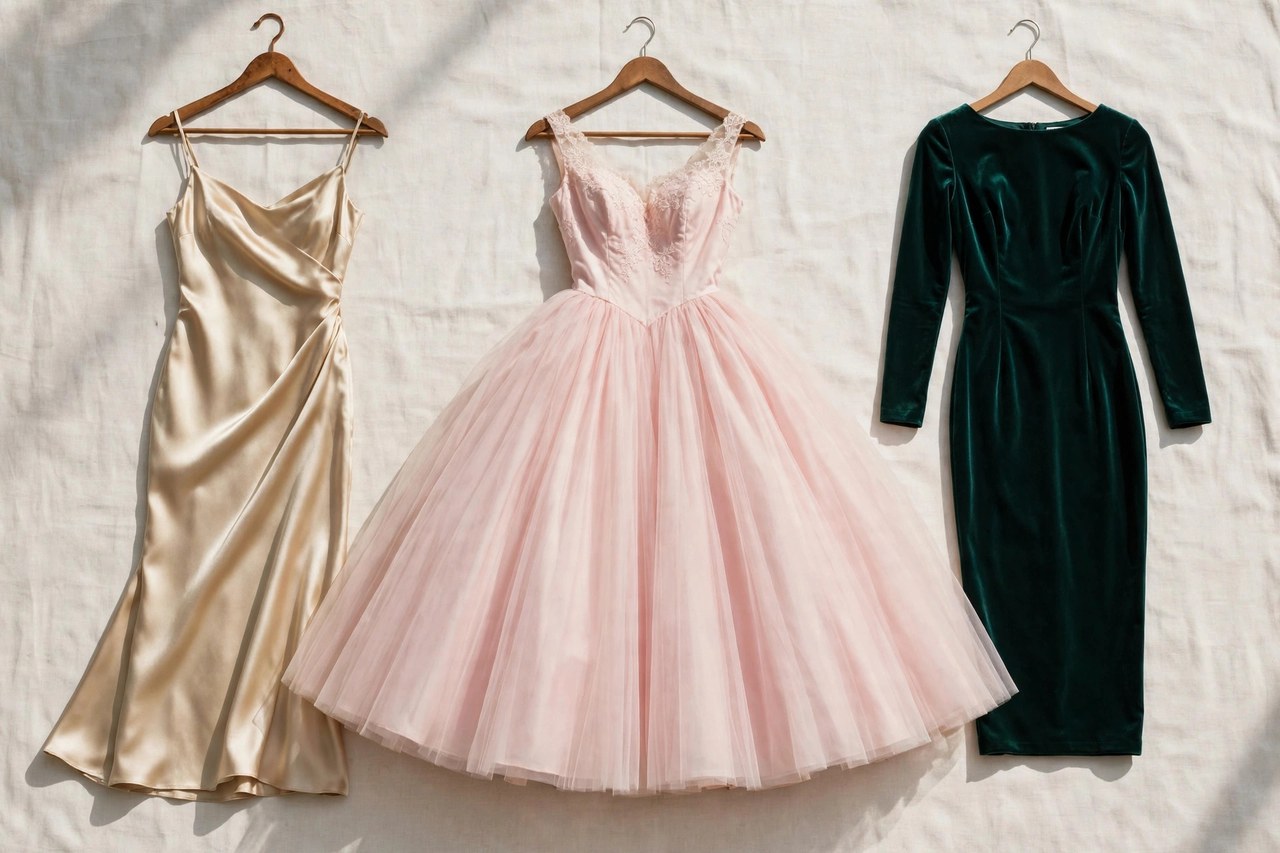
A gown is a dress with the volume turned up: full length, formal intent and enough fabric to make an entrance. Retro gowns draw on the great evening decades, above all the 1930s, when bias-cut satin turned evening dress into liquid sculpture, and the 1950s, when ballgowns of tulle and taffeta defined formal glamour for a generation. Between those poles sit the beaded sheaths, column dresses and sweeping trains that formal occasions keep calling back whenever modern evening wear feels thin.
This guide distinguishes the gown from the ordinary retro dress, walks through the major silhouettes and their decades, and covers the fabrics, necklines and embellishments that formal dress depends on. Practical sections follow on fitting a garment that often includes built-in structure, choosing a gown for a black-tie, gala or vintage-themed occasion, and storing heavy, beaded and bias-cut pieces so they survive between the rare, important nights they are worn.
The Great Gown Silhouettes
The 1930s bias-cut gown is cut on the diagonal so woven satin clings and flows without stretch, skimming the body into long liquid lines, often with a low draped back, cowl neckline or small train. It is the Old Hollywood gown, designed for movement under lights. The 1950s ballgown works in the opposite direction: a boned, fitted bodice over a vast skirt of layered tulle, net and taffeta, ankle or floor length, worn to dances, debutante balls and proms — architecture where the thirties chose water. Both silhouettes remain the twin poles of retro formal dressing.
Around them gather the supporting styles. The sheath or column gown of the late 1950s and 1960s falls straight and close, often beaded or sequined all over, elegant rather than voluminous. The empire gown, high-waisted and flowing, recurs from Regency revivals through 1970s romantic styles. Mermaid and trumpet gowns flare below the knee, a shape with roots in the 1930s that the 1980s amplified. Evening separates and the formal hostess gown — part dress, part lounging costume — complete a category that expects drama and plans for it.
Fabrics, Necklines and Embellishment
Gown fabrics are chosen for light. Silk satin and charmeuse pour; crepe drapes matte and heavy; chiffon layers into clouds over a lining; velvet absorbs light and reads winter-formal; tulle and net build volume without weight; and taffeta rustles, which is not a defect but a period sound effect. Embellishment follows the decade: all-over beading and sequins for the 1920s revival and 1960s sheath traditions, lace applique and embroidery for the 1950s ballgown bodice, and long clean unadorned satin for the 1930s manner, where the cut is the decoration.
Necklines at this level of formality are statements. Strapless sweetheart bodices crown the 1950s ballgown; halter and plunging backs belong to the 1930s; high jewel necks and illusion lace serve conservative glamour; and the one-shoulder line quotes classical drapery through several decades. Trains divide by practicality: a small sweep train suits a gala floor, while a detachable train gives a ballgown its ceremony and then gets out of the way of dancing. Gloves, covered in their own guide, were the gown's expected partner, their length set by the sleeve — long gloves with sleeveless gowns, short or none with sleeves.
Fit, Occasions and Gown Care
Formal gowns often contain their own engineering: boned bodices, built-in bras, waist stays that hook the gown to the body so the skirt's weight does not drag it down, and in ballgowns, layered petticoats or a built-in crinoline. Fit such a gown standing, sitting and raising your arms, and have alterations done by someone experienced with formal wear, since taking in a beaded or boned bodice is specialist work. Vintage gowns add the usual measurement rules, with extra caution at the zipper and the underarm, where evening wear lived hardest.
Choose the gown for the occasion's actual floor and photographs: ballgowns need room to move and suit proms, balls and vintage weddings; bias-cut satin suits galas and formal dinners where its movement can be seen; beaded sheaths travel best of the three. For care, professional cleaning by a specialist in formal and vintage garments is the default, never ordinary dry cleaning for beaded or fragile pieces. Store ballgowns flat or in a wide box if possible, bias gowns flat or rolled to prevent stretching on a hanger, and all gowns clean, dark and unhurried — a gown's next great night may be years away, and it should be ready.
Related Women's Guides
Looking for Women's Clothing Stores?
This guide helps you choose women's retro gowns. To browse where to buy, visit our women's clothing store directory, where you can find retailers that carry them.