Women's Retro Gloves Guide
Retro gloves range from the short white cotton glove of the 1950s daytime uniform to opera-length evening gloves, wrist gloves with pearl buttons and leather driving gloves.
Shop Women's Retro Gloves Now
Shop Women's Retro Gloves on Amazon Shop Women's Retro Gloves on eBayThe Amazon and eBay links on this page are affiliate links. If you make a purchase through them, Apparel Search may earn a commission.
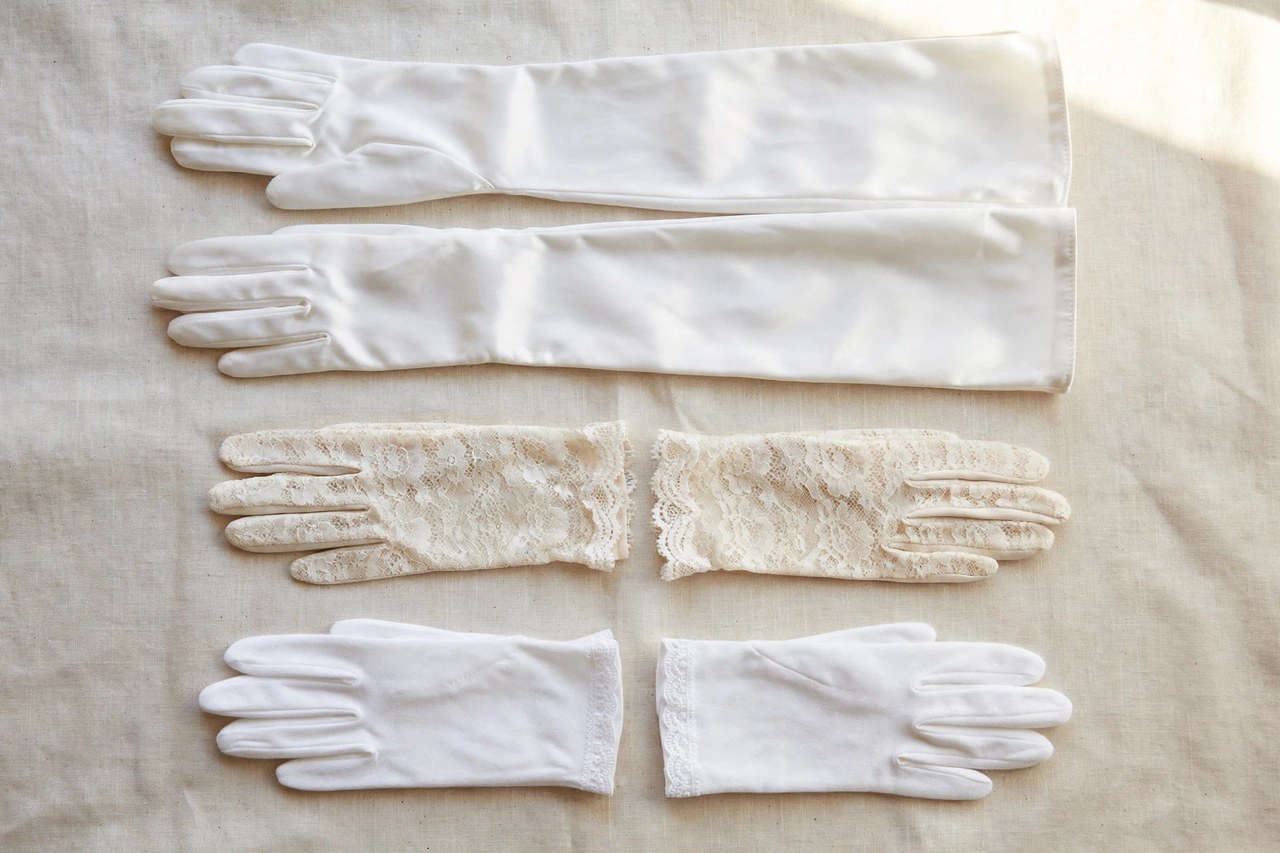
For most of the twentieth century, a woman's outfit was not finished until the gloves went on. Gloves were changed for the time of day, the season and the occasion as precisely as shoes are now, and the retro wardrobe rediscovers that whole system: the short white cotton glove for summer days, the leather glove for town and travel, the wrist-length glove with a pearl button for luncheons and weddings, and the long evening glove rising past the elbow for formal dress. No accessory signals period polish faster.
This guide explains the glove wardrobe as it was actually worn: the standard lengths and what each was for, the etiquette that decided when gloves stayed on and when they came off, the materials from cotton and nylon to kid leather and lace, and how glove sizing works. It closes with buying and care advice for both genuine vintage gloves — plentiful and inexpensive compared with other period pieces — and modern reproductions made for weddings, period events and everyday retro dressing.
Lengths and Their Occasions
Glove length is measured in buttons, an old French convention counting roughly an inch per button from the base of the thumb upward. The shortie or wrist glove, one to two buttons, was the daytime standard of the 1950s, in white or pastel cotton for summer and leather or suede for cooler months. Wrist and four-button gloves suited suits and coats with bracelet sleeves. Eight-button gloves reached the elbow for afternoon formality, and sixteen-button opera gloves rose above the elbow for evening, worn with sleeveless gowns so skin and glove met in the right proportion.
Etiquette filled a small book but reduces to a few rules that still read well. Gloves came off for eating, drinking and smoking, and stayed on for handshakes, dancing and receiving lines. Evening gloves were put on at home, never wrestled into in public, and long gloves with a dinner invitation were slipped down from the fingers and folded at the wrist for the meal rather than removed entirely. Modern retro wearers need not revive the whole code, but knowing it explains the design details — the wrist slits and mousquetaire button openings that let the hand emerge while the glove stayed on the arm.
Materials and Styles by Decade
Day gloves ran to washable cotton, fine nylon and soft leather — kid, doeskin and suede — often with hand-stitched points, the three decorative stitched lines on the back of the hand that remain the mark of a real dress glove. The 1940s added crocheted and lace gloves for summer under rationing ingenuity, and the 1950s made the white shortie an emblem of the decade, embroidered or trimmed with a tiny bow or pearl button at the wrist. Gauntlet gloves with wide flared cuffs belong to the 1950s driving and tailored look, reviving a much older cavalry shape.
Evening gloves favored silk, satin, velvet and fine nylon in white, ivory and black, with pastels matching gowns in the 1950s. Driving gloves, in perforated leather with open backs and knuckle holes, traveled from motoring necessity to a sporty retro style for both daywear and costume. Novelty and doeskin gloves with cutwork, applique and contrasting stitching reward collectors, and gloves survive in excellent condition more often than other garments because they were bought in multiples, worn briefly and stored in drawers — which is why genuine vintage gloves remain the easiest authentic piece in the whole retro wardrobe.
Glove Sizing, Buying and Care
Glove sizes run in numbers — traditionally six through eight and a half for women — taken from the circumference of the hand around the knuckles in inches, excluding the thumb. Vintage gloves skew small and their leather has often lost stretch, so measure your hand and, for vintage pairs, allow that a glove should slip on without forcing the seams between the fingers, the fourchettes, where old stitching fails first. A glove that fits correctly ends smoothly without pulling across the palm and lets the fingers close comfortably.
Wash cotton and nylon gloves by hand in cool water with mild soap, on the hands if they are stained, then off, rolled in a towel and dried flat away from heat. Leather gloves need a specialist cleaner or a careful sponge with saddle soap for light soil, and should never be soaked. Store gloves flat, fingers smoothed, in a drawer or box rather than crushed in a coat pocket, where vintage pairs go to be forgotten and found creased a decade later. Keep white gloves in the dark, since light yellows old cotton and nylon unevenly, and your best pair will stay photograph white.
Related Women's Guides
Photos

Looking for Women's Clothing Stores?
This guide helps you choose women's retro gloves. To browse where to buy, visit our women's clothing store directory, where you can find retailers that carry them.