Women's Retro Equestrian Clothing Guide
Retro equestrian clothing runs from the tailored riding habit and side-saddle apron to jodhpurs, hacking jackets and tall boots — horse-country tailoring that fashion keeps borrowing back.
Shop Women's Retro Equestrian Clothing Now
Shop Women's Retro Equestrian Clothing on Amazon Shop Women's Retro Equestrian Clothing on eBayThe Amazon and eBay links on this page are affiliate links. If you make a purchase through them, Apparel Search may earn a commission.
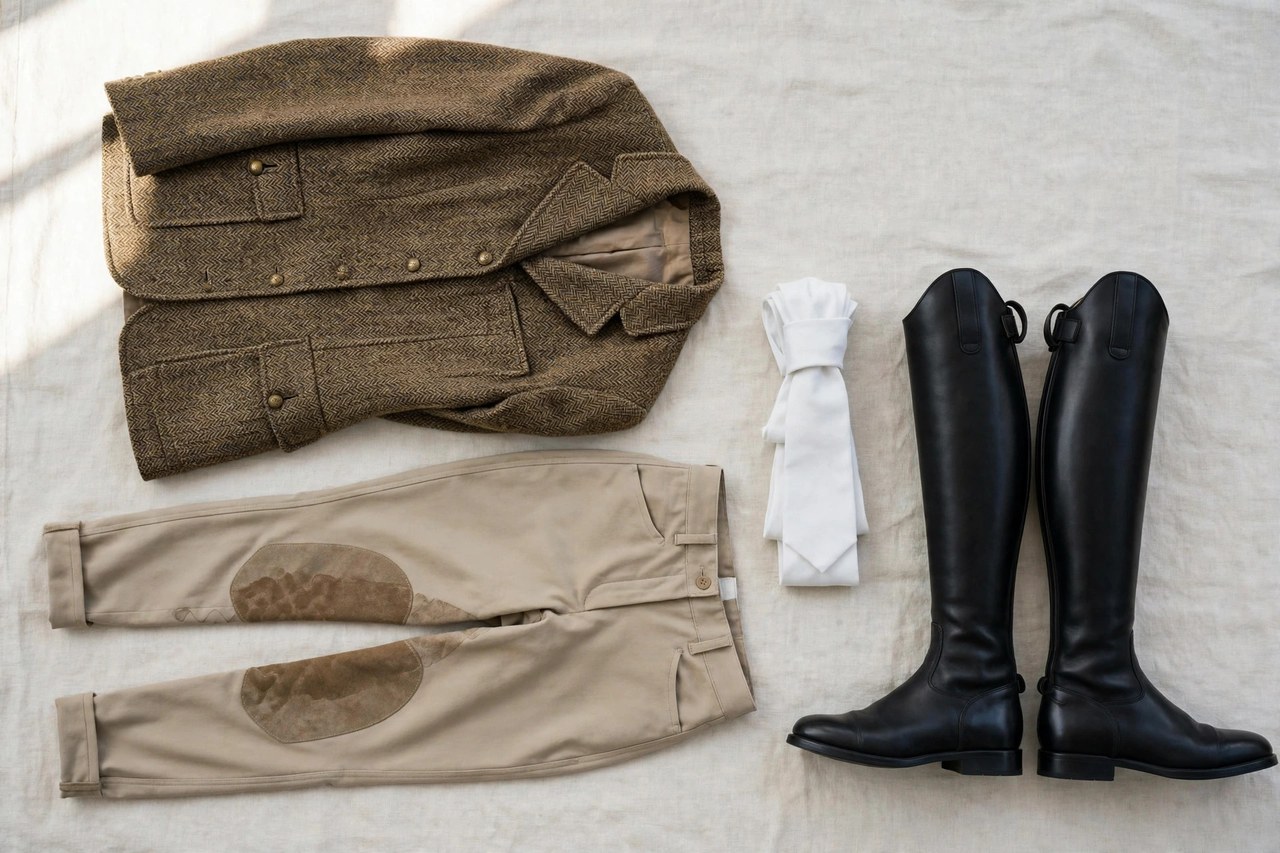
Equestrian clothing is the oldest continuously worn retro wardrobe in women's fashion. The tailored riding habit — fitted jacket, long skirt arranged for the saddle and a top hat or bowler — was standard for women riders for two centuries, and its components never really left: the hacking jacket, the breeches, the tall boot and the stock tie are still made today in forms a Victorian rider would recognize at once. Retro equestrian clothing therefore means two things at once: surviving historical riding dress, and the modern fashion that borrows its tailoring.
This guide covers both. It traces the riding habit and its side-saddle skirt, explains the working parts of the traditional kit — jacket, breeches and jodhpurs, boots, stocks and gloves — and shows how equestrian style migrated into everyday fashion, from tweed jackets with jeans to the boot-and-breeches silhouette designers revive each autumn. Notes on fit and on caring for wool, leather and velvet complete the picture, because riding clothes were built expensively and reward proper keeping.
The Riding Habit and Side-Saddle Dress
The classic habit paired a tailored, waist-fitted jacket with a long skirt cut to drape safely over a side saddle, worn with a chemisette or stock at the throat, gloves, and a top hat with a veil or a bowler for everyday riding. Because women rode side saddle into the early twentieth century, the skirt was engineering as much as fashion: an apron-front overskirt that wrapped and buttoned to stay modest and clear of the horse, over breeches worn beneath for safety when dismounted. Surviving habits in melton wool are among the finest tailored garments of their eras.
When astride riding became normal for women in the 1920s and 1930s, the skirt retired and breeches and jodhpurs took over: breeches ending below the knee to meet tall boots, jodhpurs continuing to the ankle with a strap under a short boot. The jacket stayed — tweed for hacking and hunting, black or navy melton for formal hunting and showing. That interwar kit, practical and beautifully cut, is the direct ancestor of both modern competition dress and the equestrian look in fashion.
The Working Kit, Piece by Piece
The hacking jacket is a single-breasted tweed jacket with a velvet collar option, flap pockets and a rear vent, cut long enough to sit correctly in the saddle. Stocks — white or cream neck cloths tied and pinned at the throat — protected the neck and finished the formal picture, while ratcatcher shirts with buttoned collars served informal days. Gloves in string, leather or pigskin protected reins hands, and the safety helmet gradually replaced the bowler and top hat, keeping the velvet-covered silhouette for the show ring.
Footwear splits by breech length: tall field or dress boots in black or brown leather with breeches, and jodhpur boots, ankle height with an elastic side, with jodhpurs. Retro reproductions of all these pieces serve historical reenactment, traditional hunting dress and vintage riding events, where correctness of period detail matters. The fabrics are honest ones: cavalry twill and Bedford cord for breeches, heavy tweed and melton for jackets, cotton and linen for shirts and stocks — a wardrobe designed for weather, mud and decades of service.
Equestrian Style Off the Horse, and Care
Fashion borrows from the stable whenever it wants polish without fuss. The borrowed kit is consistent across revivals: a tweed or plaid blazer cut like a hacking jacket, slim tan or cream trousers standing in for breeches, tall flat boots worn over them, a silk scarf tied where a stock would sit, and hardware borrowed from bridles — snaffle bits on loafers and bags, stirrup leathers as belts. Worn one or two pieces at a time, the look reads classic; the full kit off a horse reads costume, except at genuinely horsey events where it simply reads correct.
Care follows the materials. Brush tweed and melton jackets after wear, sponge mud from wool breeches rather than washing often, and store jackets on shaped hangers to hold the tailored shoulder. Leather boots need the stable routine: clean off sweat and mud, condition the leather, and store upright on boot trees so the tall shaft does not fold and crack at the ankle. Velvet-covered helmets and caps brush clean and live away from damp. Riding clothes were made to outlast their makers, and with ordinary attention the vintage pieces in this category routinely do.
Related Women's Guides
Photos

Looking for Women's Clothing Stores?
This guide helps you choose women's retro equestrian clothing. To browse where to buy, visit our women's clothing store directory, where you can find retailers that carry them.