Women's Retro Apparel Guide
Retro apparel is the whole wardrobe viewed through earlier decades — dresses, separates, outerwear and accessories newly made or lovingly kept in the shapes, fabrics and details of the past.
Shop Women's Retro Apparel Now
Shop Women's Retro Apparel on Amazon Shop Women's Retro Apparel on eBayThe Amazon and eBay links on this page are affiliate links. If you make a purchase through them, Apparel Search may earn a commission.
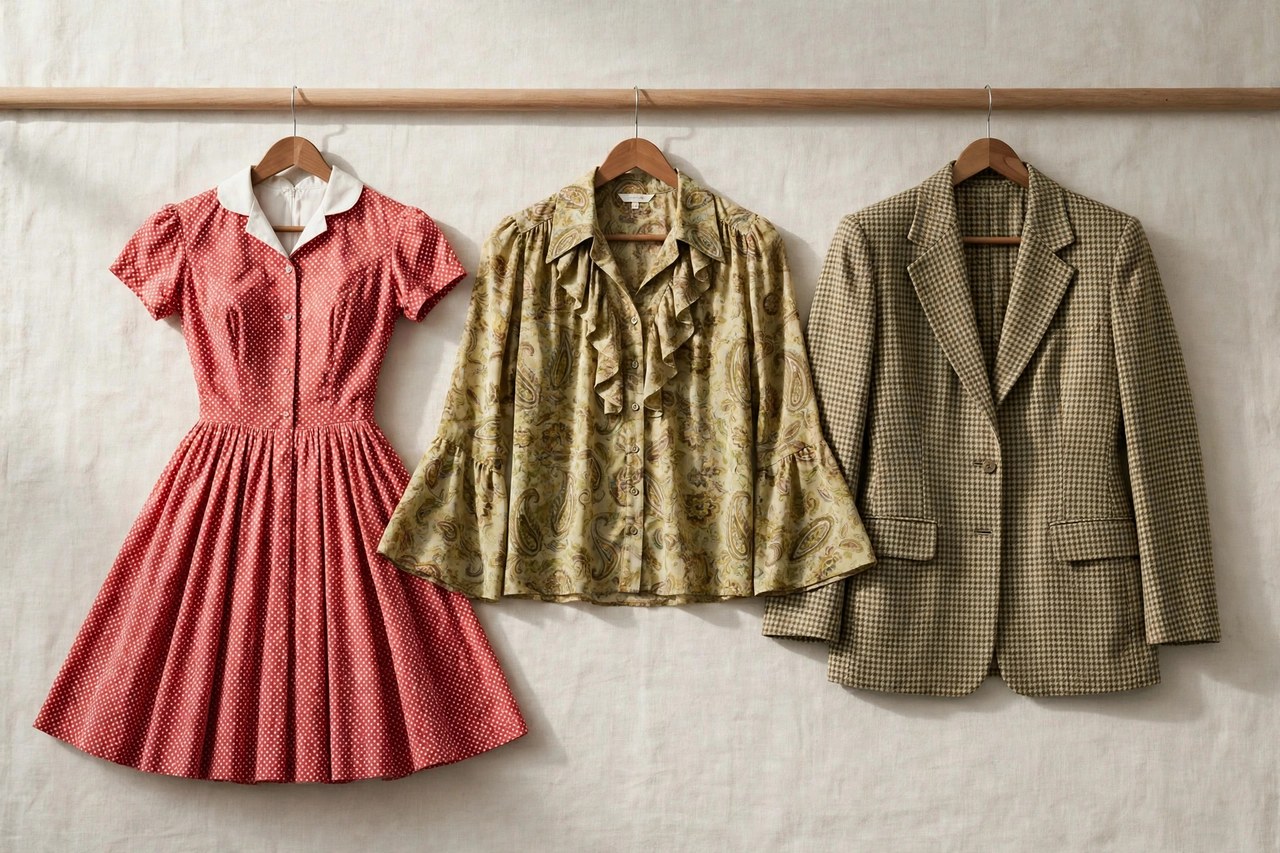
Retro apparel is the umbrella term for the whole wardrobe — every category of clothing a woman wears, interpreted through the design language of an earlier era. Where a single retro dress or blouse makes one statement, retro apparel describes the collection as a whole: the swing skirt worn with a tucked-in blouse, the high-waisted trouser with a knit top, the tailored jacket over all of it, and the shoes and bag chosen to agree with them. It is a way of dressing, not a single garment.
The word retro means imitative or consciously derivative of the recent past, and that consciousness is the point. A retro wardrobe is assembled on purpose, piece by piece, by someone who knows which decades she loves and why. This guide treats apparel at the wardrobe level: which eras supply which staples, how to mix genuine vintage pieces with modern reproductions, which fabrics carry the look, and how to care for older garments so the collection lasts.
The Decades That Stock the Wardrobe
Each decade contributes different staples. The 1920s give drop-waisted dresses, long beads and cloche shapes; the 1930s add bias-cut fluidity and flutter sleeves; the 1940s contribute strong shoulders, tea dresses and practical separates shaped by wartime rationing. The 1950s dominate most retro wardrobes with fit-and-flare dresses, full circle skirts, pencil skirts and neat cardigans, while the 1960s bring shift dresses, cropped jackets and bold prints, and the 1970s supply wrap dresses, wide-leg trousers, peasant blouses and suede.
A workable retro wardrobe usually leans on one or two anchor decades rather than sampling all of them, because silhouettes from the same era were designed to be worn together. A 1950s full skirt and a 1950s fitted blouse share a waist emphasis that makes the outfit read as one thought. Mixing eras can work — a 1970s blouse under a 1940s-style jacket, for instance — but it works best when color and fabric tie the pieces together and one era clearly leads.
Building the Wardrobe Piece by Piece
Start with the foundation categories in neutral, era-true versions: a full or pencil skirt, high-waisted trousers, two or three blouses, a knit top, and a dress in your anchor silhouette. Add outerwear next — a tailored wool coat, a cropped jacket or a swing coat transforms separates into a period outfit instantly. Only then add the expressive pieces: the printed novelty dress, the beaded cardigan, the statement hat. This order keeps the wardrobe wearable on ordinary days instead of becoming a costume rack.
Balance genuine vintage against modern reproduction honestly. True vintage brings irreplaceable fabric, hand finishing and history, but sizes run small, condition varies and the best pieces cannot be replaced if damaged. Reproduction apparel copies the silhouettes in modern sizes and washable fabrics, and it takes the daily wear that would destroy a seventy-year-old dress. Most experienced collectors wear reproductions as the workhorses and save true vintage for occasions, which keeps both halves of the wardrobe in service longer.
Fabrics, Fit and Caring for the Collection
Period fabrics are half the look. The retro wardrobe runs on cotton sateen and poplin, rayon and rayon crepe, wool gabardine and tweed, silk, linen, and the early synthetics — nylon, polyester double knit and acrylic knits — that defined the 1960s and 1970s. Reproductions in natural fibers generally drape closer to the originals than stiff modern synthetics do, so read fiber labels the way you read silhouettes. Fit follows the era, too: vintage sizing predates modern vanity sizing, so shop by measurements in inches, never by the number on the label.
Care decides how long the collection survives. Wash vintage as little as possible, spot clean first, and use cool water and gentle detergent when washing is unavoidable; rayon and early synthetics can shrink or distort in heat. Store knitwear folded, hang woven pieces on padded hangers, and keep everything away from direct light, which fades prints unevenly. Mend small seam splits early — a ten-minute repair now prevents the tear that retires a garment. Rotate what you wear, too, resting each piece between outings so elastic, seams and fabrics recover; constant wear ages even sturdy clothing faster than time alone ever could. A retro wardrobe is a small museum you get to wear, and it rewards museum habits.
Related Women's Guides
Looking for Women's Clothing Stores?
This guide helps you choose women's retro apparel. To browse where to buy, visit our women's clothing store directory, where you can find retailers that carry them.