Women's Retro Clothing Guide
Retro clothing, approached as collecting: how to tell true vintage from reproduction, date a garment by its labels and seams, judge condition, and buy pieces that hold up in a working wardrobe.
Shop Women's Retro Clothing Now
Shop Women's Retro Clothing on Amazon Shop Women's Retro Clothing on eBayThe Amazon and eBay links on this page are affiliate links. If you make a purchase through them, Apparel Search may earn a commission.
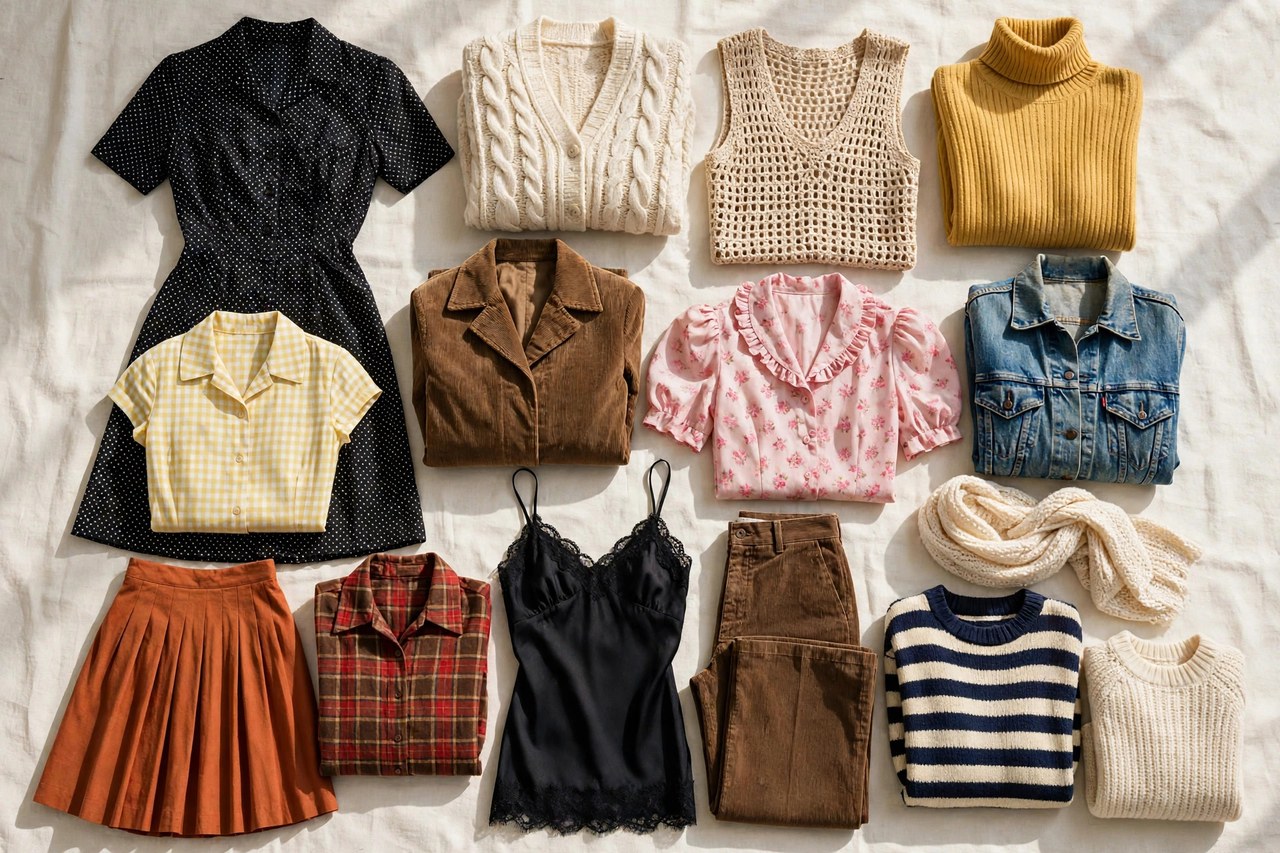
This guide approaches retro clothing from the buyer's and collector's side of the rail. The companion apparel guide treats retro as a wardrobe to be worn; this one treats it as a stock to be found, judged and kept. Retro clothing includes both genuine garments that survive from earlier decades and modern clothing made in their image, and the first skill in the field is telling those two apart at a glance — because they differ in price, in care, in sizing and in how honestly a seller should describe them.
Collecting women's retro clothing has grown from thrift-store luck into a knowledgeable market with its own vocabulary: era, provenance, deadstock, reproduction, condition grading. Whether you buy to wear, to resell or to build a long-term collection, the same checks apply. This guide covers how to date a garment from its labels, fastenings and construction, how to grade condition without wishful thinking, how vintage sizing translates to a modern body, and how to store a growing collection so it keeps its value and its wearability.
Vintage, Reproduction and the Space Between
True vintage means the garment was actually made in the era it represents — generally at least twenty years old, with pre-1960s pieces increasingly scarce. Reproduction clothing is newly made to vintage patterns and standards, often by specialist makers who copy period fabrics and details faithfully. Between them sit vintage-style high-street pieces that borrow a silhouette for one season in modern fabrics. None of the three is dishonest in itself; the dishonesty is only in the labeling, so learn to verify rather than trust.
Dating clues are built into every garment. Care labels became standard in the 1970s, so an unlabeled garment is often older. Metal zippers suggest pre-1970s make, nylon zippers the years after; side zippers point to the 1940s and 1950s, back zippers to the 1960s onward. Union labels, country-of-origin wording, fabric names — rayon before the synthetics era, the arrival of polyester in the 1960s — and construction details like hand-finished hems, pinked seams and bound buttonholes each narrow the date. Collectors read a garment the way mechanics read an engine.
Condition, Sizing and What to Pay
Condition is graded in plain words: deadstock or mint for unworn pieces with tags, excellent for pieces with no visible flaws, good for sound garments with minor wear, and fair or study pieces for damaged items bought for their fabric, buttons or pattern. Check any purchase in daylight at the underarms, waistline, hem and closures, smell it — storage odors can be permanent — and hold thin fabrics up to the light to find weak spots. A small seam split is a repair; shattered silk and brittle rayon are not.
Vintage sizing is the beginner's biggest surprise: a labeled size 12 from the 1950s measures closer to a modern size 4 or 6, because sizing standards and bodies both changed. Ignore labels and work from flat measurements — bust, waist, hip and shoulder — doubled where the garment is measured laid flat. On price, rarity, condition and wearability set the market: a wearable 1950s cotton day dress in a larger measured size is genuinely scarce and priced like it, while common 1970s polyester is plentiful and should be bought cheaply and worn freely.
Storing and Keeping a Collection
Store clothing the way archives do, adapted to a home: clean before storing, because invisible stains and perspiration oxidize into permanent marks; fold knitwear and heavy beaded pieces flat with acid-free tissue at the folds; hang woven garments on padded hangers, never wire; and keep everything in a dark, dry, ventilated space rather than sealed plastic, which traps moisture. Cedar and lavender discourage moths in wool, but they are a supplement to cleanliness, not a substitute for it.
Keep simple records as the collection grows: what the piece is, its measured size, its era and how you dated it, what you paid and what it needs. A photographed inventory on your phone takes an afternoon and pays for itself the first time you cannot remember whether you already own a black 1940s crepe dress. Finally, rotate wear. Garments kept in motion, aired and rested between outings last longer than pieces entombed for years, and a collection of retro clothing earns its keep by being clothing first and a collection second.
Related Women's Guides
Looking for Women's Clothing Stores?
This guide helps you choose women's retro clothing. To browse where to buy, visit our women's clothing store directory, where you can find retailers that carry them.