Women's Retro Denim Guide
Retro denim covers the jeans, jackets and skirts of denim's own history — high rises, straight and wide legs, dark rigid fabric and the fades that only years of wear can write.
Shop Women's Retro Denim Now
Shop Women's Retro Denim on Amazon Shop Women's Retro Denim on eBayThe Amazon and eBay links on this page are affiliate links. If you make a purchase through them, Apparel Search may earn a commission.
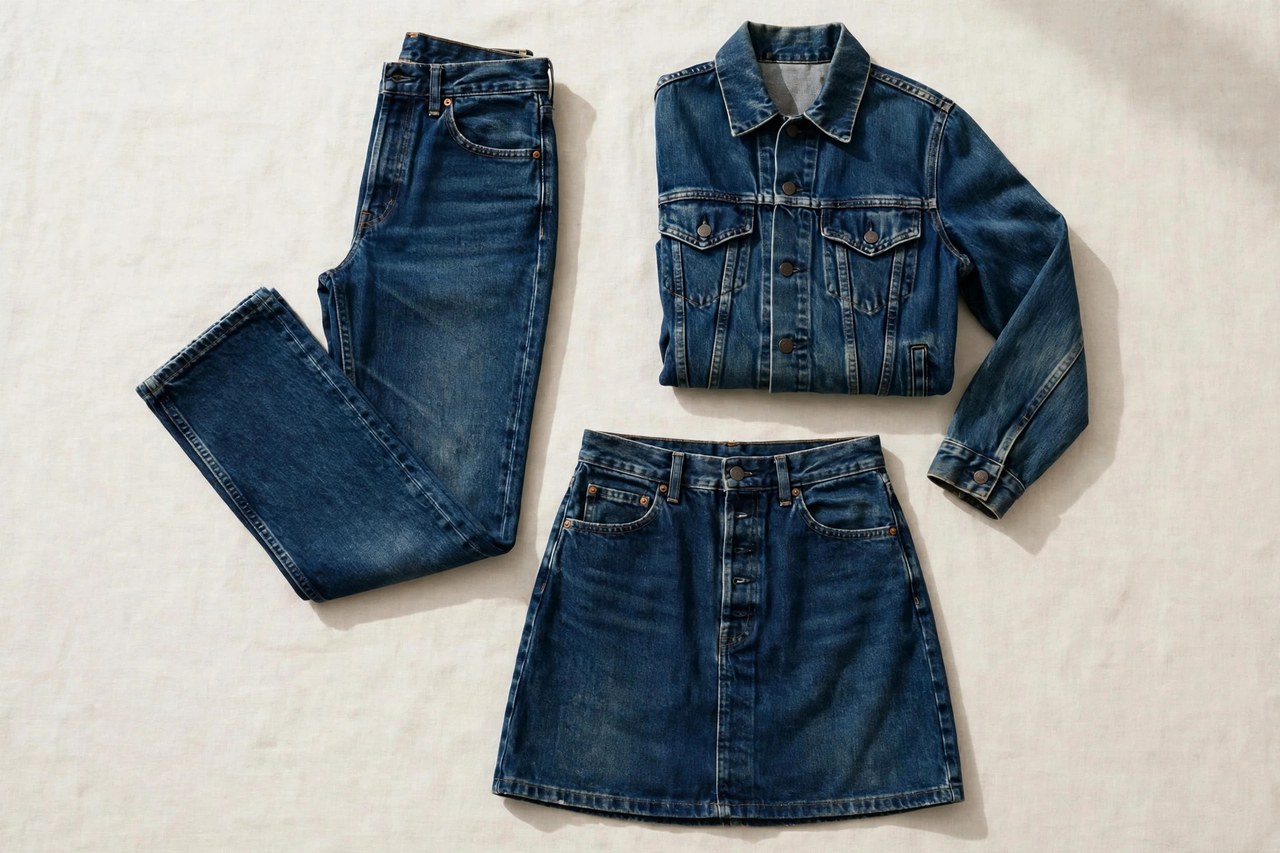
Denim has been workwear, rebellion and fashion in turn, and retro denim means wearing it the way earlier decades did: higher rises, straighter legs, heavier fabric and darker washes than the stretch-and-distress cycle of recent years. For women the retro story starts surprisingly late — jeans were men's work clothing first, and women's versions arrived as 1930s ranch and dude-ranch wear before becoming teenage uniform in the 1950s, designer fashion in the 1970s and a dozen revivals since.
This guide covers the category as a whole: the jean cuts that define each era, the difference between rigid and stretch denim, what selvedge means and whether it matters, the washes and fades that read as retro, and the denim jackets, skirts and dresses that complete the category. Fitting and washing advice follows, because retro denim asks a little more patience than modern stretch jeans and repays it with garments that age beautifully.
Jean Cuts by Decade
The 1950s women's jean was high-waisted and slim through the leg, worn cuffed with a tucked blouse or knit top — the rockabilly uniform. The 1960s slimmed further into stovepipe and capri lengths. The 1970s reversed everything: flares and bell-bottoms in dark denim, high rises with wide waistbands, then designer jeans with stitched back pockets. The 1980s added acid wash, pleats and tapered legs in pale stonewashed fabric, and the 1990s relaxed into straight, loose and carpenter cuts. A retro wardrobe picks its decade by leg shape first.
Construction details date a jean as precisely as its cut. Look for a zip fly on most women's retro styles (button flies belong mainly to men's heritage lines), a single-needle stitched yoke, chain-stitched hems that pucker slightly with washing, and the classic five-pocket layout with copper or branded rivets. Wide-leg and sailor-front jeans quote 1930s and 1970s work and naval wear. Dark, unwashed fabric is the safest retro signal of all: nearly every era's jeans started dark and earned their lightness, so a pair that begins pale is quoting the end of a story rather than the start.
Rigid, Stretch and Selvedge Denim
Original jeans were rigid: 100 percent cotton denim, typically twelve to fourteen ounces, stiff when new and molding to the wearer over months. Retro reproductions honor that tradition, sometimes with one or two percent elastane as a concession to modern comfort — enough to ease the first weeks without changing the silhouette or the way the fabric fades. Heavy stretch denim, by contrast, fits instantly but bags at the knee and fades flat and uniform, which is why purists avoid it for retro cuts even when the styling is right.
Selvedge denim is woven on old shuttle looms that finish the fabric's edge as they weave, producing the self-edged strip visible inside a cuffed outseam, often with a colored thread ID. It is denser, more textured and more expensive than standard denim, and it fades with pronounced character. Selvedge is a quality and craft choice rather than a visual one — nobody sees it until the cuff turns up — so buy it if you enjoy the making of things, and buy ordinary rigid denim without apology if you simply want the 1950s silhouette.
Jackets, Skirts, Fades and Care
Beyond jeans, the retro denim wardrobe includes the trucker jacket in its fitted mid-century form, worn as a light jacket over dresses; the denim skirt, A-line in the 1970s manner or pencil-cut for a 1950s look; denim dresses and jumpsuits from the 1970s and 1980s; and shorts cut high with a turned cuff. Double denim — jacket and jeans together — reads retro when the two pieces differ clearly in wash, and costume-like when they match exactly, a rule every decade seems to rediscover.
Care for retro denim inverts modern laundry habits. Wash rarely, in cold water, inside out, with dark colors together, and skip the dryer, which twists seams and fades fabric evenly where wear alone would fade it interestingly. The whiskers at the hip, honeycombs behind the knee and train-track lines along a selvedge cuff are a record of the wearer's life in the garment, and collectors value honest fades above any factory distressing. Rigid jeans soften and fit better with every month; give a new pair a full season before judging it, because retro denim is a slow garment by design.
Related Women's Guides
More to Explore on Apparel Search
Looking for Women's Clothing Stores?
This guide helps you choose women's retro denim. To browse where to buy, visit our women's clothing store directory, where you can find retailers that carry them.