Women's Retro Footwear Guide
Retro footwear finishes the silhouette from the ground up: rounded-toe pumps, Mary Janes, saddle shoes, T-straps, platforms and the boots that anchor each decade's look.
Shop Women's Retro Footwear Now
Shop Women's Retro Footwear on Amazon Shop Women's Retro Footwear on eBayThe Amazon and eBay links on this page are affiliate links. If you make a purchase through them, Apparel Search may earn a commission.
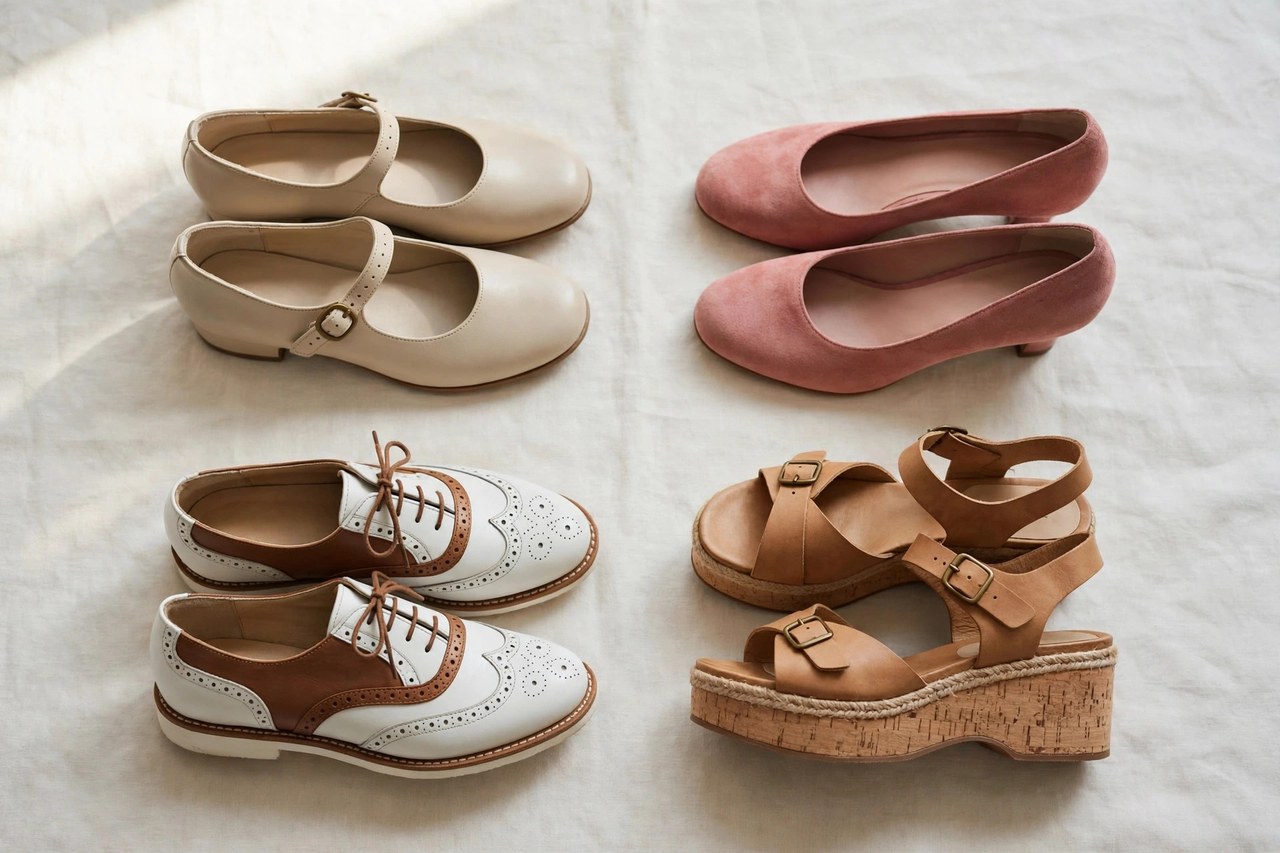
Shoes date an outfit from the ground up, and they do it at a glance: the rounded toe and curved heel of a 1940s pump, the strap of a Mary Jane, the towering platform of a 1970s sandal. Retro footwear is therefore both a collecting category and a practical problem, because shoes work harder and wear faster than any other part of the wardrobe. Vintage shoes in wearable condition are the scarcest retro finds of all, and reproductions earn their place here more honestly than in any other category.
This guide covers the signature women's styles decade by decade — pumps and peep toes, Mary Janes and T-straps, saddle shoes and loafers, platforms, wedges and boots — along with the heel shapes and materials that identify them. It then turns practical: how vintage shoe sizing and widths differ from modern ones, what to check in an old shoe before trusting it with your weight, and how to care for leather, suede and satin footwear so a good pair stays a good pair.
Signature Styles by Decade
The 1940s shoe was sturdy and shapely: rounded or peep toes, ankle straps, wedge and platform soles born partly of wartime material rules, in suede and leather. The 1950s refined the pump to a point as the decade turned, pairing kitten and stiletto heels with pointed toes, while everyday wear ran to saddle shoes and loafers with bobby socks, and the ballet flat arrived from the dance world. Mary Janes, defined by their instep strap, span the whole century, shifting from children's shoes to a recurring adult fashion in every decade since the 1920s.
The 1960s lowered the heel and squared or rounded the toe: pilgrim pumps with buckles, low slingbacks, white boots for the space-age look and flat T-strap sandals. The 1970s raised everything on platforms and chunky heels — platform sandals, clogs, knee boots and peep-toe platforms in suede, patent and wood-soled constructions. The 1980s sharpened the pump again and colored it boldly. When building an outfit, match the shoe's decade to the dress's: a 1950s fit-and-flare over 1970s platforms reads as two costumes negotiating, not one outfit.
Heels, Materials and Construction
Heel shape is the connoisseur's dating tool. The curved Louis heel flares at the base; the 1950s stiletto narrowed to a steel-cored spike; the kitten heel kept the shape at walking height; the 1960s stacked and block heels widened the stance; and the 1970s platform added height under the toe so the wearer gained inches without the pitch. Wedges recur in the 1940s and 1970s alike. Knowing these shapes lets you date reproduction marketing claims quickly, since a claimed 1940s shoe on a stiletto heel is quoting two decades at once.
Materials follow budget and era: leather for quality shoes in every decade, suede for day and evening softness, patent leather for shine, satin and fabric for evening, and the widening world of synthetics from the 1960s onward. Construction matters more in old shoes than in old dresses, because a shoe carries weight on glued and stitched joints that age invisibly. Cork, wood and early foam in platform soles can dry and crumble; leather soles wear through at the ball; and heel tips vanish. Buy vintage shoes as engineering, not just as styling, and the next section's checks become habit.
Vintage Shoe Fit, Checks and Care
Vintage shoe sizing predates modern standards and runs narrow: mid-century shoes were made in a forest of width fittings, and the survivors skew slim, with higher arches and smaller toe boxes than modern feet expect. Shop by insole measurement in inches or centimeters, measured on a shoe that fits you, and expect many genuine vintage pairs simply not to fit modern feet — that is the honest reason reproduction footwear exists in every retro size range, copying the silhouettes at contemporary widths.
Before wearing a vintage pair, flex the sole gently for cracking, press the platform and heel for crumble or wobble, check that heel tips are sound and have a cobbler replace them and add thin rubber soles if you will walk outdoors; period leather soles are slippery on modern floors. Care is the classic routine: rest shoes a day between wearings, store on trees or stuffed to hold shape, condition leather, brush suede, and keep satin evening shoes in boxes. A well-kept reproduction pair and a carefully checked vintage pair together cover a retro wardrobe's needs without gambling on either.
Related Women's Guides
Photos

Looking for Women's Clothing Stores?
This guide helps you choose women's retro footwear. To browse where to buy, visit our women's clothing store directory, where you can find retailers that carry them.