Women's Retro Blouses Guide
A retro blouse borrows its collar, sleeves and details from an earlier decade — the pussy bow, the Peter Pan collar, the puff sleeve — and pairs with skirts and trousers across the whole retro wardrobe.
Shop Women's Retro Blouses Now
Shop Women's Retro Blouses on Amazon Shop Women's Retro Blouses on eBayThe Amazon and eBay links on this page are affiliate links. If you make a purchase through them, Apparel Search may earn a commission.
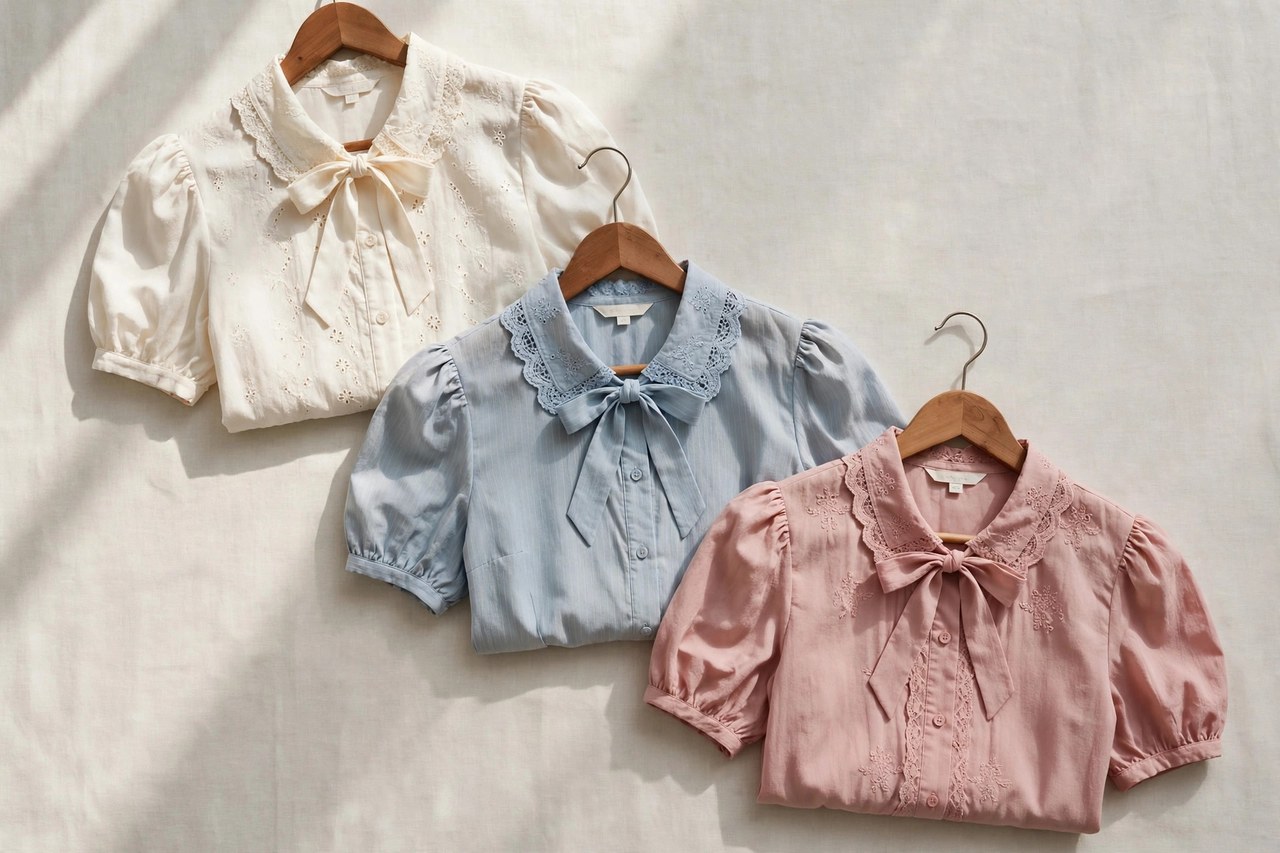
A ladies retro blouse is one that appears to be designed based on styles from a past era, and that simple definition covers a great deal of fashion history. Blouse trends from the past come back into style so regularly because the blouse is the most changeable part of an outfit: keep the skirt or trousers, change the blouse, and the whole look moves to a different decade. Retro style is imitative or consciously derivative of lifestyles and trends from the historical past — and few garments borrow as openly, or as charmingly, as the blouse.
Fashion is cyclical, and the blouse proves it every season. This guide covers the signature retro blouse styles decade by decade — the bow necks, rounded collars, puff sleeves and peasant necklines that identify each era — along with the fabrics they were made in, how to wear them with the rest of a retro wardrobe, how vintage blouse sizing differs from modern sizing, and how to wash and store older blouses without losing their buttons, lace or shape.
Signature Collars, Necklines and Sleeves
The pussy bow blouse, with its soft tied bow at the throat, traveled from 1930s elegance through 1970s career dressing to become the most recognized retro blouse of all. The Peter Pan collar — flat, rounded and sweet — belongs to the 1950s and early 1960s, usually in white cotton on a pastel blouse. Lace and broderie collars, detachable in many original wardrobes, dressed up plain 1940s blouses. Later decades added the wide pointed dagger collar of the 1970s and the romantic high lace neck of Victorian revival styles.
Sleeves date a blouse as surely as its collar. Puff sleeves and gathered sleeve heads speak of the 1930s and 1940s; neat short sleeves with turned-back cuffs are pure 1950s; the bishop sleeve, full at the wrist and caught into a cuff, runs from Victorian revivals through the 1970s peasant look. Sleeveless shell blouses in printed silk belong to the 1960s, worn under cropped jackets. When you shop, read collar and sleeve first: together they tell you which decade a blouse is quoting, however modern its fabric may be.
Fabrics and the Styles They Carry
Original retro blouses were made in silk and silk crepe for dressy styles, rayon for fluid draped fronts, cotton lawn and voile for summer, and nylon and polyester for the easy-care blouses of the 1960s and 1970s. Sheer fabrics were common — chiffon, georgette and dotted Swiss worn over a camisole — and prints did heavy work: polka dots, tiny florals, novelty prints of poodles, fruit or travel scenes, and the bold geometrics of the late 1960s. A genuine vintage blouse in a period print is often a better buy than a plain one, because the print cannot be reproduced exactly.
The peasant blouse deserves its own note: gathered neckline, embroidered yoke and loose body, drawn from folk dress and revived in both the 1940s and the 1970s. It is the one retro blouse worn untucked, over skirts and jeans alike. The jabot and ruffled-front blouse quotes the eighteenth century by way of the 1980s, while the simple camp-collar blouse in rayon prints channels 1950s leisure wear. Each style has a correct partner: bow blouses with pencil skirts, Peter Pan collars with full skirts, peasant blouses with denim or tiered skirts.
Wearing, Fitting and Caring for Retro Blouses
Most retro blouses were designed to be tucked in, cut shorter in the body and higher at the waist than modern tops, so pair them with high-waisted skirts and trousers and expect to tuck. Vintage sizes run small and the number on the label means little; measure the bust and shoulder of a blouse you own that fits, and shop by those inches. Check the stress points before buying vintage: underarm seams, button plackets and the fabric at the cuff, where perspiration and wear thin rayon and silk first.
Wash vintage blouses by hand in cool water with a gentle detergent, supporting the whole garment when wet because waterlogged rayon is fragile and can tear under its own weight. Roll in a towel to remove water, dry flat or on a padded hanger away from sun, and store folded if the fabric is sheer or beaded. Keep a small stock of replacement buttons in period styles — losing one original button is the commonest vintage blouse injury, and a matched spare saves the set. Treat the blouse gently and it will outlast several modern tops.
Related Women's Guides
Photos

More to Explore on Apparel Search
Looking for Women's Clothing Stores?
This guide helps you choose women's retro blouses. To browse where to buy, visit our women's clothing store directory, where you can find retailers that carry them.