Women's Polo Shirts Guide
From René Lacoste's tennis court to Ralph Lauren's icon, the women's polo shirt is piqué knit, a soft collar and a placket — sport heritage that doubles as a uniform and a wardrobe staple.
Shop Women's Polo Shirts Now
Shop Women's Polo Shirts on Amazon Shop Women's Polo Shirts on eBayThe Amazon and eBay links on this page are affiliate links. If you make a purchase through them, Apparel Search may earn a commission.

The polo shirt began as a practical revolt. In the 1920s, French tennis champion René Lacoste tired of playing in stiff long-sleeved shirts and designed a short-sleeved top in breathable cotton piqué with a soft, unstarched collar that could be turned up against the sun and a short button placket for ventilation. He wore it at the 1926 U.S. Championships, embroidered it with the crocodile that became one of fashion's first logos, and by 1933 was selling it to the public. The shirt took its everyday name from polo players, who adopted a similar style, but its engineering is tennis engineering.
The second act belongs to Ralph Lauren, whose Polo line from the 1970s onward turned the shirt into an American icon and, crucially, cut it properly for women. Today the women's polo shirt lives three lives at once: a sport garment for golf and tennis, a smart-casual staple that stands in for a blouse, and one of the most common work uniforms in retail, hospitality and service industries. Understanding its construction explains why one polo looks sharp for years while another twists and fades in a season.
Piqué Knit, Collar and Placket Construction
True polo fabric is piqué knit, recognizable by its fine raised texture, like a miniature waffle or honeycomb. The structure traps air, breathes in heat, holds a collar's shape and hides perspiration better than flat jersey. Most quality polos are 100 percent cotton piqué or cotton with a small elastane content for recovery; performance versions use polyester piqué for moisture wicking on the golf course or the job. Weight tells you the intent: light piqué for summer and layering, heavier piqué for structure and uniform durability.
Construction details separate the lasting shirts. The collar is knitted as a separate ribbed band and should lie flat without curling after washing; better shirts add a collar stand or taping so it keeps its roll. The placket, usually two or three buttons, should be reinforced so it does not gape, and the side vents at the hem — often with a slightly longer back, the traditional tennis tail — let the shirt move when worn untucked. Sleeve bands should hug the arm lightly without binding, and seams should be smooth enough to wear under a blazer or sweater without showing ridges.
Women's Fits and Uniform Use
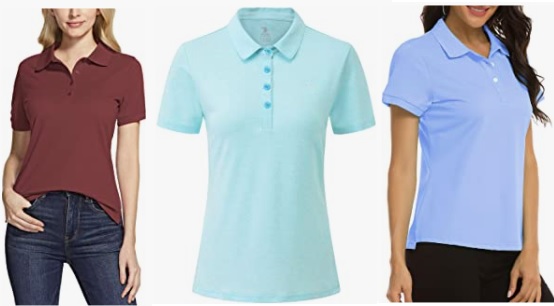
Women's polos come in three broad fits. The classic fit follows the original relaxed cut, straight through the body, best for uniforms and layering. The fitted or slim fit is shaped at the waist with narrower sleeves and a shorter body, designed to be worn untucked with trousers, skirts and shorts without looking borrowed. Relaxed and boyfriend cuts borrow the unisex block deliberately. Whatever the fit, the shoulder seam should meet the shoulder, the placket should close without pulling, and the length should cover the waistband when you reach upward — a standard test for both sport and work.
For work uniforms, the polo's virtues are practical: it looks supervised and tidy with no ironing ceremony, launders commercially, carries an embroidered logo on the chest cleanly, and reads consistently across a whole staff. Employers usually specify cotton-polyester blends for colorfastness and shrinkage control, and darker colors for soil-hiding between washes. If you are buying your own uniform polos, buy several in rotation, confirm the employer's color and logo placement before embroidery, and choose the blend over pure cotton when the shirts will be washed hot and often.
Styling and Care
Outside sport and work, the women's polo is a quiet styling tool. Tucked into high-waisted trousers or a pleated skirt with loafers, it reads polished and slightly retro. Under a blazer it replaces a shirt with none of the collar fuss. Half-tucked into white jeans or worn loose over shorts, it is weekend clothing with a little more intention than a tee. The collar does the accessorizing: leave the top button open for ease, button it fully for a sharper, more graphic line, and skip necklaces that fight the placket — earrings and a watch are enough.
Care protects the two things that age a polo first: collar curl and color fade. Wash inside out in cool water, button the placket, and reshape the collar flat while damp. Avoid high dryer heat, which twists side seams and shrinks cotton piqué, and fold polos rather than hanging them, since hanger points stretch knit shoulders. White polos stay white with prompt treatment of collar soil, the classic wear point. A well-made piqué polo cared for this way easily outlasts several seasons of cheaper jersey substitutes, which is why the style, nearly a century after Lacoste, still needs no redesign.
Related Women's Guides
Photos
Looking for Women's Clothing Stores?
This guide helps you choose women's polo shirts. To browse where to buy, visit our women's clothing store directory, where you can find retailers that carry them.